
Quantum Computing: Bridging Today’s Technology with Tomorrow’s Possibilities
Shameer 5:36 pm October 27, 2025 Quantum Computing: The Future of TechnologyA New Kind of ComputingQuantum computing marks a revolutionary leap from traditional computing. Instead of relying on simple binary bits — 0s and 1s — quantum computers use qubits, which can exist in multiple states at once. This unique property comes from the strange but powerful laws of quantum mechanics. The Power of Superposition and EntanglementTwo key principles make quantum computers extraordinary:Superposition: A qubit can represent both 0 and 1 at the same time, allowing it to perform many calculations simultaneously.Entanglement: Qubits can be deeply connected, so changing one instantly affects the other — even if they are far apart.Together, these properties enable quantum computers to tackle problems that would take classical computers thousands of years to solve. The Challenges AheadDespite its promise, quantum computing faces significant hurdles:Qubit Stability: Qubits are extremely sensitive and can lose their quantum state easily due to environmental noise (a problem called decoherence).Error Correction: Developing reliable systems to correct quantum errors is still a major research challenge. The Road Forward: Hybrid SystemsIn the near future, we’ll see hybrid quantum-classical systems, where quantum processors act as powerful sidekicks to classical computers — handling only the tasks they’re best at. This collaboration will bridge today’s computing with tomorrow’s possibilities. Recent Posts
From Chatbots to Smart Toys: AI’s Rapid Growth in China
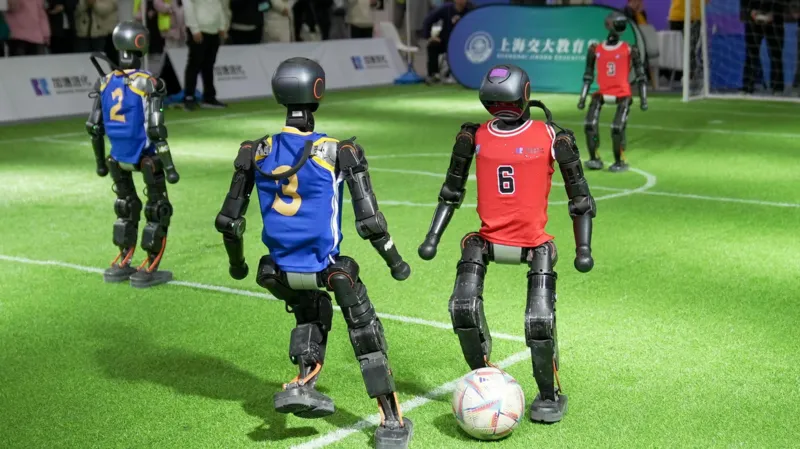
Shameer 11:49 am March 22, 2025 Eight-year-old Timmy sat hunched over his chessboard, deep in concentration, as he faced off against his robotic opponent powered by artificial intelligence. But this wasn’t a high-tech lab or an AI exhibition — this robot had become part of his everyday life, residing on the coffee table of his Beijing apartment. The first night the robot arrived, Timmy gave it a warm hug before heading to bed. He hasn’t named it yet, but he already sees it as more than just a machine. “It’s like a little teacher or a little friend,” he said, as he proudly showed his mother his next move. Moments later, the robot blinked its digital eyes and chimed: “Congrats! You win.” As it began resetting the board for a new game, it continued in Mandarin: “I’ve seen your ability. I will do better next time.” China’s AI Ambitions China is embracing artificial intelligence as it pushes to become a global tech superpower by 2030. The breakthrough Chinese chatbot, DeepSeek, which grabbed headlines in January, was just a glimpse of this ambition. Investment is flooding into AI enterprises, driving fierce domestic competition. Currently, more than 4,500 firms are developing and selling AI technologies. Schools in Beijing plan to introduce AI courses for primary and secondary students later this year, and universities are expanding spots for students eager to study the field. “This is an inevitable trend. We will co-exist with AI,” said Timmy’s mother, Yan Xue. “Children should become familiar with it as early as possible. We shouldn’t reject it.” Yan Xue was convinced the robot’s $800 price tag was a worthy investment because it not only plays chess but also teaches Go, another complex strategy game. The robot’s creators are already planning to add a language tutoring feature. China’s Race for Tech Dominance Perhaps this aligns with what the Chinese Communist Party envisioned back in 2017 when it declared AI as “the main driving force” behind the nation’s progress. Now, President Xi Jinping is heavily investing in AI as China’s economy contends with US-imposed tariffs. Beijing has outlined a plan to pour 10 trillion yuan ($1.4 trillion) into tech advancements over the next 15 years, competing with Washington for supremacy in AI and other emerging technologies. The government’s latest political assembly has given AI funding another boost, following the creation of a 60 billion yuan AI investment fund in January, just days after the US imposed tighter export controls on advanced chips and added more Chinese firms to its trade blacklist. However, DeepSeek has demonstrated that Chinese companies can navigate these obstacles, stunning Silicon Valley and industry experts who didn’t expect China to catch up so quickly. Engineering Success and Global Surprise Tommy Tang, who has spent the past six months promoting his firm’s chess-playing robot, is no stranger to international surprise. Timmy’s robot hails from his company, SenseRobot, which gained fame in 2022 when its advanced model defeated chess Grand Masters. “Parents always ask the price first, then they ask where I’m from. When I say China, there are always a couple of seconds of silence,” Tang said with a smile. SenseRobot has now sold over 100,000 units and secured a deal with the US retail giant Costco. China’s secret weapon may be its young talent. In 2020, over 3.5 million Chinese students graduated with degrees in science, technology, engineering, and mathematics (STEM) — more than any other country. As Xi told party leaders recently, “Building strength in education, science, and talent is a shared responsibility.” Abbott Lyu, vice president of AI toy-maker Whalesbot, echoes this sentiment. “We’ve accumulated talent and technology for decades,” Lyu said, as a child controlled a roaring dinosaur toy through code assembled on a smartphone. Whalesbot’s products aim to teach coding to children as young as three, with toys priced as low as $40. China’s AI industry isn’t slowing down. Companies are driven by a spirit of innovation and cost-efficiency. Tang revealed that SenseRobot initially faced challenges with the cost of its robotic arm, which would have pushed the price to $40,000. By integrating AI into the manufacturing process, they reduced it to just $1,000. “This is innovation,” he said. “Artificial engineering is now embedded into our production.” As China applies AI on a massive scale, its ambitions extend beyond consumer products. The government envisions AI-powered humanoid robots assisting its rapidly aging population and enhancing factory productivity. President Xi has set “technological self-reliance” as a cornerstone of China’s future, preparing the nation for a marathon to lead the AI revolution. “DeepSeek means the world knows we are here,” said 26-year-old engineer Yu Jingji at a recent AI fair in Shanghai, where robots played football in front of excited crowds. “The future belongs to AI, and China is ready.” China’s AI journey is just beginning, but with its rapidly growing talent pool, bold investments, and culture of relentless innovation, the race is heating up. The dragons are rising, and the world is watching. Recent Posts
Apple accused by US labor board of imposing illegal workplace rules
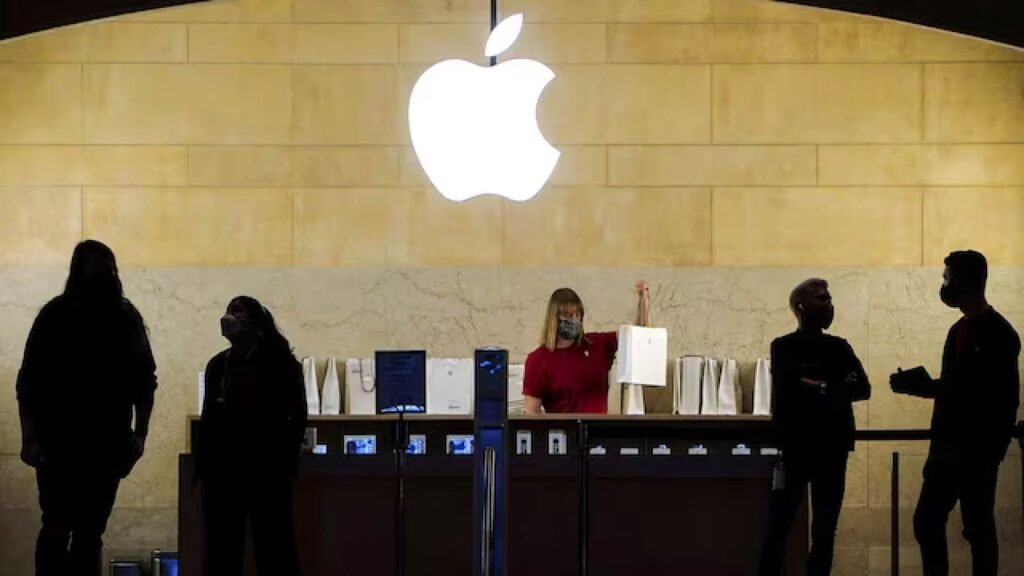
Shameer 8:56 pm October 1, 2024 On October 1st, the U.S. National Labor Relations Board (NLRB) filed a complaint against Apple (AAPL.O) for allegedly violating workers’ rights. The NLRB accuses Apple of enforcing unlawful workplace policies, including confidentiality, non-disclosure, and non-compete agreements that restrict employees from organizing and advocating for better working conditions. The complaint also claims Apple implemented overly restrictive misconduct and social media policies, which infringe on employees’ rights under federal labor law. Apple, in response, stated that it respects its employees’ rights to discuss wages, hours, and working conditions, as reflected in its policies. The company expressed its disagreement with the allegations and intends to present its case during the hearing scheduled for January, if a settlement isn’t reached. The complaint is rooted in charges filed in 2021 by former Apple senior engineering manager, Ashley Gjovik. She claimed that Apple’s confidentiality and social media policies hinder employees from discussing important topics such as pay equity and sexual discrimination. Additionally, Gjovik has filed a separate lawsuit in California federal court, alleging that Apple retaliated against her for filing these complaints and attempting to organize her colleagues. Apple has denied any misconduct and moved to dismiss the case. Apart from Gjovik’s case, Apple is also facing other pending NLRB cases, including accusations of wrongful termination at its Cupertino headquarters and interference with a union campaign at an Atlanta retail store. The company denies all allegations. Recent Posts
Microsoft taps Three Mile Island nuclear plant to power AI
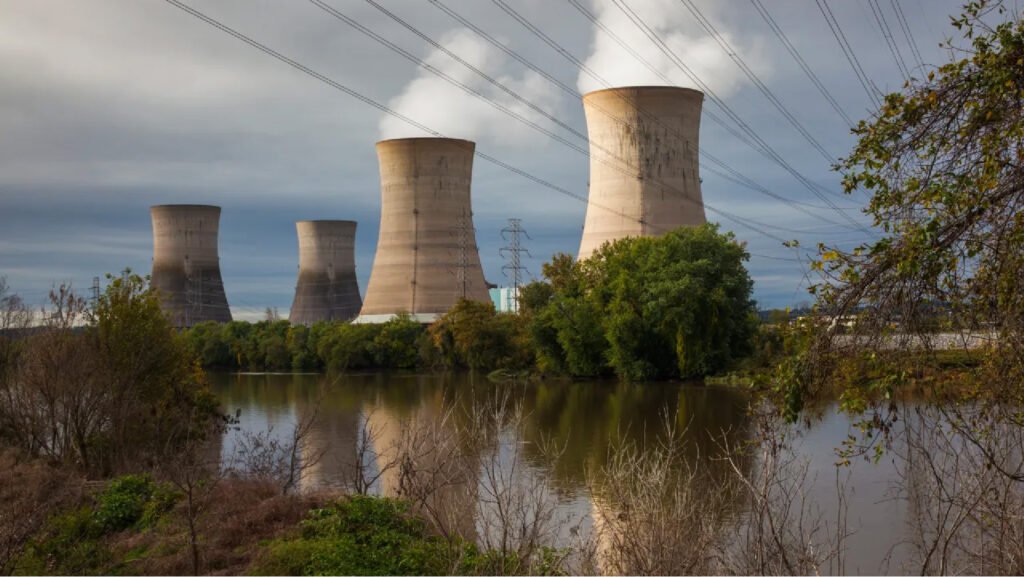
Shameer 9:04 pm September 20, 2024 Data centers powering AI models require vast energy, and major tech companies are turning to nuclear power to meet these demands. Microsoft has made a significant move by signing a deal with Constellation Energy to source energy for its data centers from the Three Mile Island Unit 1 nuclear plant. This plant, which is adjacent to the infamous TMI-Unit 2 that suffered a meltdown in 1979, was decommissioned in 2019 due to declining demand for nuclear energy. However, Constellation plans to invest $1.6 billion to revive the facility, with an expected operational date by 2028, pending regulatory approval. Microsoft has agreed to purchase all the energy produced by the 835-megawatt plant for the next 20 years, though financial terms have not been disclosed. Once restored, the plant will be renamed the Crane Clean Energy Center (CCEC) in honor of Constellation’s late CEO, Chris Crane. The plant’s revival is projected to create 3,400 jobs and contribute $16 billion to Pennsylvania’s GDP. Joe Dominguez, CEO of Constellation, highlighted nuclear energy’s reliability, stating it’s the only energy source capable of consistently powering critical industries, including data centers, with carbon-free energy around the clock. Microsoft isn’t the only tech company eyeing nuclear energy. OpenAI’s CEO Sam Altman has advocated for nuclear power, and Amazon recently acquired a nuclear-powered data center in Pennsylvania for $650 million. As companies like Microsoft, Amazon, and Alphabet strive to transition to 100% renewable energy by 2030, the surge in AI demands has complicated their green energy goals. A report in June revealed that the power consumption of future data centers could reach 508 terawatt-hours annually, exceeding Australia’s yearly electricity production. The growing demand for clean energy across industries, including electric vehicles and factories, has led to renewed interest in nuclear power. Investors are increasingly optimistic about nuclear fusion startups, which have raised $7.1 billion so far, offering a cleaner, more powerful alternative that relies on hydrogen fuel instead of uranium or plutonium. Recent Posts
Apple receives FDA approval to transform AirPods Pro into hearing aids
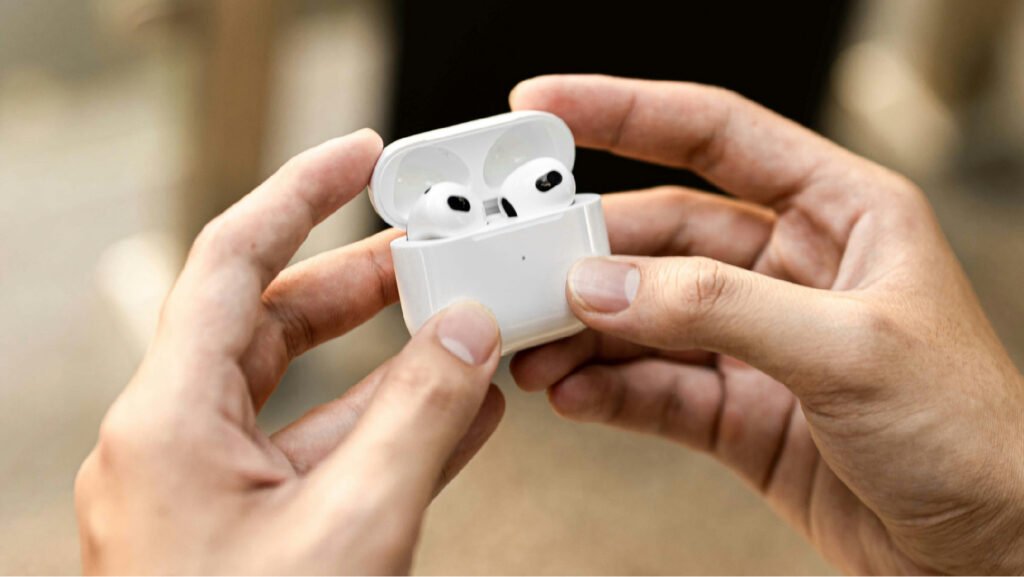
Shameer 5:41 pm September 12, 2024 Just days after Apple unveiled a new hearing aid feature for its second-generation AirPods Pro, the U.S. Food and Drug Administration (FDA) has granted approval for the software behind this functionality. In a press release, the FDA referred to Apple’s solution as “the first over-the-counter (OTC) hearing aid software device.” The feature was “evaluated in a clinical study involving 118 participants with perceived mild to moderate hearing loss,” according to the FDA, with results showing that those using Apple’s self-fitting strategy experienced a comparable benefit to those who received a professional fitting for the same device. The ability to use AirPods Pro as clinical-grade hearing aids is one of several new features Apple is introducing to the second-generation AirPods Pro this fall, as part of its ongoing commitment to hearing health. The earbuds will also include a Hearing Protection mode that shields ears in noisy environments like concerts. This mode, enabled by default, will maintain “natural and vibrant” sound quality at live performances. Additionally, AirPods Pro users will have access to a new Hearing Test feature, where they tap the screen when hearing various tones through the earbuds. The test results, displayed in Apple’s Health app, will be used to create a personalized audio profile for the hearing aid function. This advancement in hearing aid functionality for the AirPods Pro marks a major step forward in reducing stigma and lowering costs for consumers aiming to protect their hearing. According to the World Health Organization, around 1.5 billion people worldwide experience some degree of hearing loss. Apple’s platforms already offer several features to alert users when they are exposed to dangerously loud environments or listening at levels that could cause permanent hearing damage—a logical progression from the company that introduced the iPod and later the iPhone. The FDA also noted that Apple’s application was evaluated under De Novo classification, intended for “low- to moderate-risk devices that are novel and for which there is no prior legally marketed device.” Recent Posts