
Biotechnology: The Silent Revolution Shaping Our Future

Shameer 4:47 pm November 18, 2025 Have you ever wondered how scientists create medicines that target specific diseases, or how farmers grow crops that resist pests without harmful chemicals? The answer lies in biotechnology—a field quietly transforming our world in ways that touch nearly every part of our lives. What Is Biotechnology, Really? At its core, biotechnology is simple: it means using living organisms—like bacteria, plants, and human cells—to create useful products or solve real-world problems. It’s like working with nature’s own tools to improve life. Humans have actually been using biotechnology for thousands of years. When ancient people used yeast to make bread rise or fermented grapes into wine, they were practicing early biotechnology—without even knowing it. Today, we combine these traditional methods with advanced science to accomplish things our ancestors could only dream of. Feeding a Growing World With the global population heading toward 10 billion, biotechnology is becoming essential for sustainable food production: Crops engineered to survive droughts and resist diseases Golden rice, enriched with vitamin A to combat malnutrition Research into lab-grown meat to reduce environmental impact Protecting Our Planet Biotechnology is also offering innovative environmental solutions: Biofuels made from algae and plant waste Biodegradable plastics that break down naturally Engineered bacteria that clean up oil spills or toxic waste Microorganisms designed to capture carbon dioxide from the atmosphere These technologies use nature’s own mechanisms to protect the planet. Why This Matters to You Biotechnology isn’t just found in laboratories—it’s already part of your daily routine: Yogurt in your fridge? Made with biotech. Cotton in your clothes? Possibly grown from biotech seeds. Vaccines that protect you? Developed using biotechnology. As biotech continues to grow, it will bring new careers, better medical options, and solutions to global challenges. Recent Posts
A Professional Overview of Blockchain: How It Works and Why It Matters
Shameer 5:11 pm November 15, 2025 What is Blockchain? Blockchain is a method of storing information in a way that makes it nearly impossible to alter, hack, or manipulate. Think of it as a digital ledger that is shared across thousands of computers instead of being held by one person or organization. Imagine a notebook where every transaction is recorded. Now imagine thousands of people having identical copies of that notebook. Whenever a new entry is added, everyone’s copy updates automatically. That’s exactly how blockchain works. How Does Blockchain Work? The term blockchain comes from its structure—data is stored in blocks that are linked together in a chronological chain. Step-by-step process: A Transaction OccursSomeone initiates a transaction or submits data to be recorded. Broadcast to the NetworkThe transaction is shared with a worldwide network of computers called nodes. VerificationThese nodes verify the transaction using complex mathematical algorithms to ensure its legitimacy. Block CreationVerified transactions are grouped together to form a new block. Adding to the ChainThe new block is permanently added to the blockchain. Each block contains information linking it to the previous block, creating a secure chain. A Brief History of Blockchain The concept began in the early 1990s when Stuart Haber and W. Scott Stornetta introduced a method for securing digital documents using cryptographically linked blocks. Their pioneering research influenced future cryptography experts such as Dave Bayer and Hal Finney. In 2008, an individual (or group) under the pseudonym Satoshi Nakamoto released the Bitcoin whitepaper, which became the foundation of modern blockchain technology. Benefits of Blockchain Technology • Reduced Costs By removing middlemen and automating processes, blockchain significantly lowers transaction expenses. • Increased Speed Transactions that usually take days can be completed within minutes or even seconds. • Enhanced Security Its cryptographic design makes blockchain highly resistant to fraud, tampering, and cyberattacks. • Greater Trust Transparent and unalterable records help build trust among participants—even those who don’t know or trust each other. Conclusion Blockchain is reshaping how information is stored and verified. Its decentralized, transparent, and secure nature has the potential to transform numerous industries and daily interactions. You don’t need a technical background to understand blockchain. At its core, it’s simply a better, safer, and more transparent way to keep records. As it continues to evolve, being familiar with blockchain will become increasingly valuable for professionals, tech enthusiasts, and anyone interested in the future of digital innovation. Recent Posts
Cloud Computing: Powering the Digital Future
Shameer 2:44 pm November 13, 2025 What is Cloud Computing Cloud computing is the on-demand delivery of computing services — such as servers, storage, databases, networking, software, and analytics — over the internet.Instead of owning and maintaining physical hardware or data centers, users rent computing power and storage as needed, paying only for what they use. This revolutionary model enables users to access resources anytime, anywhere via the internet. The term “cloud” refers to a shared pool of configurable computing resources that can be rapidly provisioned and released with minimal management effort. Cloud computing represents a major shift from traditional IT systems, offering greater flexibility, scalability, and efficiency. Today, it’s part of everyday life — from checking Gmail and streaming Netflix to running AI models and hosting global-scale applications. The Evolution of Cloud Computing The idea of shared computing resources dates back to the 1960s, when Dr. J.C.R. Licklider proposed the concept of an “Intergalactic Computer Network.”However, modern cloud computing began taking shape in the early 2000s. 2002: Amazon launched its first cloud-based storage and computing services — marking the birth of modern cloud infrastructure. 2006: AWS introduced Elastic Compute Cloud (EC2), enabling users to rent virtual servers on demand. 2006: Google launched Google Apps (now Google Workspace), offering cloud-based productivity tools. 2009: Microsoft entered the scene with its first major SaaS offering, Microsoft Office 2011. Understanding Cloud Service Models 1. Infrastructure as a Service (IaaS) Provides fundamental computing resources — virtual machines, storage, and networking. Offers maximum control for IT administrators who want to build infrastructure without physical servers. 2. Platform as a Service (PaaS) Delivers a complete development and deployment environment in the cloud.Developers can focus on coding and innovation while the platform manages the infrastructure, software stack, and scalability. 3. Software as a Service (SaaS) Delivers fully functional applications via a web browser (e.g., Gmail, Slack, Salesforce) — no installation or maintenance needed.Ensures automatic updates, security, and data backup. 4. Serverless Computing Abstracts all infrastructure management. Developers just write code, and the cloud handles scaling, execution, and billing — only charging for actual runtime.A subset of this, Function as a Service (FaaS), runs small code blocks in response to triggers, optimizing efficiency and cost. Exploring Cloud Deployment Models 1. Public Cloud Offered over the internet by providers like AWS, Google Cloud, and Microsoft Azure.Serves multiple organizations using shared infrastructure — providing affordability, scalability, and rapid deployment. 2. Private Cloud Dedicated to one organization, offering enhanced control, security, and customization.Used by industries with strict regulations such as banking and healthcare. 3. Hybrid Cloud Combines public and private environments for a flexible, unified infrastructure.Ideal for DevOps, dynamic scaling, and workload balancing. 4. Multicloud Uses services from multiple providers to avoid vendor lock-in and leverage each platform’s unique strengths. 5. Modern Hybrid Multicloud Integrates hybrid flexibility with multicloud diversity — offering maximum control, cost optimization, and performance.Today, over three-quarters of organizations operate in a hybrid multicloud environment. The Future of Cloud Computing The future is cloud-driven, empowering innovation, sustainability, and intelligence across every industry.Cloud technology continues to reshape how we build, deploy, and scale digital experiences globally. Recent Posts
The Internet of Things: When Everyday Things Start Thinking (A Little) — and Why It Matters
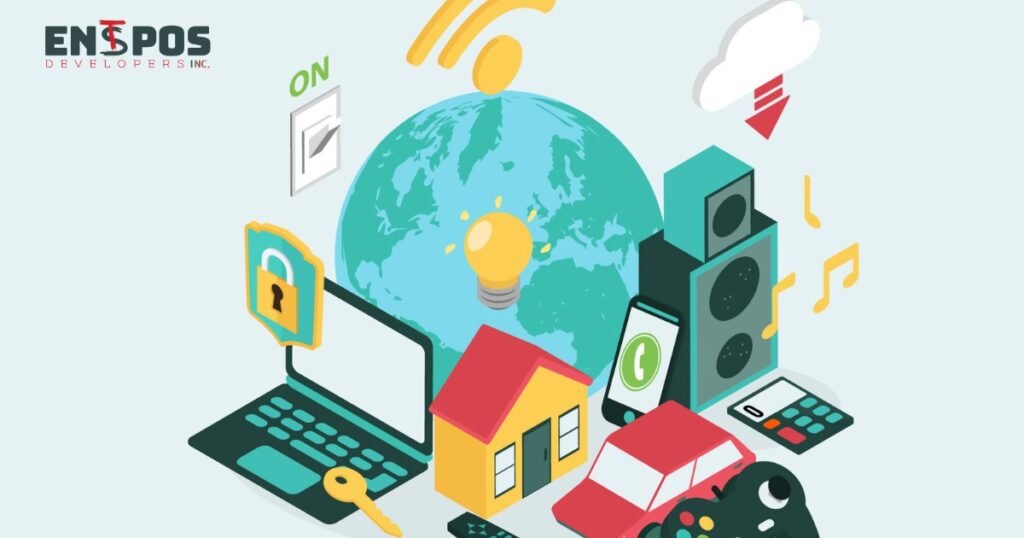
Shameer 9:54 am November 10, 2025 You stumble out of bed, bleary-eyed. Your coffee machine has already started brewing. Your thermostat warmed the bedroom just enough to make getting up painless. Your phone pings: the smart fridge noticed you’re low on milk and added it to your grocery list. Far from science fiction, that’s the Internet of Things — devices quietly helping you through the day, one tiny data point at a time.But IoT isn’t just about convenient mornings and smart kettles. It’s a quiet revolution reshaping healthcare, farming, cities, and industries — and it comes with both enormous opportunity and real risk. What is IOT? IoT = ordinary objects + internet + tiny brains (sensors and software).A sensor sees something (is the soil dry?), a device sends that signal, the cloud or an app decides what to do, and something acts (water the crop, text the farmer). No dramatic sci-fi robot uprising — just lots of small, useful conversations between devices. But How Does It Actually Work? It’s simple when you break it down:Devices (like sensors or wearables) collect data.That data is sent through the internet to a cloud platform.The platform analyzes it and sends back useful information or commands.For example, your smart thermostat senses that you’re away, and the app automatically lowers the temperature to save energy It’s all about communication — not between people, but between things. The Future Is Connected The Internet of Things is not just a tech trend — it’s a shift in how we live. As IoT grows, our homes, workplaces, and cities will continue getting smarter, more responsive, and more connected. Recent Posts
The Rise of Generative AI: How Machines Are Transforming Human Creativity
Shameer 5:30 pm November 3, 2025 Generative AI : The New Face of Creativity and Work“Innovation is taking two things that exist and putting them together in a new way.” – Tom Freston For a long time, creativity was seen as something only humans could do — writing, designing, coding, or composing. But with Generative Artificial Intelligence (AI), that’s no longer true. What is Generative AI? Generative AI uses advanced algorithms to create new content — text, images, code, or audio — by learning patterns from data. Tools like DALL·E 2, GPT-4, and Copilot can now produce outputs nearly indistinguishable from human work. Transforming the Way We Work Beyond art and design, generative AI supports everyday tasks:IT and customer support through intelligent chatbots.Daily needs like cooking recipes or health tips.Content creation across marketing, writing, and design.A Goldman Sachs (2023) report predicts that AI could boost global GDP by 7% and impact up to 300 million knowledge jobs — signaling both opportunity and disruption. Role in Information Systems In Business & Information Systems Engineering (BISE), generative AI is reshaping how we manage data, automate processes, and make decisions. Researchers emphasize the need to integrate these systems responsibly — balancing innovation with ethics and sustainability. Conclusion Generative AI marks a turning point in human–machine collaboration. When used responsibly, it can amplify creativity, boost productivity, and shape a smarter, more innovative future. Recent Posts