
From Idea to Deployment: Complete Software Development Lifecycle Explained Simply
Businesses often think that software is about writing code.. The hardest part is actually turning a vague idea into a reliable product that solves a real business problem. That is why a structured software development process is so important. It gives teams a path from concept to launch and helps reduce confusion and expensive mistakes.
Software projects rarely fail because of one issue. Often they struggle because the process was unclear from the start. A business may want an app or a customer portal. Without a structured approach the team can easily build the wrong thing or launch too late. A organized development lifecycle helps everyone stay aligned and focused on outcomes not just features.
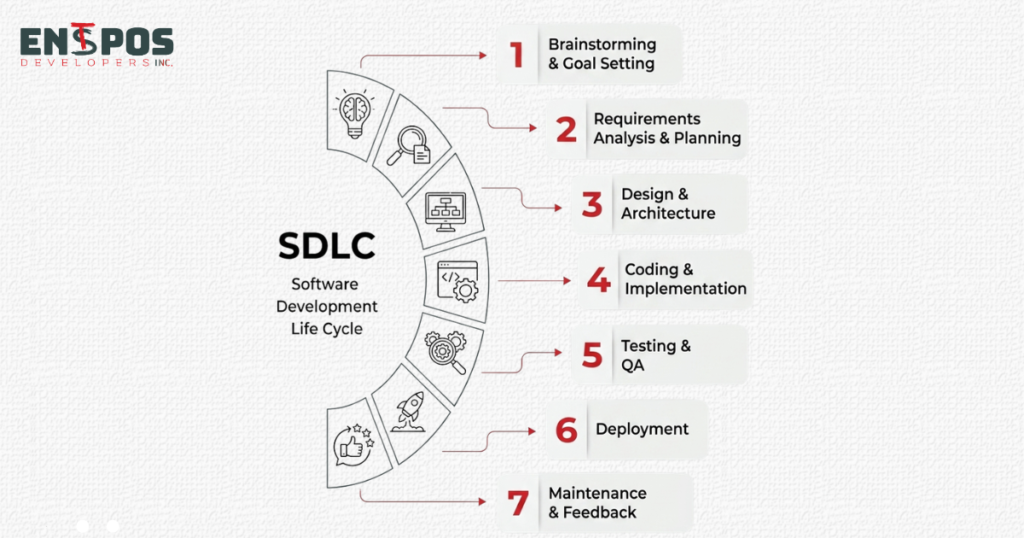
Idea and Requirement Gathering
Every successful project starts with a problem.. Many businesses begin with an idea that sounds good but is still too broad to build effectively. For example saying “we need a customer app” is not enough. A better question is: what should the app help customers do that they cannot do easily today? Unclear ideas often lead to failed projects because the team spends time building features nobody truly needs.
To avoid this it is essential to gather requirements. This means asking questions identifying users defining business goals and documenting must-have features before any work begins. The quality of the product is usually limited by the quality of the first conversation. If the requirements are vague the results will be vague too.
Planning and Analysis
Once the idea is clear the next step is planning. This is where the team decides what is realistic how long it may take and what it will cost. For business owners this phase is especially important because it turns ambition into a roadmap. Common mistakes happen when companies skip analysis and rush into development.
A simple example is a business wanting a sales system connected to inventory, payments and reporting. On paper it sounds straightforward.. Each integration can add time, cost and complexity. Planning helps teams break the project into phases so the business can launch in a controlled way of waiting months for one massive release.
Design Phase
Design is not about making software look attractive. It is about making it easy to use, easy to understand and easy to trust. Good design focuses on how the software feels to a user and how it is structured behind the scenes. Poor design creates friction. Can lead to lower adoption and weaker results from the software investment.
Imagine an ordering platform with a cluttered checkout process. Even if the product works technically customers may leave before completing a purchase simply because the experience feels frustrating. On the hand a clean and intuitive design can improve conversions reduce training time and increase satisfaction.
Development Phase
This is the stage most people think of first: coding.. Development is not just one long stretch of programming. It is a process where developers build features in parts, test ideas as they go and refine the product through regular feedback. Challenges are normal here. The best development teams communicate clearly ask questions and build with the real use case in mind.
Testing and Quality Assurance
Testing is what protects a business from mistakes after launch. It checks whether the software works as expected and whether users can complete tasks smoothly. Many companies underestimate this phase because they assume bugs are minor.. Even small issues can damage revenue, trust or internal productivity.
For example a bug in an e-commerce checkout process could cause customers to abandon purchases. A reporting error in software could lead management to make decisions based on the wrong numbers. Testing should cover functionality, user experience, performance and security. The goal is not perfection. Confidence.
Deployment
Deployment is the moment software becomes available to users. It may be launched at once or released in stages depending on the product and business risk. While launch day is exciting it is also where preparation matters most. Even a built product can face issues if deployment is rushed or poorly coordinated.
Common deployment problems include server overload, setup errors and confusion among users. That is why many teams prepare launch checklists rollback plans and support arrangements before release. Deployment is not a technical handoff; it is a business event. The smoother the launch the faster the software can start delivering value.
Maintenance and Updates
Many business owners think the project ends once the software goes live.. Launch is only the beginning. Software needs maintenance, updates and improvements to stay secure, useful and competitive. Over time businesses may need bug fixes, performance improvements and changes based on user feedback.
Costs do not disappear after launch; they simply shift from build costs to support and improvement costs. A good example is a customer-facing platform that launches successfully but later needs optimization or new reporting features. Without maintenance the product slowly becomes outdated and less effective. With updates it stays aligned with business goals and user expectations.
A structured software development lifecycle saves time cost and effort because it reduces guesswork at every stage. It helps businesses move from an idea to a product, with clearer expectations, better quality and fewer costly surprises. For -technical business owners the key lesson is simple: software success depends on process as much as it depends on code. Choosing the development approach is not just a technical decision; it is a business decision. The right process can turn an idea into a digital asset that supports efficiency, customer satisfaction and long-term growth.