
 by
by 
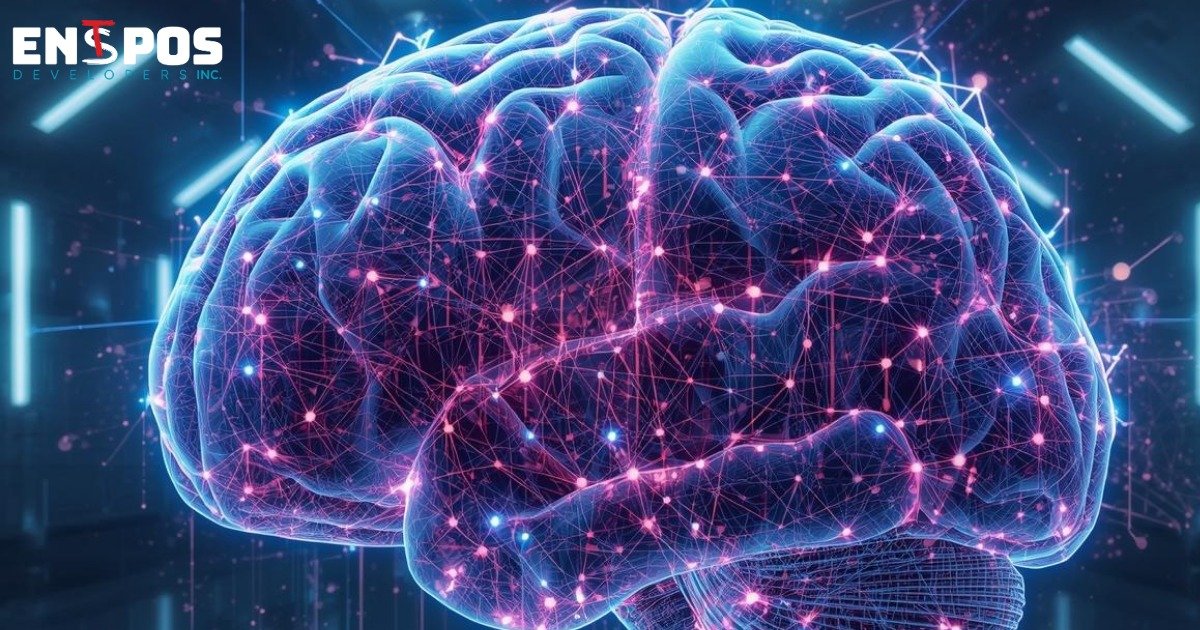
Brain–Computer Interfaces (BCI): Connecting the Human Brain with Machines
- Shameer
- 10:23 am
- January 23, 2026
Brain–Computer Interfaces (BCI): Connecting the Human Brain with Machines
Introduction
Imagine controlling a computer cursor, typing a message, or moving a robotic arm using nothing but your thoughts. This isn’t science fiction—it’s the reality of brain–computer interfaces (BCI), one of the most transformative technologies at the intersection of neuroscience, artificial intelligence, and human–machine interaction.
BCI technology matters now more than ever. As our world becomes increasingly digital, the ability to create seamless connections between the human brain and machines opens unprecedented possibilities. For healthcare, BCIs offer hope to patients with paralysis and neurological conditions. For AI development, they provide direct pathways to understand human cognition. For human augmentation, they represent the next frontier in how we interact with technology and enhance our capabilities.
The global BCI market is experiencing rapid growth, driven by advances in machine learning, miniaturized sensors, and a deeper understanding of neural signals. From medical rehabilitation centers to gaming studios, from military research labs to consumer tech companies, organizations worldwide are exploring how BCIs can revolutionize the way humans and machines collaborate.
What is a Brain–Computer Interface (BCI)?
A brain–computer interface is a direct communication pathway between the brain’s electrical activity and an external device, typically a computer or robotic system. Unlike traditional interfaces that require physical movement—typing on a keyboard, clicking a mouse, or speaking commands—BCIs bypass conventional neuromuscular pathways entirely.
The basic working principle follows a straightforward process: brain signals are captured through sensors, these signals are processed and translated by algorithms, and finally, they’re converted into commands that control external devices. Think of it as a translator that converts the language of neurons into the language of machines.
When you think about moving your hand, specific patterns of electrical activity occur in your brain’s motor cortex. A BCI system detects these patterns, interprets your intent, and can trigger a corresponding action—whether that’s moving a cursor on a screen, controlling a wheelchair, or operating a prosthetic limb.
BCI Architecture Overview
Understanding how BCIs work requires examining their four main components:
Brain Signal Acquisition
The first step involves capturing electrical signals from the brain. This can be done through various methods:
Non-invasive techniques like electroencephalography (EEG) use sensors placed on the scalp to detect electrical activity. EEG is safe and accessible but captures weaker signals with lower spatial resolution.
Invasive methods involve surgically implanted electrodes that sit directly on or within brain tissue. These provide much clearer, more detailed signals but carry surgical risks and require medical procedures.
Signal Processing and Feature Extraction
Raw brain signals are noisy and complex. Advanced signal processing algorithms filter out interference, identify relevant patterns, and extract meaningful features. This step removes artifacts caused by eye movements, muscle activity, or external electrical noise.
Machine Learning and AI Interpretation
Modern BCI systems rely heavily on artificial intelligence to decode brain signals. Machine learning models are trained to recognize specific neural patterns associated with particular intentions or mental states. Deep learning algorithms can identify subtle patterns that improve accuracy over time, adapting to individual users’ unique brain signatures.
Output Devices and Applications
The final component translates interpreted signals into real-world actions. Output devices include computer interfaces, prosthetic limbs, wheelchairs, communication systems, and even smart home controls. The sophistication of these outputs continues to advance as BCI technology matures.
Types of Brain–Computer Interfaces
BCIs are categorized based on how signals are acquired from the brain:
Invasive BCIs
Invasive BCIs require neurosurgery to place electrodes directly on the brain’s surface or within brain tissue. These systems offer the highest signal quality and precision.
Advantages: Superior signal resolution, precise control, ability to detect complex neural patterns, stable long-term performance.
Limitations: Surgical risks, potential for infection or immune response, high cost, ethical concerns about brain modification.
Real-world example: The Utah Array, used in research studies, has enabled paralyzed individuals to control robotic arms with remarkable dexterity. Patients have successfully performed complex tasks like drinking from a cup or playing simple games.
Semi-Invasive BCIs
These systems position electrodes inside the skull but outside the brain tissue itself, sitting on the surface of the brain beneath the skull.
Advantages: Better signal quality than non-invasive methods, lower risk than fully invasive approaches, reduced tissue damage.
Limitations: Still requires surgery, may experience signal degradation over time, limited commercial availability.
Real-world example: Electrocorticography (ECoG) systems are sometimes used during epilepsy treatment to map brain function before surgery.
Non-Invasive BCIs
Non-invasive BCIs use external sensors, most commonly EEG caps or headbands, to detect brain activity from outside the skull.
Advantages: No surgery required, safe and reversible, lower cost, easier to deploy at scale, suitable for consumer applications.
Limitations: Weaker signals, lower spatial resolution, susceptible to noise and artifacts, generally limited to simpler commands.
Real-world example: Consumer EEG headsets like those used in meditation apps or basic gaming controls demonstrate how non-invasive BCIs can enter everyday life.
Key Characteristics of BCI Systems
Several defining characteristics set BCI technology apart:
Real-time brain signal processing is essential for BCIs to function effectively. The system must detect, interpret, and respond to brain signals with minimal delay—typically within milliseconds—to create a natural user experience.
Direct human–machine interaction occurs without any physical movement or sensory pathway. This represents a fundamentally different mode of communication compared to any previous technology in human history.
Dependence on AI and machine learning means BCIs improve through use. As systems gather more data, algorithms become better at interpreting individual users’ unique neural patterns, leading to increased accuracy and responsiveness.
Ethical and privacy considerations are paramount. BCIs access our most private domain—our thoughts. Questions about data ownership, consent, mental privacy, and the potential for misuse require careful ethical frameworks and robust regulatory oversight.
Advantages
Medical rehabilitation and restoration: BCIs offer transformative potential for individuals with spinal cord injuries, ALS, locked-in syndrome, and other conditions that impair movement or communication. Patients who have lost motor function can regain independence through BCI-controlled devices.
Assistive technologies: Beyond medical applications, BCIs can enhance accessibility for people with disabilities, enabling more natural control of computers, smartphones, and environmental controls.
Enhanced human–computer interaction: For everyone, BCIs promise more intuitive, efficient ways to interact with technology. Imagine instantly searching for information, controlling smart home devices, or navigating virtual environments purely through thought.
Disadvantages
High cost: Both development and implementation of BCI systems remain expensive. Invasive BCIs require specialized surgical teams and equipment, while even consumer-grade non-invasive devices represent significant investments for most users.
Ethical and privacy risks: The ability to read neural signals raises profound questions about cognitive liberty, mental privacy, and the potential for unauthorized access to our thoughts. What happens if BCI data is hacked or used without consent?
Technical limitations and accuracy challenges: Current BCIs still struggle with consistency and accuracy. Non-invasive systems have limited bandwidth and can only detect relatively simple commands. Even advanced invasive systems may misinterpret intentions or experience performance degradation over time.
Real-World Applications of BCI
Healthcare and Medical Rehabilitation
The most mature BCI applications exist in healthcare. Researchers have demonstrated systems that allow paralyzed patients to control robotic limbs, type messages using brain signals, and even regain some sensation through bidirectional neural interfaces. Neurorehabilitation programs use BCIs to help stroke patients rewire their brains and recover lost motor functions.
Gaming and Entertainment
The gaming industry has embraced non-invasive BCIs for novel gameplay experiences. Players can control game elements through concentration, relaxation, or specific mental states. While still relatively basic, these applications demonstrate consumer interest in neural interfaces.
Military and Defense
Defense agencies worldwide research BCIs for applications ranging from enhanced situational awareness to direct control of unmanned vehicles. Pilots might one day control multiple drones simultaneously through thought, while soldiers could communicate silently in the field.
Research and Neuroscience
BCIs serve as powerful research tools, helping neuroscientists understand how the brain encodes information, makes decisions, and controls movement. The technology creates feedback loops where BCI development advances neuroscience, and neuroscientific discoveries improve BCI capabilities.
Smart Devices and Accessibility Tools
Emerging applications include BCI-controlled smart homes, where users adjust lighting, temperature, or entertainment systems through thought. For individuals with severe disabilities, this represents unprecedented autonomy and quality of life improvements.
BCIs are already successfully deployed in several domains. Medical centers use them for communication with locked-in patients who can no longer speak or move. Research institutions employ BCIs to study cognitive processes and test neurological interventions. Niche gaming and wellness applications provide early consumer exposure to the technology.
BCIs offer clear advantages in scenarios where traditional interfaces fail: when users lack motor control, when hands-free operation is essential, when speed of thought could outpace physical action, or when direct neural feedback could enhance learning and rehabilitation.
However, several limitations prevent mass adoption. The technology remains expensive and complex. Accuracy and reliability need improvement. Social acceptance of neural interfaces—especially invasive ones—requires time and trust-building. Regulatory frameworks are still evolving, creating uncertainty for commercial deployment.
Modern Trends & Future of BCI
Integration with AI and Deep Learning
The convergence of BCIs and advanced AI represents the most significant current trend. Deep learning models can now decode increasingly complex neural patterns, enabling more sophisticated control and even predicting user intentions before conscious thought fully forms.
Neuralink and Industry Initiatives
Companies like Neuralink, Synchron, Paradromics, and Blackrock Neurotech are pushing the boundaries of invasive BCI technology. Neuralink’s high-bandwidth neural interface aims to create thousands of simultaneous recording channels, potentially enabling unprecedented levels of brain–machine communication. Recent human trials mark critical milestones toward clinical and eventual commercial availability.
BCIs in Web3, Metaverse, and Extended Reality
The future digital landscape may integrate BCIs deeply into immersive experiences. Imagine navigating virtual worlds through thought, experiencing sensory feedback directly to your brain, or communicating with others through neural signals in the metaverse. While speculative, these applications drive significant research and investment.
Ethical Frameworks and Regulations
As BCI technology advances, regulatory bodies worldwide are developing frameworks to address safety, efficacy, privacy, and ethical concerns. Questions about cognitive liberty, neural data ownership, enhancement equity, and the definition of human identity in an age of brain augmentation require thoughtful policy responses.
Conclusion
Brain–computer interfaces represent one of the most profound technological developments of our era. By creating direct pathways between human cognition and machines, BCIs are reshaping medicine, accessibility, research, and human–machine interaction.
The technology has already demonstrated remarkable capabilities—enabling paralyzed individuals to move robotic limbs, helping locked-in patients communicate, and opening new frontiers in neuroscience research. Yet we stand only at the beginning of the BCI revolution. As AI algorithms become more sophisticated, hardware becomes more miniaturized, and our understanding of the brain deepens, BCIs will become more powerful, accessible, and integrated into daily life.
The challenges ahead are significant: technical limitations must be overcome, costs reduced, ethical frameworks established, and public trust earned. The questions BCIs raise about privacy, identity, equity, and what it means to be human demand careful consideration from technologists, ethicists, policymakers, and society as a whole.
For technology professionals, healthcare providers, researchers, and business leaders, now is the time to engage with BCI technology—understanding its potential, acknowledging its limitations, and contributing to its responsible development. The future of human–machine interaction is being written in the language of neurons, and brain–computer interfaces will undoubtedly play a central role in reshaping how we work, heal, communicate, and experience the world around us.
Format this without lines and generate keywords separated by commas