
AI Phones & Foldables: Nubia AI Agent Smartphone and Samsung Galaxy Foldables 2026
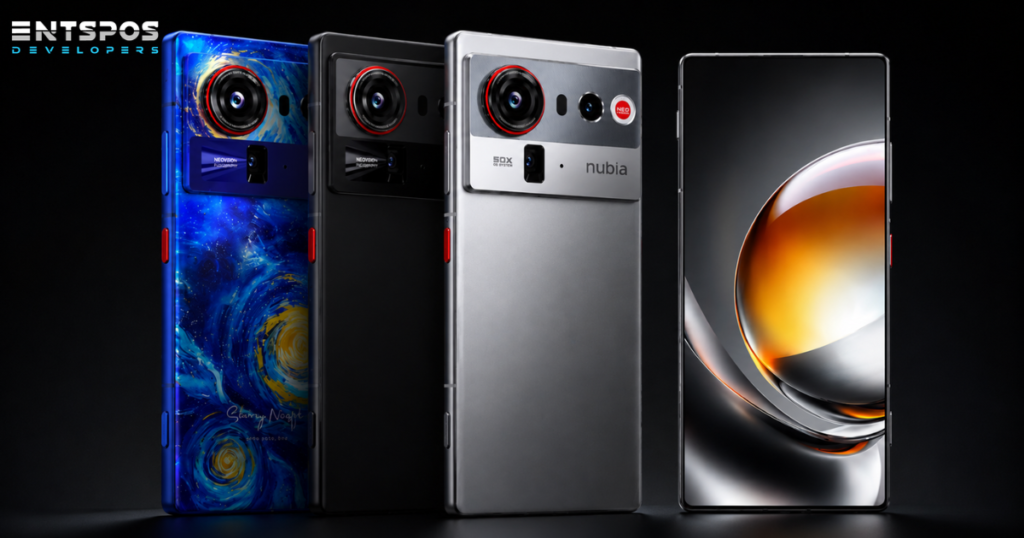
Nazima 3:11 pm July 11, 2026 AI Phones and Foldable Hardware Are Entering a New Phase The smartphone industry is changing fast. It’s not just about making improvements anymore. A company called Nubia is getting ready to show off a kind of phone. They call it the worlds AI agent smartphone. Meanwhile Samsung is having an event on July 22. People are excited to see their new Galaxy Z Fold 8 Ultra and foldable phones. A New Kind of Smartphone From Nubia Nubia will show off their AI agent smartphone at WAIC 2026 in Shanghai. The event is from July 17 to July 20. They say this phone can do tasks on its own. It can work across apps. It’s not about answering commands. This is different from phones. Most phones use AI to help with things.. Nubia wants AI to be the main way the phone works. If it really works this could be a change in how we use phones. Why Nubia’s Claim Stands Out What makes Nubias announcement special is how they’re talking about autonomy. They want the phone to understand what you want. It should be able to navigate apps and do things on its own with help from you. This moves AI in phones to a practical and ambitious level. Of just being a digital assistant the phone acts like an agent. It can do things for you. This is exciting for people who create content write tech articles and like trying things. Samsung’s Foldable Strategy Takes Shape Samsungs event on July 22 will focus on phones and wearables. People are already talking about what might be shown. One big rumor is that the Galaxy Z Fold 8 Ultra could have a display that gets bright. 3,600 Nits. That would be an improvement. There are also rumors that Samsung might add charging. If thats true it would make their foldable phones better. The rumored Ultra model suggests Samsung might be making their foldable phones premium. What This Means For Users These two stories are about the trend in the smartphone industry. Nubia is focusing on making phones smarter and more automatic. Samsung is working on making their phones better and more useful. One is trying to change what a phone can do. The other is trying to make a foldable phone work better in daily life. For people who buy phones the important question is no longer about which phone has a better camera or faster processor. It’s, about how a phone can help you through automation, good display, battery life and convenience. That’s why these announcements are getting a lot of attention. The Bigger Industry Signal These developments show that the smartphone market is getting more competitive and experimental. AI is becoming a feature. Foldable phones are getting more premium. The next few weeks will be important. We’ll see if Nubias AI phone is a breakthrough or just a concept. We’ll also see if Samsungs new phones match the rumors. Either way both companies are shaping the future of innovation. Recent Posts
Brain–Computer Interfaces (BCI): Connecting the Human Brain with Machines
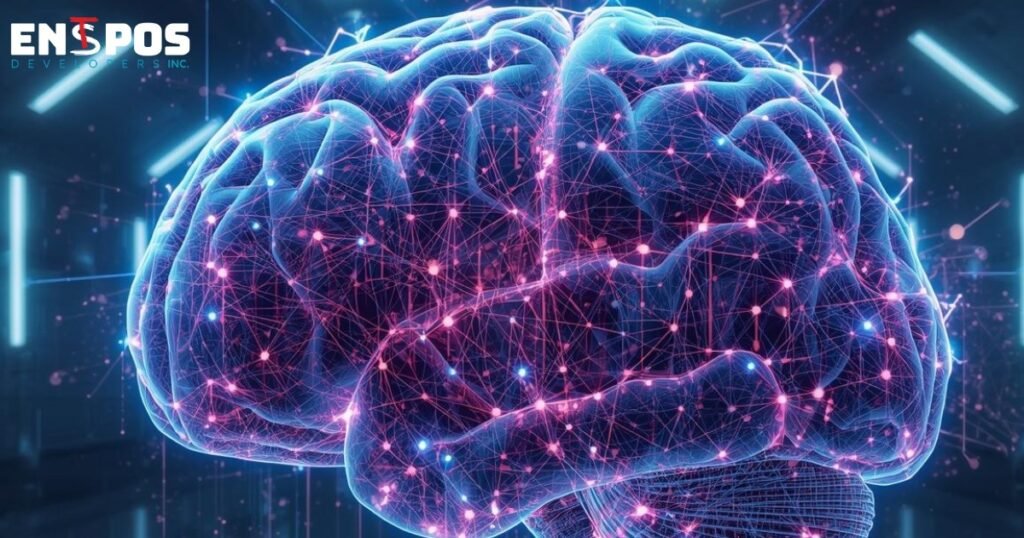
Shameer 10:23 am January 23, 2026 Brain–Computer Interfaces (BCI): Connecting the Human Brain with Machines Introduction Imagine controlling a computer cursor, typing a message, or moving a robotic arm using nothing but your thoughts. This isn’t science fiction—it’s the reality of brain–computer interfaces (BCI), one of the most transformative technologies at the intersection of neuroscience, artificial intelligence, and human–machine interaction. BCI technology matters now more than ever. As our world becomes increasingly digital, the ability to create seamless connections between the human brain and machines opens unprecedented possibilities. For healthcare, BCIs offer hope to patients with paralysis and neurological conditions. For AI development, they provide direct pathways to understand human cognition. For human augmentation, they represent the next frontier in how we interact with technology and enhance our capabilities. The global BCI market is experiencing rapid growth, driven by advances in machine learning, miniaturized sensors, and a deeper understanding of neural signals. From medical rehabilitation centers to gaming studios, from military research labs to consumer tech companies, organizations worldwide are exploring how BCIs can revolutionize the way humans and machines collaborate. What is a Brain–Computer Interface (BCI)? A brain–computer interface is a direct communication pathway between the brain’s electrical activity and an external device, typically a computer or robotic system. Unlike traditional interfaces that require physical movement—typing on a keyboard, clicking a mouse, or speaking commands—BCIs bypass conventional neuromuscular pathways entirely. The basic working principle follows a straightforward process: brain signals are captured through sensors, these signals are processed and translated by algorithms, and finally, they’re converted into commands that control external devices. Think of it as a translator that converts the language of neurons into the language of machines. When you think about moving your hand, specific patterns of electrical activity occur in your brain’s motor cortex. A BCI system detects these patterns, interprets your intent, and can trigger a corresponding action—whether that’s moving a cursor on a screen, controlling a wheelchair, or operating a prosthetic limb. BCI Architecture Overview Understanding how BCIs work requires examining their four main components: Brain Signal Acquisition The first step involves capturing electrical signals from the brain. This can be done through various methods: Non-invasive techniques like electroencephalography (EEG) use sensors placed on the scalp to detect electrical activity. EEG is safe and accessible but captures weaker signals with lower spatial resolution. Invasive methods involve surgically implanted electrodes that sit directly on or within brain tissue. These provide much clearer, more detailed signals but carry surgical risks and require medical procedures. Signal Processing and Feature Extraction Raw brain signals are noisy and complex. Advanced signal processing algorithms filter out interference, identify relevant patterns, and extract meaningful features. This step removes artifacts caused by eye movements, muscle activity, or external electrical noise. Machine Learning and AI Interpretation Modern BCI systems rely heavily on artificial intelligence to decode brain signals. Machine learning models are trained to recognize specific neural patterns associated with particular intentions or mental states. Deep learning algorithms can identify subtle patterns that improve accuracy over time, adapting to individual users’ unique brain signatures. Output Devices and Applications The final component translates interpreted signals into real-world actions. Output devices include computer interfaces, prosthetic limbs, wheelchairs, communication systems, and even smart home controls. The sophistication of these outputs continues to advance as BCI technology matures. Types of Brain–Computer Interfaces BCIs are categorized based on how signals are acquired from the brain: Invasive BCIs Invasive BCIs require neurosurgery to place electrodes directly on the brain’s surface or within brain tissue. These systems offer the highest signal quality and precision. Advantages: Superior signal resolution, precise control, ability to detect complex neural patterns, stable long-term performance. Limitations: Surgical risks, potential for infection or immune response, high cost, ethical concerns about brain modification. Real-world example: The Utah Array, used in research studies, has enabled paralyzed individuals to control robotic arms with remarkable dexterity. Patients have successfully performed complex tasks like drinking from a cup or playing simple games. Semi-Invasive BCIs These systems position electrodes inside the skull but outside the brain tissue itself, sitting on the surface of the brain beneath the skull. Advantages: Better signal quality than non-invasive methods, lower risk than fully invasive approaches, reduced tissue damage. Limitations: Still requires surgery, may experience signal degradation over time, limited commercial availability. Real-world example: Electrocorticography (ECoG) systems are sometimes used during epilepsy treatment to map brain function before surgery. Non-Invasive BCIs Non-invasive BCIs use external sensors, most commonly EEG caps or headbands, to detect brain activity from outside the skull. Advantages: No surgery required, safe and reversible, lower cost, easier to deploy at scale, suitable for consumer applications. Limitations: Weaker signals, lower spatial resolution, susceptible to noise and artifacts, generally limited to simpler commands. Real-world example: Consumer EEG headsets like those used in meditation apps or basic gaming controls demonstrate how non-invasive BCIs can enter everyday life. Key Characteristics of BCI Systems Several defining characteristics set BCI technology apart: Real-time brain signal processing is essential for BCIs to function effectively. The system must detect, interpret, and respond to brain signals with minimal delay—typically within milliseconds—to create a natural user experience. Direct human–machine interaction occurs without any physical movement or sensory pathway. This represents a fundamentally different mode of communication compared to any previous technology in human history. Dependence on AI and machine learning means BCIs improve through use. As systems gather more data, algorithms become better at interpreting individual users’ unique neural patterns, leading to increased accuracy and responsiveness. Ethical and privacy considerations are paramount. BCIs access our most private domain—our thoughts. Questions about data ownership, consent, mental privacy, and the potential for misuse require careful ethical frameworks and robust regulatory oversight. Advantages Medical rehabilitation and restoration: BCIs offer transformative potential for individuals
The Internet of Things: When Everyday Things Start Thinking (A Little) — and Why It Matters

Shameer 9:54 am November 10, 2025 You stumble out of bed, bleary-eyed. Your coffee machine has already started brewing. Your thermostat warmed the bedroom just enough to make getting up painless. Your phone pings: the smart fridge noticed you’re low on milk and added it to your grocery list. Far from science fiction, that’s the Internet of Things — devices quietly helping you through the day, one tiny data point at a time.But IoT isn’t just about convenient mornings and smart kettles. It’s a quiet revolution reshaping healthcare, farming, cities, and industries — and it comes with both enormous opportunity and real risk. What is IOT? IoT = ordinary objects + internet + tiny brains (sensors and software).A sensor sees something (is the soil dry?), a device sends that signal, the cloud or an app decides what to do, and something acts (water the crop, text the farmer). No dramatic sci-fi robot uprising — just lots of small, useful conversations between devices. But How Does It Actually Work? It’s simple when you break it down:Devices (like sensors or wearables) collect data.That data is sent through the internet to a cloud platform.The platform analyzes it and sends back useful information or commands.For example, your smart thermostat senses that you’re away, and the app automatically lowers the temperature to save energy It’s all about communication — not between people, but between things. The Future Is Connected The Internet of Things is not just a tech trend — it’s a shift in how we live. As IoT grows, our homes, workplaces, and cities will continue getting smarter, more responsive, and more connected. Recent Posts