
From Chatbots to Smart Toys: AI’s Rapid Growth in China
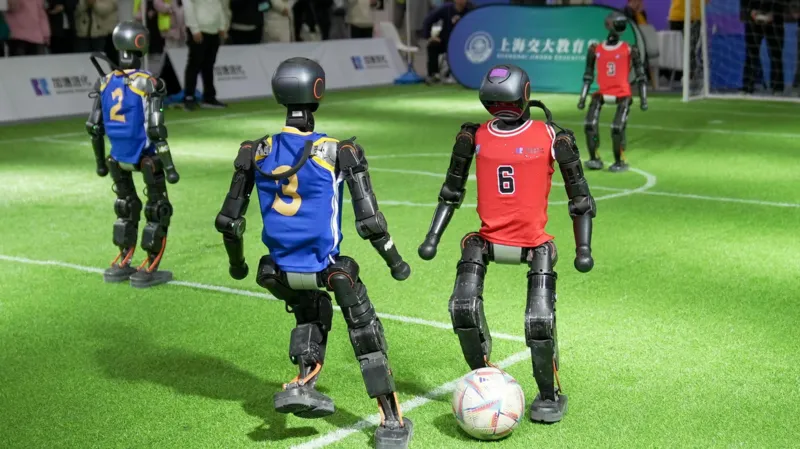
Shameer 11:49 am March 22, 2025 Eight-year-old Timmy sat hunched over his chessboard, deep in concentration, as he faced off against his robotic opponent powered by artificial intelligence. But this wasn’t a high-tech lab or an AI exhibition — this robot had become part of his everyday life, residing on the coffee table of his Beijing apartment. The first night the robot arrived, Timmy gave it a warm hug before heading to bed. He hasn’t named it yet, but he already sees it as more than just a machine. “It’s like a little teacher or a little friend,” he said, as he proudly showed his mother his next move. Moments later, the robot blinked its digital eyes and chimed: “Congrats! You win.” As it began resetting the board for a new game, it continued in Mandarin: “I’ve seen your ability. I will do better next time.” China’s AI Ambitions China is embracing artificial intelligence as it pushes to become a global tech superpower by 2030. The breakthrough Chinese chatbot, DeepSeek, which grabbed headlines in January, was just a glimpse of this ambition. Investment is flooding into AI enterprises, driving fierce domestic competition. Currently, more than 4,500 firms are developing and selling AI technologies. Schools in Beijing plan to introduce AI courses for primary and secondary students later this year, and universities are expanding spots for students eager to study the field. “This is an inevitable trend. We will co-exist with AI,” said Timmy’s mother, Yan Xue. “Children should become familiar with it as early as possible. We shouldn’t reject it.” Yan Xue was convinced the robot’s $800 price tag was a worthy investment because it not only plays chess but also teaches Go, another complex strategy game. The robot’s creators are already planning to add a language tutoring feature. China’s Race for Tech Dominance Perhaps this aligns with what the Chinese Communist Party envisioned back in 2017 when it declared AI as “the main driving force” behind the nation’s progress. Now, President Xi Jinping is heavily investing in AI as China’s economy contends with US-imposed tariffs. Beijing has outlined a plan to pour 10 trillion yuan ($1.4 trillion) into tech advancements over the next 15 years, competing with Washington for supremacy in AI and other emerging technologies. The government’s latest political assembly has given AI funding another boost, following the creation of a 60 billion yuan AI investment fund in January, just days after the US imposed tighter export controls on advanced chips and added more Chinese firms to its trade blacklist. However, DeepSeek has demonstrated that Chinese companies can navigate these obstacles, stunning Silicon Valley and industry experts who didn’t expect China to catch up so quickly. Engineering Success and Global Surprise Tommy Tang, who has spent the past six months promoting his firm’s chess-playing robot, is no stranger to international surprise. Timmy’s robot hails from his company, SenseRobot, which gained fame in 2022 when its advanced model defeated chess Grand Masters. “Parents always ask the price first, then they ask where I’m from. When I say China, there are always a couple of seconds of silence,” Tang said with a smile. SenseRobot has now sold over 100,000 units and secured a deal with the US retail giant Costco. China’s secret weapon may be its young talent. In 2020, over 3.5 million Chinese students graduated with degrees in science, technology, engineering, and mathematics (STEM) — more than any other country. As Xi told party leaders recently, “Building strength in education, science, and talent is a shared responsibility.” Abbott Lyu, vice president of AI toy-maker Whalesbot, echoes this sentiment. “We’ve accumulated talent and technology for decades,” Lyu said, as a child controlled a roaring dinosaur toy through code assembled on a smartphone. Whalesbot’s products aim to teach coding to children as young as three, with toys priced as low as $40. China’s AI industry isn’t slowing down. Companies are driven by a spirit of innovation and cost-efficiency. Tang revealed that SenseRobot initially faced challenges with the cost of its robotic arm, which would have pushed the price to $40,000. By integrating AI into the manufacturing process, they reduced it to just $1,000. “This is innovation,” he said. “Artificial engineering is now embedded into our production.” As China applies AI on a massive scale, its ambitions extend beyond consumer products. The government envisions AI-powered humanoid robots assisting its rapidly aging population and enhancing factory productivity. President Xi has set “technological self-reliance” as a cornerstone of China’s future, preparing the nation for a marathon to lead the AI revolution. “DeepSeek means the world knows we are here,” said 26-year-old engineer Yu Jingji at a recent AI fair in Shanghai, where robots played football in front of excited crowds. “The future belongs to AI, and China is ready.” China’s AI journey is just beginning, but with its rapidly growing talent pool, bold investments, and culture of relentless innovation, the race is heating up. The dragons are rising, and the world is watching. Recent Posts
AI brings a new dimension to the complexities of transforming organizations.
entspos 8:12 pm September 1, 2024 Change is universally challenging, and this difficulty escalates in large organizations. Over the past 15 years, we’ve witnessed major companies struggle repeatedly as they attempted to adopt mobile technology, Big Data, cloud computing, and digital transformation. Today, AI is the force compelling companies and their employees to adapt, whether they want to or not. One significant hurdle is technical debt—the idea that an organization’s technology infrastructure must evolve to leverage new technologies fully, rather than relying on systems built for a previous era. Transforming something so integral to business operations is risky; it’s no small feat to change without disrupting what already works. Many managers are understandably hesitant to embrace such substantial change due to the high risks and potential rewards involved. Another challenge is institutional inertia. Changing established workflows is tough. Years ago, as a technical writer, I helped implement a computer system in a small-town register of deeds office, where deeds were manually filed in cabinets—a cumbersome process that could take weeks. The new computer system was a clear improvement, but the front-desk workers were resistant. Their identity and sense of authority were tied to the physical act of stamping documents, a ritual they had performed with pride for decades. To gain their buy-in, the system architect ultimately allowed them to keep their stamps, even though the new system rendered them unnecessary. This leads to the core issue: change management. The toughest part of implementing new technology isn’t purchasing or deploying it—it’s getting people to use it. Sometimes, you have to allow people to keep their “stamps,” or they might undermine even the best-intentioned plans. Considering the scale of change that AI introduces, the challenge becomes even more significant. Those accustomed to holding the “stamps” see their influence waning, and it’s crucial to manage this transition carefully to avoid wasting resources. Ultimately, organizations are made up of people, and people are complex. To truly transform a business with new technology, you need to look beyond the technical aspects and focus on the human element. AI represents a whole new way of working. Technological shifts within organizations are not new—the arrival of PCs in the 1980s and the spread of the internet were transformative. However, AI may surpass these previous waves of change. AI is fundamentally different from past technological advancements. It reduces the cost of expertise, shifting the dynamics of how work is performed. This technology enables computers to make judgment calls and process data similarly to humans, prompting companies to rethink the role of computing within their operations. This shift requires new frameworks and paradigms to address issues like accuracy, data security, and model training. Companies must navigate a complex landscape of vendors and solutions, each promising to add value but often complicating the decision-making process. A major challenge is determining whether generative AI truly enhances productivity. Without clear metrics, it’s difficult to convince skeptical employees of its benefits. Yet, some employees will demand these tools, creating tension as organizations work to integrate AI across varying perspectives. Despite these challenges, some experts argue that embracing AI is essential to staying competitive. The technology is transformative, and failing to adopt it could result in losing market share and becoming obsolete. The real value of AI lies in its ability to fundamentally change how work is done. Like the advent of word processors, which revolutionized the way people managed information, AI holds the potential to unlock new levels of innovation and efficiency. Executive buy-in has always been critical in driving technological change. Unlike previous technologies, AI’s impact is readily apparent to CEOs and board members, which may accelerate its adoption. However, overcoming the human element remains the most significant obstacle. As organizations embrace AI, they must carefully manage the transition, ensuring that employees feel empowered rather than threatened by the changes. The road ahead won’t be easy. Companies vary in their technological readiness and ability to adapt. But AI will challenge organizational flexibility more than any previous technology, and how well companies navigate this shift may determine their future success or failure. Recent Posts
OpenAI in Crisis: Insiders Reveal Alarming Safety Oversights and Internal Turmoil

entspos 10:12 am July 15, 2024 OpenAI, a frontrunner in developing human-level AI, is facing increasing scrutiny over safety concerns, as highlighted by employees in various media outlets. The latest instance, reported by The Washington Post, features an anonymous employee alleging that OpenAI rushed safety tests and celebrated their product prematurely. “They planned the launch after-party before ensuring the product’s safety,” the employee revealed. “We essentially failed in our process.” Safety issues persist at OpenAI, with current and former employees recently signing an open letter demanding better safety and transparency practices. This follows the dissolution of the safety team after cofounder Ilya Sutskever’s departure, and the resignation of key researcher Jan Leike, who criticized the company’s prioritization of flashy products over safety. Safety is a cornerstone of OpenAI’s charter, which pledges to assist other organizations in advancing safety if AGI is achieved elsewhere. OpenAI asserts its commitment to addressing the safety challenges of such a complex system, even keeping its proprietary models private to mitigate risks. Despite these assurances, there are growing concerns that safety has been deprioritized. OpenAI is under intense scrutiny, and public relations efforts alone won’t ensure societal safety. “We’re proud of our track record providing the most capable and safest AI systems and believe in our scientific approach to addressing risk,” OpenAI spokesperson Taya Christianson stated to The Verge. “Rigorous debate is critical given the significance of this technology, and we will continue to engage with governments, civil society, and other communities worldwide in service of our mission.” The stakes are high, with a report commissioned by the US State Department warning of the risks AI poses to national security, likening its impact to that of nuclear weapons. OpenAI’s troubles are further compounded by last year’s boardroom coup that briefly ousted CEO Sam Altman due to communication issues, leading to an inconclusive investigation. While OpenAI spokesperson Lindsey Held claimed the GPT-4o launch was thorough in safety checks, another representative admitted the safety review was condensed to a single week, acknowledging the need for a better approach. Amidst ongoing controversies, OpenAI has tried to mitigate fears with strategic announcements, including a partnership with Los Alamos National Laboratory to explore the safe use of advanced AI models in bioscientific research, and the creation of an internal scale to track progress towards AGI. These safety-focused announcements seem like defensive measures against growing criticism. The real concern is the impact on society if OpenAI continues to overlook strict safety protocols. The public has little influence over the development of privatized AGI, yet they are directly affected by its outcomes. “AI tools can be revolutionary,” FTC chair Lina Khan told Bloomberg in November. However, she expressed concerns that “the critical inputs of these tools are controlled by a relatively small number of companies.” If the criticisms of OpenAI’s safety protocols are valid, it raises serious questions about the organization’s suitability to steward AGI. Allowing a single group in San Francisco to control potentially transformative technology is alarming, and there is an urgent need for greater transparency and safety practices within the company. Recent Posts
Arm offers new designs, software for AI on smartphones
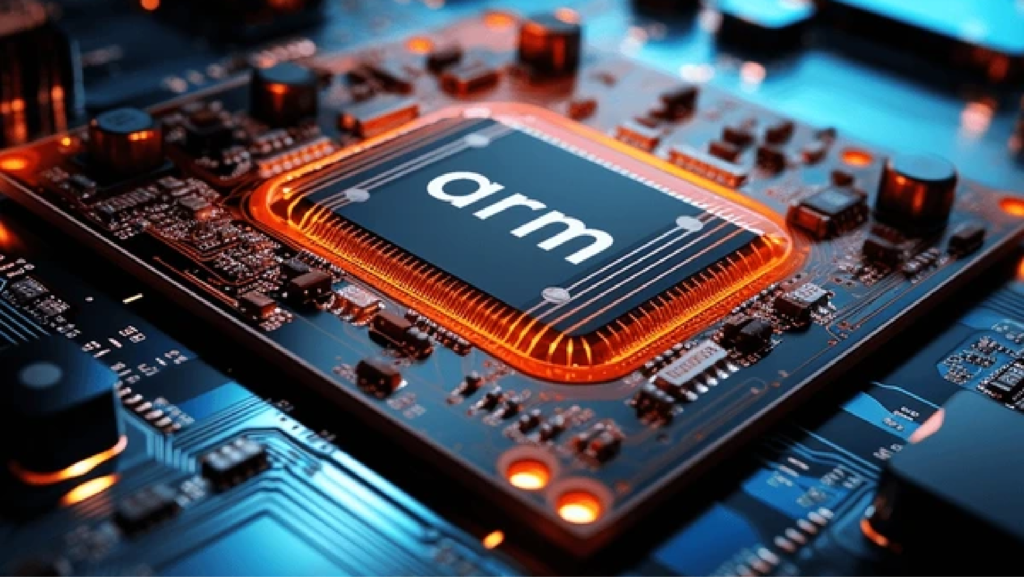
entspos 6:23 am May 30, 2024 On May 29, Arm Holdings (O9Ty.F) announced new chip designs and software tools aimed at enhancing smartphones’ ability to handle artificial intelligence tasks. Additionally, the company introduced changes in how it delivers these blueprints to accelerate their adoption. Arm’s technology, renowned for its energy efficiency, has been pivotal in the smartphone revolution and is increasingly prevalent in PCs and data centers. The smartphone market remains Arm’s largest, where it supplies intellectual property to competitors like Apple (AAPL.O), Qualcomm (QCOM.O), and MediaTek (2454.TW). The new releases include designs for central processing units (CPUs) optimized for AI tasks and new graphics processing units (GPUs). Arm will also offer software tools to help developers run AI applications, such as chatbots, on Arm chips more easily. A significant shift is in the method of delivering these products. Traditionally, Arm provided specifications or abstract designs, leaving chip companies to create physical blueprints. This process involves complex decisions on the arrangement of billions of transistors. For the new products, Arm collaborated with Samsung Electronics Co Ltd (005930.KS) and Taiwan Semiconductor Manufacturing Co (2330.TW) to offer ready-to-manufacture blueprints of physical designs. Chris Bergey, Arm’s senior vice president and general manager of the client line of business, emphasized that Arm is not aiming to compete with its customers but to help them reach the market more quickly. This allows customers to focus on critical components like neural processing units (NPUs) that are essential for optimal AI performance. The importance of NPUs is underscored by Microsoft’s recent AI features, which require such technology. Although Arm does not currently supply NPU technology for phones and PCs, Bergey stated that the company plans to provide more comprehensive designs that chip firms can integrate with their NPUs. “We’re combining a platform where these accelerators can be very tightly coupled,” Bergey explained. Recent Posts
Truecaller partnered with Microsoft’s Azure AI Speech for users of its AI assistant.

entspos 12:48 pm May 24, 2024 Truecaller, known for its app that identifies and blocks spam calls, is introducing a new feature that allows users to create an AI version of their voice to answer calls. This feature is part of Truecaller’s AI Assistant, which users can now personalize by recording their own voice. The AI, developed in partnership with Microsoft’s Azure AI Speech, will learn from the recorded clip to generate an AI version of the user’s voice. “This groundbreaking capability not only adds a touch of familiarity and comfort for the users but also showcases the power of AI in transforming the way we interact with our digital assistants,” said Truecaller Product Director and General Manager Raphael Mimoun in a blog post. The AI Assistant, first introduced in 2022 and available only in select countries, screens incoming calls and informs users of the caller’s reason. Users can then decide whether to answer the call themselves or let the AI Assistant respond. Previously, users could choose from a set of preset voices, but the new feature allows for greater personalization by using the user’s own recorded voice. Azure AI Speech, highlighted during the Build conference, features a personal voice option that lets users record and replicate voices. Microsoft notes that personal voice is currently available on a limited basis for specific applications like voice assistants. Additionally, voices generated by Azure AI Speech’s personal voice automatically include watermarks, and Microsoft has implemented a code of conduct requiring full consent from people being recorded and prohibiting impersonation. The effectiveness of the AI-generated personal voice compared to a traditional voicemail message remains to be seen. Recent Posts