
AI in Modern Education

Shameer 7:58 am December 28, 2025 Artificial intelligence is fundamentally reshaping how students learn and educators teach, moving beyond simple automation to become a genuine partner in the educational process. AI-powered platforms such as ChatGPT, Google’s Gemini, and educational tools like Khan Academy’s Khanmigo provide personalized learning experiences that adapt to individual student needs in real time. These systems can identify knowledge gaps, adjust difficulty levels, and offer targeted practice that traditional one-size-fits-all curricula cannot achieve. For example, when a student struggles with quadratic equations, an AI tutor can detect the specific conceptual issue and deliver customized explanations and guided practice until mastery is reached. This level of personalization, once limited to private tutoring, is now accessible to a broader range of learners through AI-driven technologies. Beyond personalized learning, AI is transforming administrative tasks and assessment methods, allowing educators to focus more on meaningful teaching and student engagement. Activities such as grading, providing feedback, and tracking progress consume significant time, but AI tools can now assist with these tasks efficiently. Writing assistants offer immediate feedback on grammar, structure, and clarity, while platforms like Gradescope streamline grading in technical subjects. Language learning applications such as Duolingo use AI to provide pronunciation feedback and adaptive exercises, making learning more engaging and accessible. However, successful integration requires balance, ensuring that efficiency does not replace the essential human elements of teaching, including mentorship, creativity, and emotional support. Ethical considerations surrounding AI in education are increasingly important as these technologies become more widespread. Issues related to data privacy, algorithmic bias, and over-dependence on AI tools must be addressed thoughtfully. There is a risk that students may rely too heavily on AI instead of developing independent problem-solving skills, or that biased data could reinforce educational inequalities. To counter these challenges, many institutions are introducing AI literacy to help students understand how to use these tools responsibly and effectively. The most effective use of AI in education treats it as a supplement to human intelligence rather than a replacement, fostering a collaborative environment that supports critical thinking, creativity, and ethical awareness in an AI-driven world. Recent Posts
Big Data: Transforming How We Process and Understand Information

Shameer 9:10 am December 16, 2025 OverviewBig data refers to the massive volumes of structured and unstructured information generated every second from countless sources such as social media interactions, financial transactions, sensor networks, mobile devices, and digital communications. What sets big data apart from traditional datasets is not only its volume, but also the speed at which it is produced and processed, and the wide variety of formats it includes, ranging from text and images to video and real-time streaming data. Impact on OrganizationsOrganizations across industries use big data analytics to uncover patterns, trends, and correlations that were previously hidden. These insights enable better decision-making, more accurate predictions, and stronger competitive advantages. As a result, the global big data market has grown rapidly, with businesses using data-driven strategies to understand customer preferences, optimize operations, reduce costs, and discover new revenue opportunities. Technological AdvancementsTo handle the scale and complexity of big data, new technologies have emerged beyond traditional databases. Distributed computing frameworks like Hadoop and Spark, cloud-based storage systems, and AI- and machine-learning-powered analytics tools allow organizations to process enormous datasets efficiently. Tasks that once took weeks or months can now be completed in hours or minutes. These advancements have transformed industries such as healthcare, retail, and urban planning through predictive analytics, personalization, and real-time optimization. Challenges and Future OutlookDespite its benefits, big data introduces challenges related to privacy, security, and governance. Regulations such as GDPR and CCPA require organizations to manage data responsibly. There is also a significant skills gap in data science and analytics, along with risks associated with poor data quality. Even so, big data continues to shape the future, driving innovation in artificial intelligence, personalized services, and evidence-based decision-making. Large Language Models: Transforming How Machines Understand and Generate Human LanguageLarge language models represent one of the most significant breakthroughs in artificial intelligence, fundamentally changing how computers process and generate human language. These sophisticated neural networks, trained on vast amounts of text from books, websites, and numerous other sources, have developed remarkable abilities to understand context, generate coherent text, and perform complex tasks once thought to require human intelligence.At their core, large language models work by predicting the next likely word in a sequence. This simple mechanism enables surprisingly advanced behavior. Through billions of examples, these models learn grammar, syntax, semantics, style, tone, and even reasoning patterns. The “large” refers not only to the extensive datasets but also to architectures containing hundreds of billions of parameters that capture intricate relationships within language.What makes LLMs extraordinary is their versatility. Earlier AI systems required task-specific programming, but LLMs can perform countless functions through natural language prompts. They can draft emails, summarize documents, translate languages, write code, answer specialized questions, and even engage in creative writing. Their general-purpose understanding makes them foundational infrastructure across industries.Practical applications are widespread. Customer service uses them for intelligent chatbots. Healthcare uses them to interpret medical literature and draft documentation. Developers rely on them for code generation and debugging. Educators use them for personalized learning and explanations. Creators use them for brainstorming and content drafting.However, LLMs also present challenges. They sometimes produce inaccurate but confident responses, known as hallucinations. Their training data may contain biased patterns that models can unintentionally replicate. Copyright and privacy concerns persist, and training these large models consumes significant computational resources. As capabilities grow, responsible use and alignment with human values become essential.The field continues evolving rapidly. Techniques like retrieval-augmented generation improve factual reliability by connecting models to external knowledge sources. Fine-tuning personalizes models for specific tasks. Multimodal systems expand capabilities beyond text to images, audio, and video.Looking ahead, large language models will become even more integrated into daily life. As they grow more capable and accessible, they will augment human creativity, productivity, and problem-solving in transformative ways. This technology represents not just a technical breakthrough but a new paradigm for human-machine collaboration, with natural language serving as the interface. Understanding their capabilities, limitations, and implications is increasingly vital in today’s digital world. Recent Posts
Large Language Models: Transforming How Machines Understand and Generate Human Language
Shameer 5:42 pm December 6, 2025 Large Language Models: Transforming How Machines Understand and Generate Human Language Large language models represent one of the most significant breakthroughs in artificial intelligence, fundamentally changing how computers process and generate human language. These sophisticated neural networks, trained on vast amounts of text from books, websites, and numerous other sources, have developed remarkable abilities to understand context, generate coherent text, and perform complex tasks once thought to require human intelligence. At their core, large language models work by predicting the next likely word in a sequence. This simple mechanism enables surprisingly advanced behavior. Through billions of examples, these models learn grammar, syntax, semantics, style, tone, and even reasoning patterns. The “large” refers not only to the extensive datasets but also to architectures containing hundreds of billions of parameters that capture intricate relationships within language. What makes LLMs extraordinary is their versatility. Earlier AI systems required task-specific programming, but LLMs can perform countless functions through natural language prompts. They can draft emails, summarize documents, translate languages, write code, answer specialized questions, and even engage in creative writing. Their general-purpose understanding makes them foundational infrastructure across industries. Practical applications are widespread. Customer service uses them for intelligent chatbots. Healthcare uses them to interpret medical literature and draft documentation. Developers rely on them for code generation and debugging. Educators use them for personalized learning and explanations. Creators use them for brainstorming and content drafting. However, LLMs also present challenges. They sometimes produce inaccurate but confident responses, known as hallucinations. Their training data may contain biased patterns that models can unintentionally replicate. Copyright and privacy concerns persist, and training these large models consumes significant computational resources. As capabilities grow, responsible use and alignment with human values become essential. The field continues evolving rapidly. Techniques like retrieval-augmented generation improve factual reliability by connecting models to external knowledge sources. Fine-tuning personalizes models for specific tasks. Multimodal systems expand capabilities beyond text to images, audio, and video. Looking ahead, large language models will become even more integrated into daily life. As they grow more capable and accessible, they will augment human creativity, productivity, and problem-solving in transformative ways. This technology represents not just a technical breakthrough but a new paradigm for human-machine collaboration, with natural language serving as the interface. Understanding their capabilities, limitations, and implications is increasingly vital in today’s digital world. Recent Posts
IT Ethics and Law: Navigating the Digital Landscape with Integrity
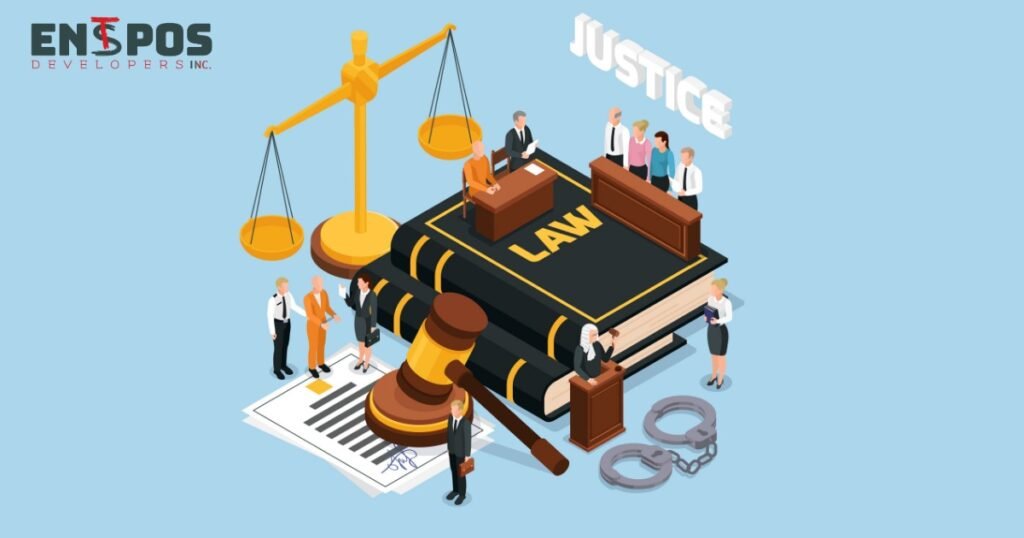
Shameer 5:39 pm December 6, 2025 IT Ethics and Law: Navigating the Digital Landscape with Integrity The rapid evolution of information technology has fundamentally transformed how we work, communicate, and conduct business. Yet with these advances comes a profound responsibility to ensure that our use of technology aligns with both ethical principles and legal frameworks. Understanding the intersection of ethics and law in the digital realm has never been more critical for IT professionals, business leaders, and everyday users of technology. At its core, IT ethics concerns itself with the moral principles that govern how we create, deploy, and interact with technology. These principles extend beyond mere compliance with regulations to encompass broader questions about privacy, security, access, intellectual property, and the societal impact of our technological choices. The law provides the formal structure within which these ethical considerations must operate, establishing boundaries and consequences for technological misconduct. Privacy, Data Protection, and Security Privacy stands as perhaps the most pressing ethical and legal concern in modern IT. The data we generate through our digital activities creates an unprecedented portrait of our lives, and organizations collecting this information face both ethical obligations and legal requirements regarding its use and protection. Regulations such as the GDPR and CCPA attempt to codify privacy rights, granting individuals greater control over their personal data through transparency, consent requirements, and rights to access, correct, or delete information. However, legal compliance alone doesn’t satisfy the ethical dimension of privacy protection. Organizations must ask deeper questions: Just because we can collect certain data, should we? What responsibility do we bear when algorithms can infer sensitive information users never explicitly shared? How do we balance business interests with individual autonomy and dignity? Cybersecurity is another crucial domain. Laws now require breach notifications and reasonable security measures, but ethics demands more—IT professionals often know of vulnerabilities that could cause harm if exploited. Responsible disclosure attempts to balance public safety, organizational reputation, and security improvement, though it remains imperfect. Intellectual Property, AI Ethics, and Algorithmic Responsibility Intellectual property law intersects with IT ethics in complex ways. While piracy is illegal, ethical arguments often arise around access to technology. Open source provides a model grounded in transparency and shared benefit, but requires careful navigation of licenses. AI introduces entirely new challenges. Algorithmic bias, explainability, and responsibility for automated decisions raise concerns that law has not fully addressed. Bias can occur unintentionally within training data, yet still produce harmful outcomes. Transparency, fairness, and accountability have become essential ethical principles but remain difficult to enforce consistently. Professional Responsibility and Emerging Challenges IT professionals often access sensitive information, creating risks of misuse. Reporting unethical practices—ignored vulnerabilities, mishandled data, deceptive systems—requires balancing loyalty, consequences, and societal obligations. Whistleblower protections offer limited support. Digital inclusion is another growing concern. As essential services shift online, unequal access becomes an issue of fairness. Accessibility and equitable access increasingly intersect with legal requirements in some regions. Surveillance technologies heighten tensions between security and liberty. Debates grow around encryption, law enforcement access, and potential misuse. Social media platforms further complicate ethical and legal boundaries as they curate content, gather large datasets, and influence public discourse. Emerging technologies such as quantum computing, IoT ecosystems, and biotechnology will continue testing existing ethical and legal frameworks. Ultimately, navigating IT ethics and law requires more than regulatory compliance. It demands ongoing ethical reflection, professional integrity, and a commitment to human dignity and rights. Ethical awareness, education, and open dialogue are essential as technology continues reshaping society. The choices we make today will define the digital future for generations to come. Recent Posts
The Rise of Generative AI: How Machines Are Transforming Human Creativity
Shameer 5:30 pm November 3, 2025 Generative AI : The New Face of Creativity and Work“Innovation is taking two things that exist and putting them together in a new way.” – Tom Freston For a long time, creativity was seen as something only humans could do — writing, designing, coding, or composing. But with Generative Artificial Intelligence (AI), that’s no longer true. What is Generative AI? Generative AI uses advanced algorithms to create new content — text, images, code, or audio — by learning patterns from data. Tools like DALL·E 2, GPT-4, and Copilot can now produce outputs nearly indistinguishable from human work. Transforming the Way We Work Beyond art and design, generative AI supports everyday tasks:IT and customer support through intelligent chatbots.Daily needs like cooking recipes or health tips.Content creation across marketing, writing, and design.A Goldman Sachs (2023) report predicts that AI could boost global GDP by 7% and impact up to 300 million knowledge jobs — signaling both opportunity and disruption. Role in Information Systems In Business & Information Systems Engineering (BISE), generative AI is reshaping how we manage data, automate processes, and make decisions. Researchers emphasize the need to integrate these systems responsibly — balancing innovation with ethics and sustainability. Conclusion Generative AI marks a turning point in human–machine collaboration. When used responsibly, it can amplify creativity, boost productivity, and shape a smarter, more innovative future. Recent Posts