
Elon Musk claims Optimus robots could make Tesla a $25 trillion company — more than half the value of the S&P 500 today
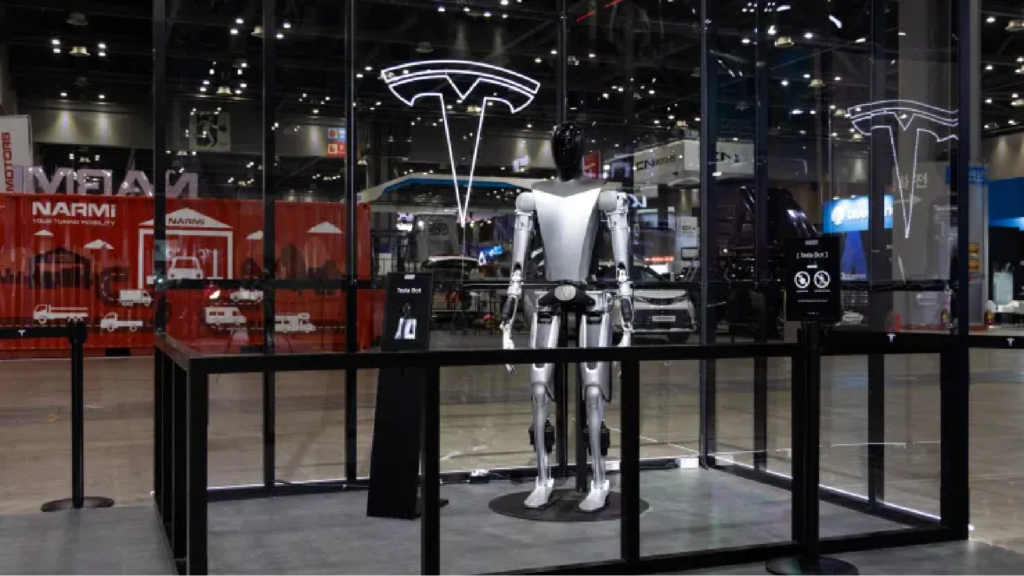
entspos 6:16 pm June 15, 2024 The S&P 500’s total value currently stands at $45.5 trillion, according to FactSet. On Thursday, Tesla CEO Elon Musk claimed that his company’s Optimus humanoid robots could eventually push Tesla’s worth to more than half of that amount. At the 2024 annual shareholder meeting in Austin, Texas, Musk described himself as “pathologically optimistic” and said Tesla is not only beginning a “new chapter” but is about to write an entirely “new book.” The Optimus robots appear to be central to this vision. Tesla first announced its humanoid robot plans in 2021 during an AI Day event, featuring a dancer in a unitard resembling a sleek, androgynous robot. In January, Tesla showcased Optimus robots folding laundry in a demo video, which was criticized by robotics engineers as deceptive since the robots were not autonomous but operated by humans. At the shareholder event, Musk did not specify current capabilities of Optimus but suggested that in the future, they could perform tasks like cooking, cleaning, factory work, or even teaching children, akin to R2-D2 and C-3PO from “Star Wars.” He claimed Optimus could potentially elevate Tesla’s market cap to $25 trillion. Speaking to an enthusiastic audience at the Gigafactory, Musk promised “limited production” of Optimus in 2025 and plans to test the robots in Tesla’s factories next year, predicting the company would have “over 1,000, or a few thousand” robots working by 2025. Musk is known for ambitious promises that often do not materialize, such as software upgrades to make existing Teslas self-driving or EV battery swapping stations. Achieving a $25 trillion market cap would make Tesla worth about eight times Apple’s current value. Apple is the world’s largest company by market cap, just ahead of Microsoft. As of Thursday’s close, Tesla was valued at about $580 billion, making it the 10th most valuable company in the S&P 500. Musk did not provide a timeline for reaching $25 trillion but suggested autonomous vehicles could increase the company’s market cap to $5 trillion to $7 trillion. He aligned with Tesla bull Cathie Wood, CEO of Ark Invest, who this week set a $2,600 price target on Tesla’s stock by 2029, predicting a commercial robotaxi business, equating to a market cap of over $8 trillion. Musk’s comments followed the shareholder vote to reinstate his $56 billion pay plan, which a Delaware court had ordered to rescind. The crowd cheered the proposal and the preliminary results. Taking the stage after the vote, Musk said, “I just want to start off by saying hot d—! I love you guys.” Tesla shares have fallen 27% this year, attributed to a sales decline partly due to an aging lineup and increased competition in China. The company has also faced significant layoffs. Musk urged investors to focus on Tesla’s future in autonomous driving, robots, and AI. One bold claim Musk made was that Tesla had surpassed Nvidia in developing silicon for machine learning inference. Nvidia’s shares have surged nearly ninefold since the end of 2022, driven by AI chip demand, making the company worth about $3.2 trillion. Concerns persist about Musk’s focus on Tesla given his other ventures, including X (formerly Twitter), SpaceX, The Boring Co., Neuralink, and his new startup, xAI, which recently raised $6 billion in venture funding. When asked about his importance to Tesla’s future, Musk said he is a “helpful accelerant,” emphasizing his role in innovation. He acknowledged competition in the humanoid robot market from companies like Boston Dynamics, Agility, Neura, and Apptronik, stressing the importance of Tesla being faster and better. Recent Posts
Apple Set to Unveil Major AI Push at Amidst Growing Challenges
entspos 4:38 am June 10, 2024 Apple is set to launch one of its most crucial events in recent years at the annual Worldwide Developers Conference starting Monday. The company is expected to reveal a partnership with OpenAI and introduce the first wave of generative AI tools for its mobile operating system. This AI push could revitalize iPhone sales and services, especially as consumers delay upgrades and economic uncertainties loom, particularly in China. Apple also faces regulatory scrutiny in Washington and was recently overtaken by Nvidia as the second-largest public company in the US. “Generative AI is a key opportunity across our products, and we have unique advantages,” Apple CEO Tim Cook said during the company’s earnings call in early May, hinting at upcoming announcements. Typically, Apple takes its time to adopt and perfect new technologies. However, the rapid adoption of generative AI worldwide may be pushing the company to quickly integrate cutting-edge technology into its smartphones. Wedbush analyst Dan Ives believes Apple’s commitment to AI will “kick off a new frontier” with lasting impacts on its products and services. Apple is expected to introduce its AI initiative, “Apple Intelligence,” which will be opt-in only and require an iPhone 15 Pro or a device with an M1 chip or newer, as reported by Bloomberg. Integrating generative AI into Siri could transform it into a sophisticated chatbot capable of performing tasks like recalling old photos or answering detailed questions. Over time, Siri could learn user preferences and personalities for more personalized responses. AI-powered features might also assist users with tasks such as summarizing and drafting emails or bringing up information with a finger gesture. These features will likely adapt seamlessly to users based on voice, audio, natural language, images, and contextual cues. “Generative AI will enable future iPhones to act as a sixth sense, enhancing our interaction with the world,” said Thomas Husson, an analyst at Forrester. AI could also be embedded within Apple’s ecosystem, enhancing apps like Apple Maps, iMovie, and iPhoto. Some analysts anticipate Apple will provide tools for developers to create new AI-driven experiences. Reece Hayden, a senior analyst at ABI Research, expects Apple to showcase on-device AI benefits and outline its long-term vision, including R&D efforts, investments, and acquisitions. Reports suggest Apple was considering partnerships with both OpenAI and Google but has now settled on a deal with OpenAI. This partnership could be detailed during Monday’s keynote. “If OpenAI powers Apple’s AI capabilities, a formal partnership announcement is expected to clarify regulations, data usage, and privacy concerns,” Hayden said. While this partnership could boost innovation, it might also limit Apple’s control over product development and data regulation. Aligning with OpenAI, which faces public trust issues, could pose future risks. Recently, OpenAI employees called for greater transparency and protection for those voicing concerns about AI’s risks. Apple’s longstanding commitment to privacy and security will likely be emphasized in the announcements. Companies acknowledge AI’s risks, including misinformation, manipulation, and potential loss of control. Educating the public on these risks and protective measures is crucial. **Vision Pro Update:** Apple is expected to update its Vision Pro mixed reality headset, announced a year ago and available since February. CEO Tim Cook noted that over half of the Fortune 100 companies have purchased the Vision Pro, exploring innovative applications. Generative AI could enhance the headset’s personalization and immersion, offering new use cases in education and medicine. Tuong Nygugen, a director analyst at Gartner, said any company involved in headsets must consider AI integration across all product lines. While it’s uncertain what will be a success, companies are compiling use cases, focusing on enterprise, and promoting future experiences and devices. Enhancements could also boost sales of the Vision Pro, which starts at $3,499 and has reportedly faced weak demand. Recent Posts
AMD launches new AI chips to take on leader Nvidia
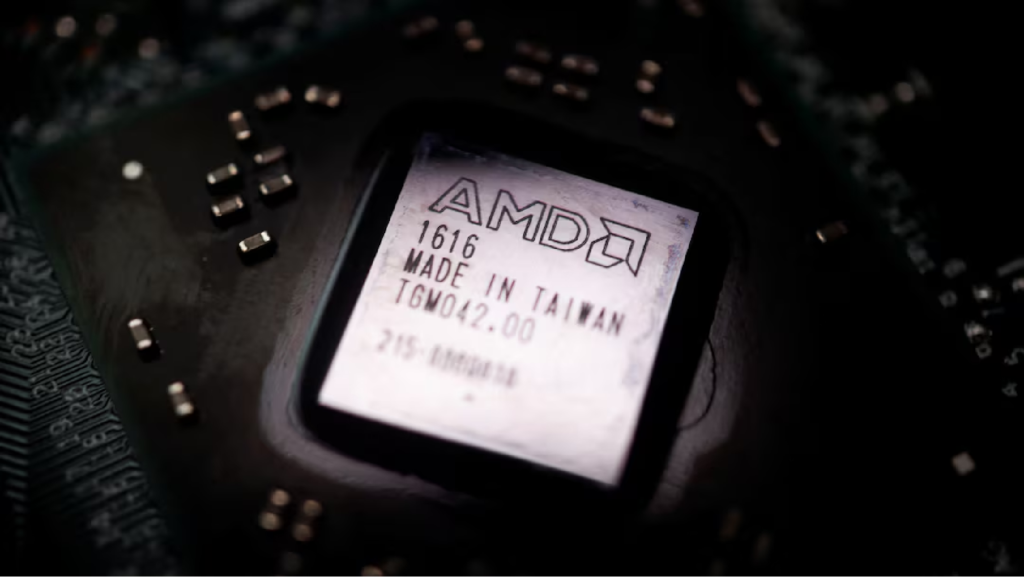
entspos 3:28 am June 4, 2024 Advanced Micro Devices (AMD.O) unveiled its latest artificial intelligence processors on Monday, outlining a two-year roadmap to challenge industry leader Nvidia (NVDA.O). At the Computex technology trade show in Taipei, AMD CEO Lisa Su introduced the MI325X accelerator, scheduled for release in the fourth quarter of 2024. The escalating demand for advanced chips in AI data centers, driven by the development of generative artificial intelligence programs, has intensified the competition between AMD and Nvidia, the latter commanding about 80% of the AI semiconductor market. AMD has adopted an annual release cycle for its products, following Nvidia’s lead from last year. “AI is clearly our number one priority as a company, and we have really harnessed all of the development capability within the company to do that,” Su told reporters. She emphasized the necessity of introducing new products and capabilities annually to maintain a competitive portfolio. AMD also announced the MI350 chip series, expected in 2025, featuring a new architecture and anticipated to perform 35 times better in inference than the current MI300 series. Additionally, the MI400 series, set for 2026 release, will be based on an architecture named “Next.” Nvidia’s CEO Jensen Huang revealed that their next-generation AI chip platform, Rubin, would be available in 2026, incorporating GPUs, CPUs, and networking chips. Investors, heavily investing in the booming genAI sector, are keenly watching for long-term updates from chip companies. Despite AMD’s shares remaining flat and Nvidia’s rising over 3% on Monday, AMD has more than doubled its value since the start of 2023. However, this increase is overshadowed by Nvidia’s over seven-fold rise in the same period. “While the proof will be in the pudding, there’s no doubt that AMD is taking Nvidia heads-on and companies looking for alternatives to Nvidia are bound to be happy to hear what AMD had to say,” said Technalysis Research chief analyst Bob O’Donnell. Su stated in April that AMD anticipates AI chip sales of approximately $4 billion for 2024, up $500 million from previous estimates. At Computex, AMD announced that its latest generation of central processor units (CPUs) would likely be available in the second half of 2024. While AI chips for data centers are a priority, some of AMD’s CPUs will be used with graphics processor units (GPUs), though GPUs remain the dominant component. AMD also outlined the architecture for its new neural processing units (NPUs), designed for on-device AI tasks in AI PCs. PC makers such as HP (HPQ.N) and Lenovo (0992.HK) plan to release devices incorporating AMD’s AI PC chips, which exceed Microsoft’s (MSFT.O) Copilot+ PC requirements. Chipmakers are banking on enhanced AI capabilities to stimulate growth in the PC market, which is recovering from a prolonged downturn. Recent Posts
Arm offers new designs, software for AI on smartphones
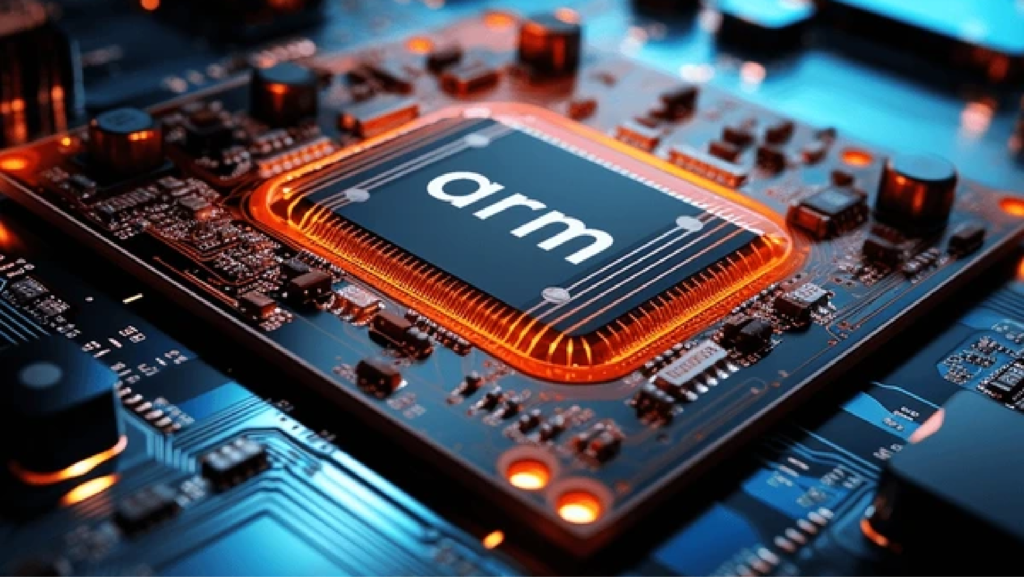
entspos 6:23 am May 30, 2024 On May 29, Arm Holdings (O9Ty.F) announced new chip designs and software tools aimed at enhancing smartphones’ ability to handle artificial intelligence tasks. Additionally, the company introduced changes in how it delivers these blueprints to accelerate their adoption. Arm’s technology, renowned for its energy efficiency, has been pivotal in the smartphone revolution and is increasingly prevalent in PCs and data centers. The smartphone market remains Arm’s largest, where it supplies intellectual property to competitors like Apple (AAPL.O), Qualcomm (QCOM.O), and MediaTek (2454.TW). The new releases include designs for central processing units (CPUs) optimized for AI tasks and new graphics processing units (GPUs). Arm will also offer software tools to help developers run AI applications, such as chatbots, on Arm chips more easily. A significant shift is in the method of delivering these products. Traditionally, Arm provided specifications or abstract designs, leaving chip companies to create physical blueprints. This process involves complex decisions on the arrangement of billions of transistors. For the new products, Arm collaborated with Samsung Electronics Co Ltd (005930.KS) and Taiwan Semiconductor Manufacturing Co (2330.TW) to offer ready-to-manufacture blueprints of physical designs. Chris Bergey, Arm’s senior vice president and general manager of the client line of business, emphasized that Arm is not aiming to compete with its customers but to help them reach the market more quickly. This allows customers to focus on critical components like neural processing units (NPUs) that are essential for optimal AI performance. The importance of NPUs is underscored by Microsoft’s recent AI features, which require such technology. Although Arm does not currently supply NPU technology for phones and PCs, Bergey stated that the company plans to provide more comprehensive designs that chip firms can integrate with their NPUs. “We’re combining a platform where these accelerators can be very tightly coupled,” Bergey explained. Recent Posts
Truecaller partnered with Microsoft’s Azure AI Speech for users of its AI assistant.
entspos 12:48 pm May 24, 2024 Truecaller, known for its app that identifies and blocks spam calls, is introducing a new feature that allows users to create an AI version of their voice to answer calls. This feature is part of Truecaller’s AI Assistant, which users can now personalize by recording their own voice. The AI, developed in partnership with Microsoft’s Azure AI Speech, will learn from the recorded clip to generate an AI version of the user’s voice. “This groundbreaking capability not only adds a touch of familiarity and comfort for the users but also showcases the power of AI in transforming the way we interact with our digital assistants,” said Truecaller Product Director and General Manager Raphael Mimoun in a blog post. The AI Assistant, first introduced in 2022 and available only in select countries, screens incoming calls and informs users of the caller’s reason. Users can then decide whether to answer the call themselves or let the AI Assistant respond. Previously, users could choose from a set of preset voices, but the new feature allows for greater personalization by using the user’s own recorded voice. Azure AI Speech, highlighted during the Build conference, features a personal voice option that lets users record and replicate voices. Microsoft notes that personal voice is currently available on a limited basis for specific applications like voice assistants. Additionally, voices generated by Azure AI Speech’s personal voice automatically include watermarks, and Microsoft has implemented a code of conduct requiring full consent from people being recorded and prohibiting impersonation. The effectiveness of the AI-generated personal voice compared to a traditional voicemail message remains to be seen. Recent Posts