
Global tech outage disrupts industries, highlights online risks
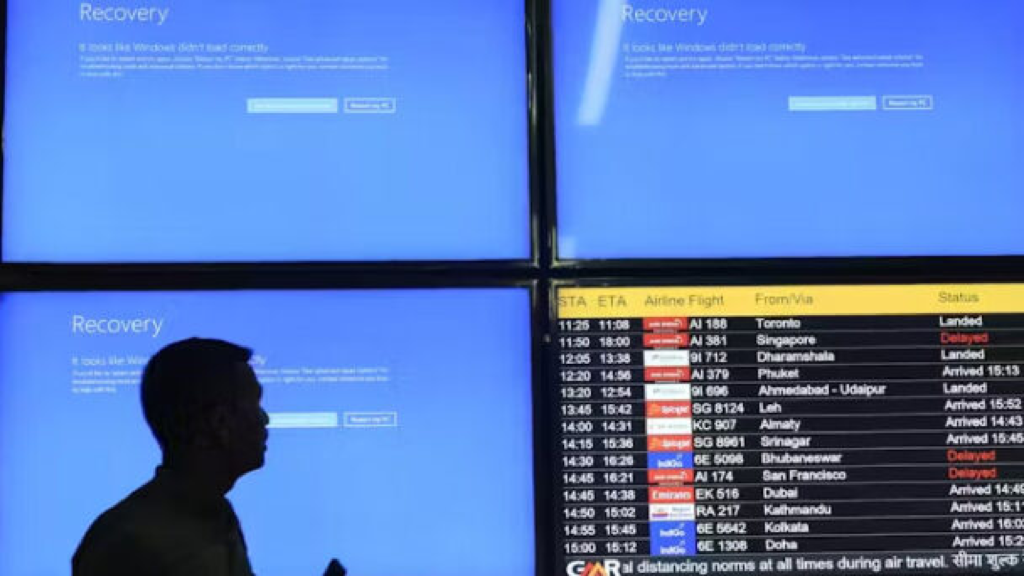
entspos 9:07 pm July 19, 2024 On July 19, a global tech outage disrupted industries ranging from travel to finance before services gradually came back online after several hours. This incident underscored the risks associated with the global shift towards interconnected digital technologies. The outage was triggered by a software update from global cybersecurity firm CrowdStrike (CRWD.O), which caused system problems that grounded flights, disrupted broadcasts, and left customers without access to essential services like healthcare and banking. Over the past two decades, accelerated by the COVID-19 pandemic, governments and businesses have become increasingly reliant on a few interconnected technology companies. This dependency explains why a single software issue had such widespread effects. CrowdStrike, an $83 billion company with over 20,000 subscribers worldwide, including tech giants like Amazon (AMZN.O) and Microsoft (MSFT.O), found itself in the spotlight. CEO George Kurtz revealed on social media platform X that a defect in a content update for Windows hosts affected Microsoft customers. Kurtz apologized on NBC News’ “Today” program, stating that many customers were rebooting their systems and restoring operations. CrowdStrike shares dropped but later recovered slightly, ending down 10.8% on Friday afternoon. Meanwhile, competitors SentinelOne (S.N) and Palo Alto Networks (PANW.O) saw their shares rise by 8.8% and 1.5%, respectively. Microsoft shares fell by about 1%. Microsoft’s Chief Communications Officer, Frank Shaw, said on X that the company was aiding customers in recovering their systems after the CrowdStrike update caused global disruptions to Windows systems. Ciaran Martin, a professor at Oxford University and former head of the UK National Cyber Security Centre, noted the unprecedented scale of the outage. A White House official confirmed that U.S. President Joe Biden was briefed on the incident, and U.S. Secretary of State Antony Blinken indicated that the outage was not a result of a malicious attack. However, the U.S. Cybersecurity and Infrastructure Security Agency observed that hackers were exploiting the situation for phishing and other malicious activities. As companies and institutions began to restore normal services, experts highlighted the outage’s revelation of the vulnerabilities in our increasingly online world. Gil Luria, a senior software analyst at D.A. Davidson, pointed out the complexity and interdependence of global computing systems, emphasizing their susceptibility to errors. The tech sector sell-off deepened on Wall Street, with the main indexes falling and the Cboe Volatility index (.VIX), Wall Street’s “fear gauge,” hitting its highest level since early May. The dollar strengthened as the outage unsettled investors. Air travel faced immediate impacts, as flight scheduling disruptions led to delays and cancellations. According to aviation analytics firm Cirium, out of more than 110,000 scheduled commercial flights on Friday, 2,691 were canceled, with more expected. Airports worldwide resorted to handwritten boarding passes, causing further delays. Banks and financial services companies warned customers about disruptions, and traders experienced transaction execution problems. The London Stock Exchange Group (LSEG.L) reported issues with its Workspace news and data platform, regulatory news service, and currency prices, but most were resolved by midday. The New York Stock Exchange and Nasdaq reported that U.S. markets were operating normally. Government agencies were also affected, with disruptions reported by the Dutch and UAE foreign ministries. U.S. healthcare providers faced outages affecting call centers, patient portals, and other operations. Boston’s Mass General Brigham treated only urgent cases, and Tufts Medical Center warned of potential delays and rescheduling. In Britain, booking systems used by doctors were offline, and Sky News apologized for being unable to transmit live. Manchester United postponed a ticket release due to the outage. In New York City, jail cameras, arrest processing software, and other governmental functions were impacted, though 911 and emergency systems remained operational. By the end of the day, more companies reported a return to normal service, including Spanish airport operator Aena (AENA.MC), U.S. carriers American Airlines (AAL.O), Frontier, Spirit (SAVE.N), Dubai International Airport operator, and Australia’s Commonwealth Bank (CBA.AX). U.S. Transportation Secretary Pete Buttigieg stated that transportation system issues seemed to be resolving and expected normal operations by Saturday, noting that the Federal Aviation Administration was unaffected. Recent Posts
OpenAI in Crisis: Insiders Reveal Alarming Safety Oversights and Internal Turmoil
entspos 10:12 am July 15, 2024 OpenAI, a frontrunner in developing human-level AI, is facing increasing scrutiny over safety concerns, as highlighted by employees in various media outlets. The latest instance, reported by The Washington Post, features an anonymous employee alleging that OpenAI rushed safety tests and celebrated their product prematurely. “They planned the launch after-party before ensuring the product’s safety,” the employee revealed. “We essentially failed in our process.” Safety issues persist at OpenAI, with current and former employees recently signing an open letter demanding better safety and transparency practices. This follows the dissolution of the safety team after cofounder Ilya Sutskever’s departure, and the resignation of key researcher Jan Leike, who criticized the company’s prioritization of flashy products over safety. Safety is a cornerstone of OpenAI’s charter, which pledges to assist other organizations in advancing safety if AGI is achieved elsewhere. OpenAI asserts its commitment to addressing the safety challenges of such a complex system, even keeping its proprietary models private to mitigate risks. Despite these assurances, there are growing concerns that safety has been deprioritized. OpenAI is under intense scrutiny, and public relations efforts alone won’t ensure societal safety. “We’re proud of our track record providing the most capable and safest AI systems and believe in our scientific approach to addressing risk,” OpenAI spokesperson Taya Christianson stated to The Verge. “Rigorous debate is critical given the significance of this technology, and we will continue to engage with governments, civil society, and other communities worldwide in service of our mission.” The stakes are high, with a report commissioned by the US State Department warning of the risks AI poses to national security, likening its impact to that of nuclear weapons. OpenAI’s troubles are further compounded by last year’s boardroom coup that briefly ousted CEO Sam Altman due to communication issues, leading to an inconclusive investigation. While OpenAI spokesperson Lindsey Held claimed the GPT-4o launch was thorough in safety checks, another representative admitted the safety review was condensed to a single week, acknowledging the need for a better approach. Amidst ongoing controversies, OpenAI has tried to mitigate fears with strategic announcements, including a partnership with Los Alamos National Laboratory to explore the safe use of advanced AI models in bioscientific research, and the creation of an internal scale to track progress towards AGI. These safety-focused announcements seem like defensive measures against growing criticism. The real concern is the impact on society if OpenAI continues to overlook strict safety protocols. The public has little influence over the development of privatized AGI, yet they are directly affected by its outcomes. “AI tools can be revolutionary,” FTC chair Lina Khan told Bloomberg in November. However, she expressed concerns that “the critical inputs of these tools are controlled by a relatively small number of companies.” If the criticisms of OpenAI’s safety protocols are valid, it raises serious questions about the organization’s suitability to steward AGI. Allowing a single group in San Francisco to control potentially transformative technology is alarming, and there is an urgent need for greater transparency and safety practices within the company. Recent Posts
Elon Musk does not owe ex-Twitter staffers $500 million in severance, court rules
entspos 4:58 am July 11, 2024 Elon Musk faces several lawsuits following his 2022 takeover of Twitter, during which he fired over 6,000 employees, including then-CEO Parag Agrawal. Recently, Musk won one such lawsuit, with a federal judge ruling that X Corp. doesn’t owe additional severance to the former employees. The lawsuit, initiated by Twitter’s former head of people experience and another ex-manager, claimed X Corp. paid less severance than promised. The complaint highlighted that the 6,000 fired employees received, at most, three months of severance pay, as Musk confirmed in a tweet at the time. Previously, Twitter’s Severance Plan, effective since 2019, had promised senior employees up to six months of severance pay. The plaintiffs estimated Musk owed the former employees over $500 million, citing protections under the federal Employee Retirement Income Security Act (ERISA). Musk had previously tweeted on November 4, 2022:“Regarding Twitter’s reduction in force, unfortunately, there is no choice when the company is losing over $4M/day.Everyone exited was offered 3 months of severance, which is 50% more than legally required.” U.S. District Judge Trina Thompson dismissed the class action lawsuit in San Francisco, stating that the ERISA protections did not apply. She noted that Musk’s company had informed employees shortly after the October 2022 takeover that fired employees would receive only cash payouts, thus the November mass firings were not under Twitter’s previous severance plan. A spokesperson for Sanford Heisler Sharp, the law firm representing the plaintiffs, expressed disappointment with the ruling and mentioned considering options for moving forward. Since the November 2022 firings, X Corp. has been operating with a significantly reduced staff. Musk told the BBC in 2023 that he reduced Twitter’s staff from roughly 8,000 to 1,500 employees as part of major cost-cutting efforts. Despite these efforts, X Corp. has continued to struggle financially, with documents obtained by Bloomberg showing a $456 million loss in the first quarter of 2023. Musk still faces additional lawsuits regarding these mass firings. Agrawal and three other former Twitter Inc. executives are seeking $128 million in severance payments from X Corp. Additionally, another lawsuit from former senior employees seeks over $1 million in severance payments. Musk contends that he never agreed to these benefit plans. Recent Posts
ChatGPT for Mac is now available to all
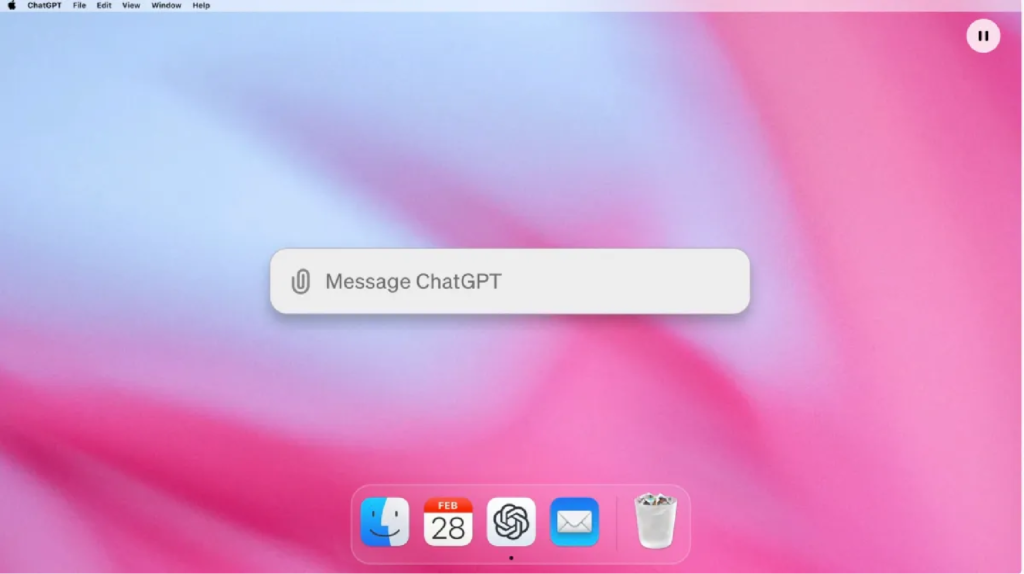
entspos 1:41 am June 26, 2024 OpenAI’s popular AI chatbot, ChatGPT, is now available for all macOS users, as the company announced on Tuesday. Initially revealed ahead of Apple’s WWDC 2024 in June, the app highlights integrations between ChatGPT and Apple’s operating systems for iPhone, iPad, and Mac. On macOS, users can quickly access ChatGPT using the keyboard shortcut Option + Space, after installing the new app. This makes the chatbot easily accessible in a way familiar to macOS users who use Command + Space to activate Spotlight Search. Instead of traditional search, users gain access to a vast knowledge base just a keystroke away. Once launched, ChatGPT appears as a chat interface overlaid on the screen. The ChatGPT desktop app for macOS is now available to all users, offering faster access for chatting about emails, screenshots, and other on-screen content with the Option + Space shortcut. The macOS app launch coincided with the release of GPT-4o, OpenAI’s flagship generative AI model that offers advanced intelligence, capable of handling text, speech, and video. GPT-4o’s multimodal capabilities and media comprehension are encapsulated in its name, where the “o” stands for “omni.” OpenAI’s announcement noted that the ChatGPT desktop app is available for both free and paid users. It features a simple keyboard shortcut for quick access, and users can take and discuss screenshots, upload files and photos, speak to ChatGPT from their desktop, and search through past conversations. The app had been gradually rolling out to Mac users, starting with Plus subscribers, but OpenAI has now made it available to everyone, as announced in a post on X. This isn’t OpenAI’s only collaboration with Apple. At WWDC, the companies revealed a broader partnership that will enable iPhone and iPad users to access ChatGPT through Siri and other AI-enhanced features like Writing Tools. These integrations, also powered by GPT-4o, will be available to Apple customers later this year with the launch of Apple’s newest operating systems. Recent Posts
Apple’s A1: We’ve seen some of this before
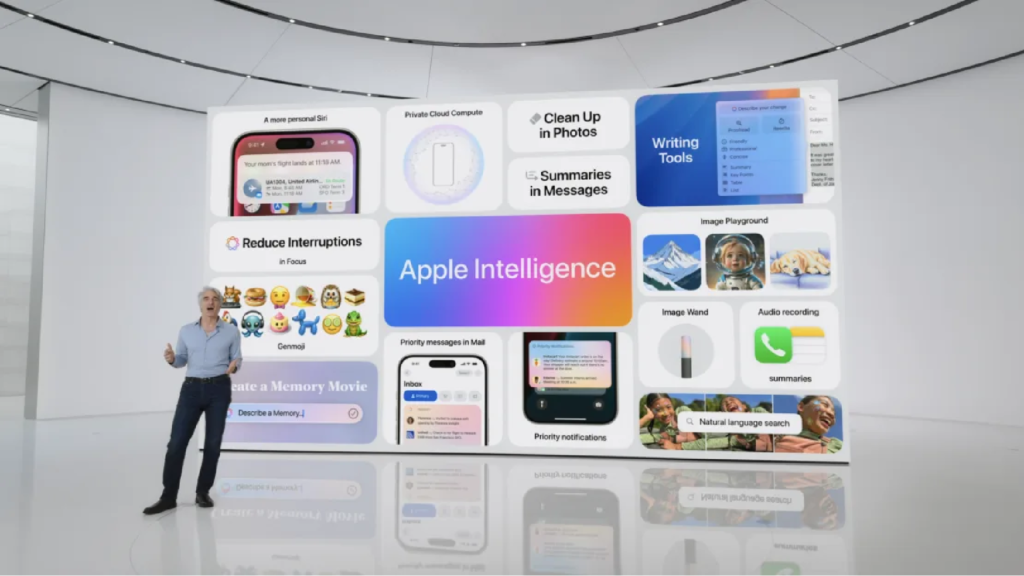
entspos 9:24 pm June 20, 2024 Apple is poised to bring artificial intelligence into the mainstream, though some of its new features resemble those already offered by competitors. Following Tuesday’s annual Worldwide Developers Conference, Apple previewed several AI-powered tools coming to the iPhone, iPad, and Mac this fall under the banner of “Apple Intelligence.” While some innovations mark a new era for Apple, others show the company catching up with industry trends. For many users, this will be their first experience with generative AI—technology that delivers comprehensive responses to queries—integrated into their daily devices. The most significant update is a modernized, smarter Siri, aiming to transform the often unreliable virtual assistant into a dependable, personalized chatbot. However, other AI tools seem familiar. For instance, Apple Intelligence will correct typos and grammar in emails, similar to Grammarly, and refine casual drafts into professional ones, akin to Microsoft’s AI Copilot. Additionally, it will allow users to remove distractions from photos, much like Google Pixel’s Magic Eraser, and create AI-generated images from sketches, similar to Samsung’s Image Wand. Apple’s approach typically involves extensive research and development to perfect new technologies before integrating them into products. However, the rapid adoption of generative AI might have accelerated Apple’s timeline to introduce these advancements and showcase its behind-the-scenes efforts. The AI tools will be available to users with Apple’s most advanced devices, such as the iPhone 15 Pro or Macs with M1, M2, and M3 processors. This rollout could encourage consumers to upgrade their devices at a time when many are holding onto older models longer. Most of the new tools are powered by Apple Intelligence, with limited involvement from OpenAI, the creator of ChatGPT. In a demo, Apple illustrated how AI could refine cover letters, suggest changes, adjust the tone of emails, rework sentence structures, and catch typos. In the Notes app, users could ask for summaries of meetings or lectures, while the Photos app could remove unwanted elements with a tap. Customized photos for messages, such as images of the Golden Gate Bridge with fireworks or a birthday invitation featuring a dinosaur on a surfboard, were also showcased. Apple’s Genmoji, AI-generated emojis using the user’s likeness, introduces novel communication methods in texting and interactions. Siri will see significant improvements, becoming more contextually aware and personalized. For example, Siri can seamlessly adjust an alarm time and understand conversation contexts, like knowing you’re talking about Roger Federer and providing relevant information without needing to mention his name explicitly. When Siri encounters a query beyond its scope, it can pass the task to ChatGPT with the user’s consent. This limited partnership allows Apple to bridge gaps in its technology while minimizing risks associated with misinformation, biases, and security concerns that AI companies like OpenAI face. Apple emphasized privacy and security during its presentation, noting that most AI functions will be processed on the device itself, keeping data off remote servers. While Apple’s stock price dipped slightly on Monday following the announcements, it rose more than 7% on Tuesday. These developments mark Apple’s initial steps into the rapidly evolving AI landscape, positioning the company as a significant player in the competitive AI arms race. Recent Posts