
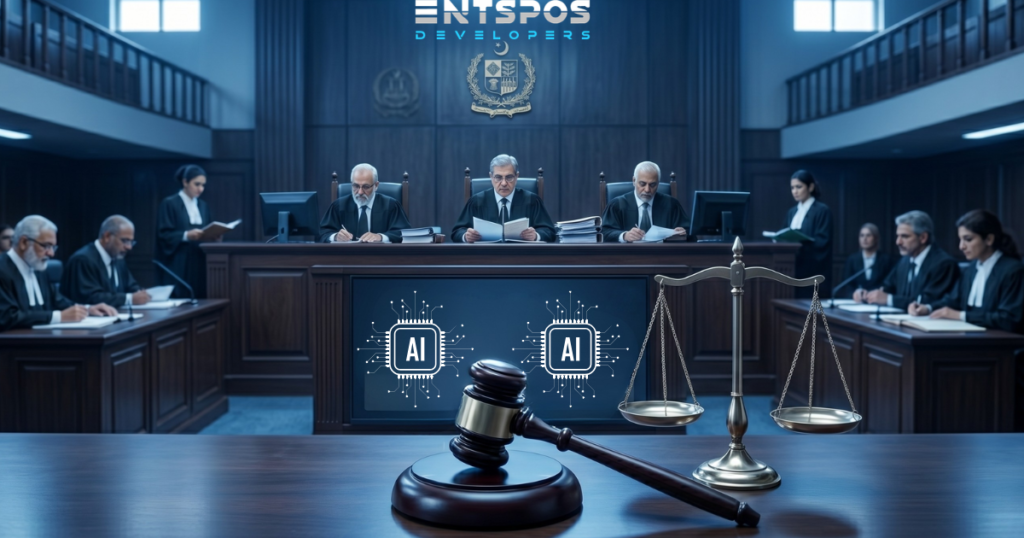
Judicial AI Frameworks: Pakistan’s Landmark Guidelines Affirm Human Authority in Justice
In a world where artificial intelligence is changing areas the judiciary is one of the most important ones.
On April 29 2026 Pakistan’s National Judicial Policy Making Committee issued the National Guidelines for the Use of Artificial Intelligence in Judicial Institutions.
This framework says clearly that AI will help make things more efficient. Human judges will still make the final decisions.
As an organization that cares about using technology in a way we think this is a great example of innovation that balances progress with important values like judicial independence and public trust.
The Context: Why Judicial AI Matters in Pakistan
Pakistan’s courts have had problems like too many cases, not enough resources and things not working well.
AI can help with these problems by:
Helping with research and looking at past cases
Managing cases and schedules
Processing documents, translating and transcribing
Making administrative tasks work better
These applications can help reduce delays make routine tasks more consistent and let judges focus on legal issues and the human side of justice.
Core Principle: Assist, But Never Replace
The guidelines are clear: AI systems must have a human in charge.
Key points include:
Human judges make the decisions. AI just helps.
AI can’t replace judgment.
Judges must be able to explain their decisions.
There must be safeguards against bias and data protection.
This approach follows best practices and is tailored to Pakistan’s context.
Strategic Implications for Pakistan’s Justice System
For judges and court staff these guidelines give them tools and clear boundaries.
For people who use the courts they can expect resolution of cases and more access to justice.
For lawyers they will need to adapt to AI-augmented research and case preparation.
The Road Ahead
There are challenges to implementing these guidelines like:
Building infrastructure and capacity
Ensuring data quality and sovereignty
Updating regulations as AI changes
Preventing bias and ensuring accountability
Pakistan’s judiciary has shown foresight in addressing these issues.
A Balanced Vision for the Future
Pakistan’s Judicial AI Framework is an example of balanced governance.
It rejects ideas and instead embraces a hybrid model where technology helps humans while preserving the essence of justice.
At our organization we are inspired by this approach.
We believe technology should empower institutions without eroding their principles.
Pakistan’s guidelines offer lessons for other countries.
The future of AI is not about replacing judges.
It is about equipping them to deliver justice effectively fairly and quickly.