
 by
by 
Computer-Aided Design: Transforming Modern Engineering and Creative Industries
- Shameer
- 8:54 am
- January 5, 2026
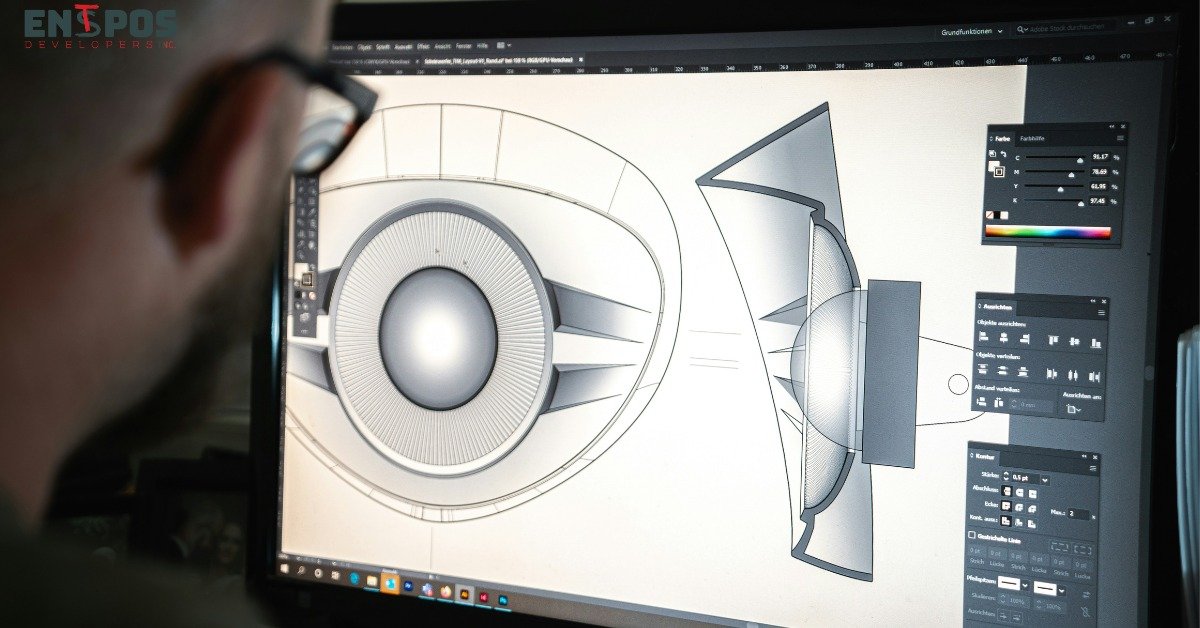
Computer-Aided Design (CAD) has fundamentally revolutionized how we conceive, develop, and manufacture products across virtually every industry. From architecture and aerospace to consumer electronics and medical devices, CAD technology has become an indispensable tool that bridges the gap between imagination and reality. This technology refers to the use of computer systems to assist in the creation, modification, analysis, and optimization of designs, replacing traditional manual drafting methods with automated processes that enable designers and engineers to create precise two-dimensional drawings and three-dimensional models with unprecedented accuracy and efficiency.
The origins of CAD trace back to the early 1960s when Ivan Sutherland developed Sketchpad, a revolutionary program that allowed users to interact with computers using a light pen. Throughout the following decades, CAD evolved from expensive mainframe-based systems accessible only to large corporations into affordable personal computer solutions that democratized access to design tools. The transition from 2D drafting to 3D solid modeling in the 1990s marked a watershed moment, fundamentally changing how designers conceptualize and communicate their ideas. Today’s CAD systems incorporate artificial intelligence, cloud computing, and virtual reality, pushing the boundaries of what’s possible in digital design.
Modern CAD software offers an extensive array of features that enhance productivity and design quality. Parametric modeling allows designers to establish relationships between different elements of a design, so modifications to one component automatically update related features throughout the model. This intelligent approach dramatically reduces revision time and minimizes errors. Simulation and analysis capabilities enable engineers to test designs virtually before physical prototyping, with finite element analysis, computational fluid dynamics, and thermal simulation helping predict how products will perform under various conditions. Collaboration tools have become increasingly sophisticated, supporting real-time multi-user editing, version control, and cloud-based data management that facilitate seamless coordination among geographically dispersed teams.
The applications of CAD span numerous industries, each leveraging the technology in unique ways. In architecture and construction, Building Information Modeling (BIM) extends traditional CAD by incorporating data about materials, costs, and construction schedules, creating intelligent 3D models that serve as comprehensive project databases throughout a structure’s lifecycle. The automotive and aerospace industries rely heavily on CAD for designing complex assemblies involving thousands of components, with surface modeling capabilities enabling the creation of aerodynamic forms and assembly management tools helping engineers ensure proper fit and function. Manufacturing industries use CAD data directly for computer numerical control machining, 3D printing, and other automated production processes, eliminating translation errors and accelerating time-to-market. Medical device development increasingly depends on CAD technology, with custom prosthetics, implants, and surgical guides designed using patient-specific anatomical data obtained from CT and MRI scans.
The benefits of CAD extend far beyond simple automation of drafting tasks. Design accuracy improves dramatically when human error in manual measurements and calculations is eliminated, and complex geometries that would be nearly impossible to draft by hand become routine. Productivity gains are substantial, with tasks that once required days or weeks often completed in hours, while design iterations that previously demanded complete redrafting now involve simple parameter adjustments. Documentation and communication improve significantly, with standardized drawing formats ensuring consistency and photorealistic renderings helping stakeholders visualize proposed designs. The environmental impact of product development decreases as virtual prototyping reduces the need for physical models, and design optimization tools help create more efficient products that use less material and energy throughout their lifecycle.
Despite its many advantages, CAD implementation presents certain challenges. The initial investment in software licenses, hardware, and training can be substantial, particularly for small businesses, with ongoing costs for maintenance and upgrades requiring careful budgeting. The learning curve for professional CAD software can be steep, requiring significant time and practice to achieve proficiency. Data management becomes increasingly complex as design files accumulate and projects involve larger teams, necessitating proper protocols for file naming, version control, and archival to avoid confusion and lost work. Software interoperability remains an ongoing concern, as translation between different CAD platforms can introduce errors or lose design intelligence, often locking organizations into particular software ecosystems.
Looking toward the future, artificial intelligence and machine learning are beginning to transform CAD workflows. Generative design algorithms can explore thousands of design variations based on specified constraints and objectives, discovering optimized solutions that human designers might never consider. Cloud-based CAD platforms are gaining traction, offering accessibility from any device, simplified collaboration, and reduced IT infrastructure requirements. Integration with augmented and virtual reality technologies creates new possibilities for design review, allowing designers to experience their creations at full scale in immersive environments. The convergence of CAD with Internet of Things data creates opportunities for designing products that incorporate real-world performance feedback, with sensors embedded in manufactured products reporting actual usage patterns to inform future design iterations.
Computer-Aided Design has evolved from a specialized tool for large enterprises into an essential technology that shapes our built environment and the products we use daily. Its impact extends across industries, fundamentally altering how we approach design problems and bringing concepts to reality with greater speed, precision, and efficiency than ever before. As CAD technology continues to advance, its role in innovation and product development will only grow more central. Organizations that effectively leverage these tools while addressing the associated challenges position themselves to compete successfully in an increasingly digital and competitive global marketplace, while professionals entering design and engineering fields will find CAD proficiency not merely advantageous but essential for success in the modern workplace.