
The Complete Guide to Open-Source Tools: Innovation Without the High Cost

Shameer 5:30 am January 9, 2026 In today’s fast-moving digital landscape, software expenses can quickly become a major barrier to innovation. Open-source tools have changed that reality. They are no longer just “free alternatives” — they are robust, enterprise-ready solutions that power startups, global corporations, and critical infrastructure worldwide. From solo developers to large engineering teams, open-source software enables faster development, greater flexibility, and long-term sustainability without sacrificing quality or performance. Why Open-Source Tools Matter Open-source software is built on transparency. Its source code is publicly available, allowing anyone to inspect, modify, and improve it. This openness drives rapid innovation, stronger security, and freedom from vendor lock-in.What truly sets open-source apart is its community-driven development model. Thousands of contributors across the globe collaborate to improve tools continuously. This collective intelligence often produces software that evolves faster and performs better than proprietary alternatives. Linux, for example, powers servers, smartphones, cloud platforms, and supercomputers — a clear testament to the strength of open collaboration. Open-Source Tools Powering Modern Workflows Across nearly every domain, open-source tools have become industry standards. In software development, Git is the backbone of version control, enabling teams to collaborate efficiently and track changes with confidence. Platforms like GitHub and GitLab extend this capability with CI/CD pipelines, issue tracking, and project management — all accessible without heavy licensing fees. Visual Studio Code has redefined code editing with its lightweight design, extensibility, and support for virtually every programming language. In design and creative work , open-source tools rival premium software. GIMP delivers advanced image editing, Blender dominates 3D modeling and animation, and Inkscape offers professional-grade vector design. Krita has earned its place among digital artists for illustration and concept art. These tools prove that creativity does not require expensive subscriptions. For data, analytics, and databases , open-source is indispensable. Python and its ecosystem (NumPy, Pandas, Matplotlib) drive data science and machine learning. R remains a cornerstone for statistical analysis. PostgreSQL and MySQL provide enterprise-level database reliability, while Apache Spark processes massive datasets efficiently. Tools like Metabase and Apache Superset turn raw data into actionable insights through intuitive dashboards. In web development and infrastructure, open-source software runs the modern internet. Frameworks such as React, Vue, and Django accelerate application development. WordPress alone powers over 40% of the web. Docker and Kubernetes have transformed deployment and scalability, while Nginx handles billions of requests daily. These tools form the foundation of today’s cloud-native architecture. How to Choose the Right Open-Source Tool Selecting the right tool requires more than comparing features. Active development is crucial — regularly updated projects with responsive maintainers are far more reliable long-term. A strong community indicates sustainability, better documentation, and faster problem resolution. High-quality documentation significantly reduces onboarding time and frustration. Tools supported by forums, Discord servers, or Slack communities offer invaluable peer support. Licensing also matters. Permissive licenses like MIT and Apache provide maximum flexibility, while copyleft licenses such as GPL impose sharing requirements. Understanding these differences helps avoid legal and compliance issues. Recent Posts
Computer-Aided Design: Transforming Modern Engineering and Creative Industries
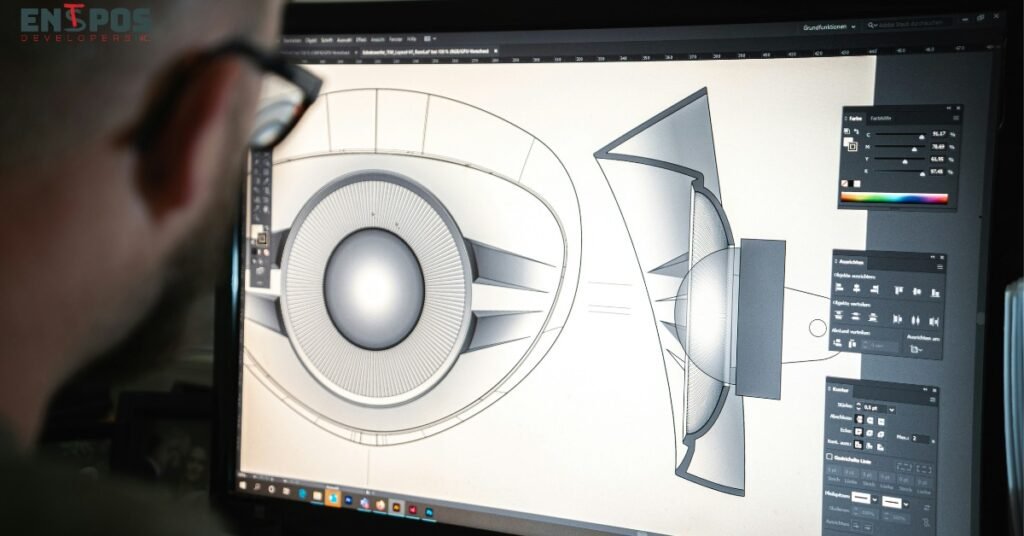
Shameer 8:54 am January 5, 2026 Computer-Aided Design (CAD) has fundamentally revolutionized how we conceive, develop, and manufacture products across virtually every industry. From architecture and aerospace to consumer electronics and medical devices, CAD technology has become an indispensable tool that bridges the gap between imagination and reality. This technology refers to the use of computer systems to assist in the creation, modification, analysis, and optimization of designs, replacing traditional manual drafting methods with automated processes that enable designers and engineers to create precise two-dimensional drawings and three-dimensional models with unprecedented accuracy and efficiency. The origins of CAD trace back to the early 1960s when Ivan Sutherland developed Sketchpad, a revolutionary program that allowed users to interact with computers using a light pen. Throughout the following decades, CAD evolved from expensive mainframe-based systems accessible only to large corporations into affordable personal computer solutions that democratized access to design tools. The transition from 2D drafting to 3D solid modeling in the 1990s marked a watershed moment, fundamentally changing how designers conceptualize and communicate their ideas. Today’s CAD systems incorporate artificial intelligence, cloud computing, and virtual reality, pushing the boundaries of what’s possible in digital design. Modern CAD software offers an extensive array of features that enhance productivity and design quality. Parametric modeling allows designers to establish relationships between different elements of a design, so modifications to one component automatically update related features throughout the model. This intelligent approach dramatically reduces revision time and minimizes errors. Simulation and analysis capabilities enable engineers to test designs virtually before physical prototyping, with finite element analysis, computational fluid dynamics, and thermal simulation helping predict how products will perform under various conditions. Collaboration tools have become increasingly sophisticated, supporting real-time multi-user editing, version control, and cloud-based data management that facilitate seamless coordination among geographically dispersed teams. The applications of CAD span numerous industries, each leveraging the technology in unique ways. In architecture and construction, Building Information Modeling (BIM) extends traditional CAD by incorporating data about materials, costs, and construction schedules, creating intelligent 3D models that serve as comprehensive project databases throughout a structure’s lifecycle. The automotive and aerospace industries rely heavily on CAD for designing complex assemblies involving thousands of components, with surface modeling capabilities enabling the creation of aerodynamic forms and assembly management tools helping engineers ensure proper fit and function. Manufacturing industries use CAD data directly for computer numerical control machining, 3D printing, and other automated production processes, eliminating translation errors and accelerating time-to-market. Medical device development increasingly depends on CAD technology, with custom prosthetics, implants, and surgical guides designed using patient-specific anatomical data obtained from CT and MRI scans. The benefits of CAD extend far beyond simple automation of drafting tasks. Design accuracy improves dramatically when human error in manual measurements and calculations is eliminated, and complex geometries that would be nearly impossible to draft by hand become routine. Productivity gains are substantial, with tasks that once required days or weeks often completed in hours, while design iterations that previously demanded complete redrafting now involve simple parameter adjustments. Documentation and communication improve significantly, with standardized drawing formats ensuring consistency and photorealistic renderings helping stakeholders visualize proposed designs. The environmental impact of product development decreases as virtual prototyping reduces the need for physical models, and design optimization tools help create more efficient products that use less material and energy throughout their lifecycle. Despite its many advantages, CAD implementation presents certain challenges. The initial investment in software licenses, hardware, and training can be substantial, particularly for small businesses, with ongoing costs for maintenance and upgrades requiring careful budgeting. The learning curve for professional CAD software can be steep, requiring significant time and practice to achieve proficiency. Data management becomes increasingly complex as design files accumulate and projects involve larger teams, necessitating proper protocols for file naming, version control, and archival to avoid confusion and lost work. Software interoperability remains an ongoing concern, as translation between different CAD platforms can introduce errors or lose design intelligence, often locking organizations into particular software ecosystems. Looking toward the future, artificial intelligence and machine learning are beginning to transform CAD workflows. Generative design algorithms can explore thousands of design variations based on specified constraints and objectives, discovering optimized solutions that human designers might never consider. Cloud-based CAD platforms are gaining traction, offering accessibility from any device, simplified collaboration, and reduced IT infrastructure requirements. Integration with augmented and virtual reality technologies creates new possibilities for design review, allowing designers to experience their creations at full scale in immersive environments. The convergence of CAD with Internet of Things data creates opportunities for designing products that incorporate real-world performance feedback, with sensors embedded in manufactured products reporting actual usage patterns to inform future design iterations. Computer-Aided Design has evolved from a specialized tool for large enterprises into an essential technology that shapes our built environment and the products we use daily. Its impact extends across industries, fundamentally altering how we approach design problems and bringing concepts to reality with greater speed, precision, and efficiency than ever before. As CAD technology continues to advance, its role in innovation and product development will only grow more central. Organizations that effectively leverage these tools while addressing the associated challenges position themselves to compete successfully in an increasingly digital and competitive global marketplace, while professionals entering design and engineering fields will find CAD proficiency not merely advantageous but essential for success in the modern workplace. Recent Posts
Computer Networking: The Backbone of Global Digital Communication

Shameer 8:58 am December 18, 2025 Computer Networking Every second, approximately 6 million Google searches are performed, 1.7 million emails are sent, and over 8,000 tweets are posted worldwide. Behind this staggering digital activity lies the intricate world of computer networking—an invisible infrastructure that connects over 5.3 billion internet users across the globe. Computer networking is the practice of linking computing devices together to share resources and information. It has evolved from simple two-computer connections in the 1960s to today’s complex global networks that transmit roughly 2.5 quintillion bytes of data daily. At its core, networking relies on standardized protocols such as TCP/IP, which break data into packets and ensure accurate delivery, whether the destination is across a room or across the ocean. The architecture of modern networks operates on multiple layers, each serving a specific role in data transmission. Local Area Networks (LANs) connect devices within limited areas such as homes or offices, typically achieving speeds between 1 and 10 Gigabits per second using modern Ethernet technology. Wide Area Networks (WANs) extend connectivity across cities, countries, and continents, with the global internet being the largest WAN in existence. Network infrastructure includes routers that direct traffic between networks, switches that connect devices within a network, and fiber optic cables that transmit data as pulses of light at speeds approaching 70 percent of the speed of light. Submarine cable networks alone consist of more than 1.4 million kilometers of cables laid across ocean floors, carrying nearly 99 percent of all intercontinental data traffic. The Future of Connectivity The networking landscape continues to evolve at a remarkable pace. Fifth-generation (5G) networks, now deployed in over 70 countries, promise download speeds of up to 10 Gbps—approximately 100 times faster than 4G—while reducing latency to as low as 1 millisecond. The Internet of Things (IoT) is projected to connect more than 29 billion devices by 2030, placing unprecedented demands on network infrastructure. Emerging technologies such as Software-Defined Networking (SDN) are transforming network management by enabling administrators to control network behavior through software rather than manual device configuration. As cloud computing, remote work, and smart cities become increasingly prevalent, the need for robust, secure, and efficient computer networking is more critical than ever for both daily life and the global economy. Recent Posts
The Internet of Things: When Everyday Things Start Thinking (A Little) — and Why It Matters

Shameer 9:54 am November 10, 2025 You stumble out of bed, bleary-eyed. Your coffee machine has already started brewing. Your thermostat warmed the bedroom just enough to make getting up painless. Your phone pings: the smart fridge noticed you’re low on milk and added it to your grocery list. Far from science fiction, that’s the Internet of Things — devices quietly helping you through the day, one tiny data point at a time.But IoT isn’t just about convenient mornings and smart kettles. It’s a quiet revolution reshaping healthcare, farming, cities, and industries — and it comes with both enormous opportunity and real risk. What is IOT? IoT = ordinary objects + internet + tiny brains (sensors and software).A sensor sees something (is the soil dry?), a device sends that signal, the cloud or an app decides what to do, and something acts (water the crop, text the farmer). No dramatic sci-fi robot uprising — just lots of small, useful conversations between devices. But How Does It Actually Work? It’s simple when you break it down:Devices (like sensors or wearables) collect data.That data is sent through the internet to a cloud platform.The platform analyzes it and sends back useful information or commands.For example, your smart thermostat senses that you’re away, and the app automatically lowers the temperature to save energy It’s all about communication — not between people, but between things. The Future Is Connected The Internet of Things is not just a tech trend — it’s a shift in how we live. As IoT grows, our homes, workplaces, and cities will continue getting smarter, more responsive, and more connected. Recent Posts
Meet the founder who built and sold a $600M enterprise software startup from Sri Lanka

entspos 5:34 pm August 3, 2024 Sanjiva Weerawarana: A Sri Lankan Success Story Sanjiva Weerawarana is a remarkable figure in Sri Lanka’s tech industry. In 2005, he founded the enterprise software firm WSO2, which grew to nearly $100 million in annual recurring revenue (ARR) before being sold to private equity firm EQT for $600 million in May 2024. Despite Sri Lanka’s modest startup ecosystem, WSO2 has stood out with major clients like Samsung, Axa, and AT&T. Founding WSO2 Weerawarana’s journey began at IBM, where he helped develop web service specifications such as WSDL and BPEL. When IBM showed no interest in his innovative middleware stack idea, he decided to establish WSO2. Despite the ongoing civil war in Sri Lanka at the time, WSO2 thrived. Today, 80% of its 780 employees are based in Sri Lanka, with the rest spread across the U.S., Europe, and Asia. Growth and Open Source Success WSO2, an open-source enterprise software provider, benefited greatly from the open-source movement, which allowed global collaboration and development. With Intel Capital as its earliest backer, WSO2 positioned itself well during the rise of cloud computing and microservices. Recently, the company has integrated AI into its products, launching a new API manager that allows developers to use AI-powered chatbots for API testing. Acquisition and Future Plans The acquisition by EQT marks a significant milestone for WSO2, providing the company with the resources to pursue longer-term strategies and setting its sights on an IPO within five years. EQT’s investment reflects confidence in WSO2’s robust product offerings, deep enterprise client relationships, and sound financial management. Weerawarana’s Commitment to Sri Lanka Weerawarana’s commitment to Sri Lanka is unwavering. Through the Avinya Foundation, established in 2022, he supports economically disadvantaged children with vocational education programs. Additionally, his decision to drive for Uber in 2017 was aimed at challenging social stigmas around certain types of work in Sri Lanka, demonstrating that all jobs deserve respect. Conclusion Sanjiva Weerawarana’s story is a testament to the potential of Sri Lanka’s tech industry. With WSO2’s continued growth and the support of EQT, the company is poised to make even greater strides on the global stage. Weerawarana’s vision and dedication to his country and industry continue to inspire many. Recent Posts