
Microsoft taps Three Mile Island nuclear plant to power AI

Shameer 9:04 pm September 20, 2024 Data centers powering AI models require vast energy, and major tech companies are turning to nuclear power to meet these demands. Microsoft has made a significant move by signing a deal with Constellation Energy to source energy for its data centers from the Three Mile Island Unit 1 nuclear plant. This plant, which is adjacent to the infamous TMI-Unit 2 that suffered a meltdown in 1979, was decommissioned in 2019 due to declining demand for nuclear energy. However, Constellation plans to invest $1.6 billion to revive the facility, with an expected operational date by 2028, pending regulatory approval. Microsoft has agreed to purchase all the energy produced by the 835-megawatt plant for the next 20 years, though financial terms have not been disclosed. Once restored, the plant will be renamed the Crane Clean Energy Center (CCEC) in honor of Constellation’s late CEO, Chris Crane. The plant’s revival is projected to create 3,400 jobs and contribute $16 billion to Pennsylvania’s GDP. Joe Dominguez, CEO of Constellation, highlighted nuclear energy’s reliability, stating it’s the only energy source capable of consistently powering critical industries, including data centers, with carbon-free energy around the clock. Microsoft isn’t the only tech company eyeing nuclear energy. OpenAI’s CEO Sam Altman has advocated for nuclear power, and Amazon recently acquired a nuclear-powered data center in Pennsylvania for $650 million. As companies like Microsoft, Amazon, and Alphabet strive to transition to 100% renewable energy by 2030, the surge in AI demands has complicated their green energy goals. A report in June revealed that the power consumption of future data centers could reach 508 terawatt-hours annually, exceeding Australia’s yearly electricity production. The growing demand for clean energy across industries, including electric vehicles and factories, has led to renewed interest in nuclear power. Investors are increasingly optimistic about nuclear fusion startups, which have raised $7.1 billion so far, offering a cleaner, more powerful alternative that relies on hydrogen fuel instead of uranium or plutonium. Recent Posts
Anysphere, a GitHub Copilot rival, has raised $60M Series A at $400M valuation from a16z, Thrive, sources say
entspos 8:15 pm August 11, 2024 Anysphere, a two-year-old startup behind the AI-powered coding assistant Cursor, has successfully raised over $60 million in Series A financing, reaching a post-money valuation of $400 million, according to sources familiar with the deal, as reported by TechCrunch. The funding round was co-led by Andreessen Horowitz and Thrive Capital, with participation from Patrick Collison, co-founder and CEO of Stripe. While Anysphere, a16z, and Collison did not provide comments, Thrive declined to comment. Founded by MIT students Michael Truell, Sualeh Asif, Arvid Lunnemark, and Aman Sanger, Anysphere has quickly made a name for itself. Truell and Sanger participated in the prestigious Neo Scholars program, which led to Neo’s pre-seed investment in the startup. Last year, Anysphere raised $11 million in a seed round led by the OpenAI Startup Fund, with contributions from former GitHub CEO Nat Friedman, Dropbox co-founder Arash Ferdowsi, and other angel investors. Anysphere is entering a competitive market of AI coding assistant startups, including Cognition, Poolside, Magic, and Augment. The surge in investor interest is not surprising. Microsoft CEO Satya Nadella recently highlighted that GitHub Copilot, an AI tool for developers, has surpassed GitHub’s entire revenue at the time of its acquisition, estimated at $300 million. This indicates a substantial market, with approximately 3 million developers paying $100 annually for GitHub’s individual subscription, underscoring the high demand for such tools. Anysphere’s growth in revenue and usage has been rapid, according to sources. In July, Business Insider reported that Anysphere was raising new funds, targeting a $400 million valuation. Recent Posts
Backed by Microsoft, AWS and Meta, the Overture Maps Foundation launches its first open map data sets

entspos 6:38 pm July 24, 2024 It’s not every day that Microsoft, Amazon, and Meta join forces for a common cause. However, that’s precisely the case with the Overture Maps Foundation, an initiative dedicated to developing interoperable and open map data. Launched in December 2022, the Overture Maps Foundation aims to challenge Google’s dominance in online mapping. Hosted by the Linux Foundation, the group has been releasing early previews of its data sets over the past year, with the first beta version arriving this April. On Wednesday, the initiative marked a significant milestone by releasing four open data sets in general availability (GA). Maps are essentially composed of “layers” that can be customized for various applications. The Overture Maps Foundation is now releasing data sets for buildings, including 2.3 billion building “footprints” worldwide; places, featuring around 54 million notable points of interest; divisions, which visualize boundaries between countries, regions, cities, or neighborhoods; and base, covering land and water features like physical infrastructure (e.g., communication towers, piers, and bridges). The foundation’s transportation data set remains in beta, while a new addresses data set, currently in alpha, includes 200 million addresses across 14 countries. While Microsoft, AWS, and Meta are the most prominent members, the core steering committee also includes location technology veteran TomTom. Other members, categorized as “general” and “contributor” members, include Esri, Hyundai, Niantic, and TripAdvisor. Google’s absence is notable but expected, given the project’s ultimate goal. The foundation aggregates data from various sources, including open datasets from projects like OpenStreetMap and government sources, as well as proprietary data from its members and even some from Google. Although most of Google’s mapping data is proprietary, it has released some datasets under an open access license, such as Open Buildings, which was released in 2021. The Overture Maps Foundation has used data from OpenStreetMap, Esri, Microsoft, and Google, as demonstrated in a map of the U.S.-Mexico border. Combining different data sets is not straightforward, as they often have different formats, structures, and standards. The process of merging these data sets, known as conflation, involves meticulous checking and de-duplication to ensure accuracy. “One of the real challenges when you start combining data from various sources is identifying whether a record of a building or place matches another record,” explained Marc Prioleau, executive director of the Overture Maps Foundation, in an interview with TechCrunch. “People often misspell things or use different names, and geographical misalignments can occur. Conflation helps address these issues.” OpenStreetMap plays a significant role in providing data for the Overture Maps Foundation, alongside open data sets from governments and municipalities. Corporate members also contribute their proprietary data. For example, Meta has shared its Facebook places data, which includes information about every “place” or restaurant with a Facebook page. “While knowing the details of what people like about a place is a competitive advantage, simply knowing the place exists is not,” said Prioleau. “Sharing this data allows us to create a more comprehensive record.” Prioleau, who has extensive experience in the mapping and location industry from his roles at Mapbox, Uber, and Meta, leads the Overture Maps Foundation. He was joined by Amy Rose as technical director in November, making the organization’s full-time staff count two. The foundation also employs around 10 contractors for various tasks, with the Linux Foundation providing some engineering support. Member companies contribute around 100 people who participate in the project, either part-time or full-time, depending on the task. “When our member companies join, we emphasize that this is a participatory effort, not a spectator sport,” said Prioleau. “We encourage active involvement in the many aspects of the project.” Recent Posts
Global tech outage disrupts industries, highlights online risks
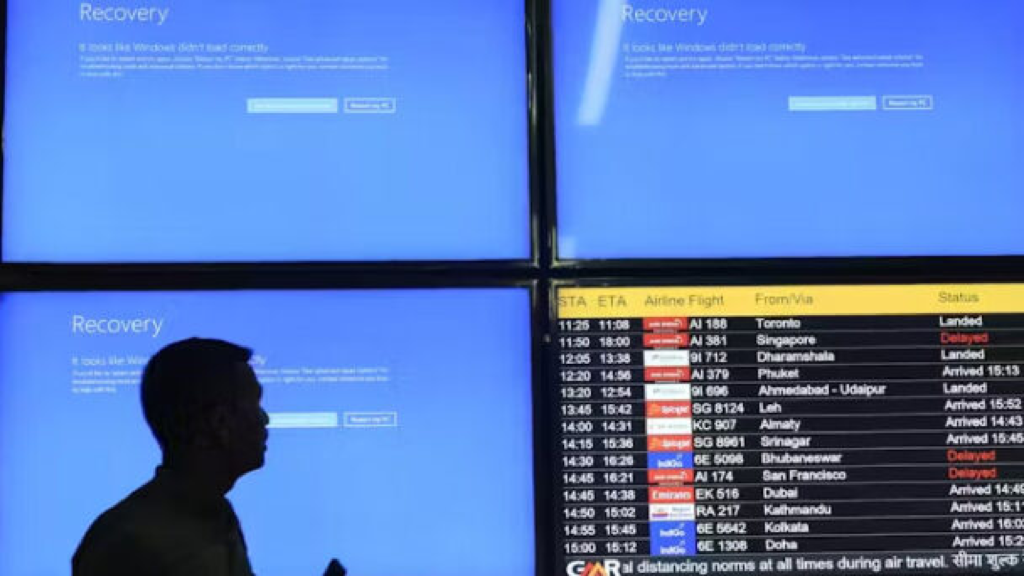
entspos 9:07 pm July 19, 2024 On July 19, a global tech outage disrupted industries ranging from travel to finance before services gradually came back online after several hours. This incident underscored the risks associated with the global shift towards interconnected digital technologies. The outage was triggered by a software update from global cybersecurity firm CrowdStrike (CRWD.O), which caused system problems that grounded flights, disrupted broadcasts, and left customers without access to essential services like healthcare and banking. Over the past two decades, accelerated by the COVID-19 pandemic, governments and businesses have become increasingly reliant on a few interconnected technology companies. This dependency explains why a single software issue had such widespread effects. CrowdStrike, an $83 billion company with over 20,000 subscribers worldwide, including tech giants like Amazon (AMZN.O) and Microsoft (MSFT.O), found itself in the spotlight. CEO George Kurtz revealed on social media platform X that a defect in a content update for Windows hosts affected Microsoft customers. Kurtz apologized on NBC News’ “Today” program, stating that many customers were rebooting their systems and restoring operations. CrowdStrike shares dropped but later recovered slightly, ending down 10.8% on Friday afternoon. Meanwhile, competitors SentinelOne (S.N) and Palo Alto Networks (PANW.O) saw their shares rise by 8.8% and 1.5%, respectively. Microsoft shares fell by about 1%. Microsoft’s Chief Communications Officer, Frank Shaw, said on X that the company was aiding customers in recovering their systems after the CrowdStrike update caused global disruptions to Windows systems. Ciaran Martin, a professor at Oxford University and former head of the UK National Cyber Security Centre, noted the unprecedented scale of the outage. A White House official confirmed that U.S. President Joe Biden was briefed on the incident, and U.S. Secretary of State Antony Blinken indicated that the outage was not a result of a malicious attack. However, the U.S. Cybersecurity and Infrastructure Security Agency observed that hackers were exploiting the situation for phishing and other malicious activities. As companies and institutions began to restore normal services, experts highlighted the outage’s revelation of the vulnerabilities in our increasingly online world. Gil Luria, a senior software analyst at D.A. Davidson, pointed out the complexity and interdependence of global computing systems, emphasizing their susceptibility to errors. The tech sector sell-off deepened on Wall Street, with the main indexes falling and the Cboe Volatility index (.VIX), Wall Street’s “fear gauge,” hitting its highest level since early May. The dollar strengthened as the outage unsettled investors. Air travel faced immediate impacts, as flight scheduling disruptions led to delays and cancellations. According to aviation analytics firm Cirium, out of more than 110,000 scheduled commercial flights on Friday, 2,691 were canceled, with more expected. Airports worldwide resorted to handwritten boarding passes, causing further delays. Banks and financial services companies warned customers about disruptions, and traders experienced transaction execution problems. The London Stock Exchange Group (LSEG.L) reported issues with its Workspace news and data platform, regulatory news service, and currency prices, but most were resolved by midday. The New York Stock Exchange and Nasdaq reported that U.S. markets were operating normally. Government agencies were also affected, with disruptions reported by the Dutch and UAE foreign ministries. U.S. healthcare providers faced outages affecting call centers, patient portals, and other operations. Boston’s Mass General Brigham treated only urgent cases, and Tufts Medical Center warned of potential delays and rescheduling. In Britain, booking systems used by doctors were offline, and Sky News apologized for being unable to transmit live. Manchester United postponed a ticket release due to the outage. In New York City, jail cameras, arrest processing software, and other governmental functions were impacted, though 911 and emergency systems remained operational. By the end of the day, more companies reported a return to normal service, including Spanish airport operator Aena (AENA.MC), U.S. carriers American Airlines (AAL.O), Frontier, Spirit (SAVE.N), Dubai International Airport operator, and Australia’s Commonwealth Bank (CBA.AX). U.S. Transportation Secretary Pete Buttigieg stated that transportation system issues seemed to be resolving and expected normal operations by Saturday, noting that the Federal Aviation Administration was unaffected. Recent Posts
Truecaller partnered with Microsoft’s Azure AI Speech for users of its AI assistant.
entspos 12:48 pm May 24, 2024 Truecaller, known for its app that identifies and blocks spam calls, is introducing a new feature that allows users to create an AI version of their voice to answer calls. This feature is part of Truecaller’s AI Assistant, which users can now personalize by recording their own voice. The AI, developed in partnership with Microsoft’s Azure AI Speech, will learn from the recorded clip to generate an AI version of the user’s voice. “This groundbreaking capability not only adds a touch of familiarity and comfort for the users but also showcases the power of AI in transforming the way we interact with our digital assistants,” said Truecaller Product Director and General Manager Raphael Mimoun in a blog post. The AI Assistant, first introduced in 2022 and available only in select countries, screens incoming calls and informs users of the caller’s reason. Users can then decide whether to answer the call themselves or let the AI Assistant respond. Previously, users could choose from a set of preset voices, but the new feature allows for greater personalization by using the user’s own recorded voice. Azure AI Speech, highlighted during the Build conference, features a personal voice option that lets users record and replicate voices. Microsoft notes that personal voice is currently available on a limited basis for specific applications like voice assistants. Additionally, voices generated by Azure AI Speech’s personal voice automatically include watermarks, and Microsoft has implemented a code of conduct requiring full consent from people being recorded and prohibiting impersonation. The effectiveness of the AI-generated personal voice compared to a traditional voicemail message remains to be seen. Recent Posts