
Computer Networking: The Backbone of Global Digital Communication
Shameer 8:58 am December 18, 2025 Computer Networking Every second, approximately 6 million Google searches are performed, 1.7 million emails are sent, and over 8,000 tweets are posted worldwide. Behind this staggering digital activity lies the intricate world of computer networking—an invisible infrastructure that connects over 5.3 billion internet users across the globe. Computer networking is the practice of linking computing devices together to share resources and information. It has evolved from simple two-computer connections in the 1960s to today’s complex global networks that transmit roughly 2.5 quintillion bytes of data daily. At its core, networking relies on standardized protocols such as TCP/IP, which break data into packets and ensure accurate delivery, whether the destination is across a room or across the ocean. The architecture of modern networks operates on multiple layers, each serving a specific role in data transmission. Local Area Networks (LANs) connect devices within limited areas such as homes or offices, typically achieving speeds between 1 and 10 Gigabits per second using modern Ethernet technology. Wide Area Networks (WANs) extend connectivity across cities, countries, and continents, with the global internet being the largest WAN in existence. Network infrastructure includes routers that direct traffic between networks, switches that connect devices within a network, and fiber optic cables that transmit data as pulses of light at speeds approaching 70 percent of the speed of light. Submarine cable networks alone consist of more than 1.4 million kilometers of cables laid across ocean floors, carrying nearly 99 percent of all intercontinental data traffic. The Future of Connectivity The networking landscape continues to evolve at a remarkable pace. Fifth-generation (5G) networks, now deployed in over 70 countries, promise download speeds of up to 10 Gbps—approximately 100 times faster than 4G—while reducing latency to as low as 1 millisecond. The Internet of Things (IoT) is projected to connect more than 29 billion devices by 2030, placing unprecedented demands on network infrastructure. Emerging technologies such as Software-Defined Networking (SDN) are transforming network management by enabling administrators to control network behavior through software rather than manual device configuration. As cloud computing, remote work, and smart cities become increasingly prevalent, the need for robust, secure, and efficient computer networking is more critical than ever for both daily life and the global economy. Recent Posts
The 5G Revolution: What It Really Means
Shameer 5:32 pm December 1, 2025 The 5G Revolution: What It Really Means 5G is often presented as a huge leap in mobile technology, but the reality is a mix of genuine improvements and practical limitations. By 2025, billions of users have access to 5G networks, and the experience varies widely depending on location and infrastructure. Still, the shift from 4G to 5G brings several measurable upgrades. In everyday use, 5G delivers significantly faster speeds, usually between 150–300 Mbps in many cities—much higher than the typical 4G range. In areas with advanced infrastructure, speeds can approach 1 Gbps, allowing full-length movies to download in seconds and enabling smooth 4K streaming. Latency has also improved: while 4G often sits around 30–50 milliseconds, 5G can go below 10 milliseconds, making online gaming, video calls, and real-time applications feel noticeably more responsive. Beyond personal devices, 5G supports a massive number of simultaneous connections. This is crucial for the Internet of Things—smart home devices, city sensors, connected cars, wearables, and industrial equipment. This isn’t futuristic talk; industries are already using private 5G networks to automate manufacturing, monitor machinery, and reduce downtime through predictive maintenance. Cities are experimenting with smart traffic systems, energy-efficient street lighting, and quicker emergency response through real-time data. The entertainment experience is also changing. Cloud gaming becomes smoother, high-quality video calling feels more stable, and AR/VR applications respond more naturally because of lower latency. For many users, these improvements are the most noticeable day-to-day benefits of 5G. Where 5G Still Struggles Despite its advantages, 5G is far from perfect. The fastest form of 5G requires dense infrastructure, meaning many areas—especially suburban and rural regions—don’t see dramatic speed improvements yet. In these places, 5G may feel only slightly better than strong 4G. Building new towers, upgrading fiber backbones, and deploying small cells is expensive, so full coverage will take time. Another limitation is that network performance depends heavily on your device and your operator’s technology. Older phones can’t use 5G’s full potential, and some networks still rely on mixed 4G/5G setups that limit real performance gains. Energy usage and privacy concerns also rise as more devices connect and generate data. Overall, 5G is a meaningful upgrade but not a miracle solution. In strong coverage areas, users get fast speeds, smoother experiences, and better connectivity for multiple devices. In weaker regions, it remains a work in progress. Instead of a sudden revolution, 5G is becoming a gradual but important step toward a more connected digital world. Recent Posts
The Internet of Things: When Everyday Things Start Thinking (A Little) — and Why It Matters
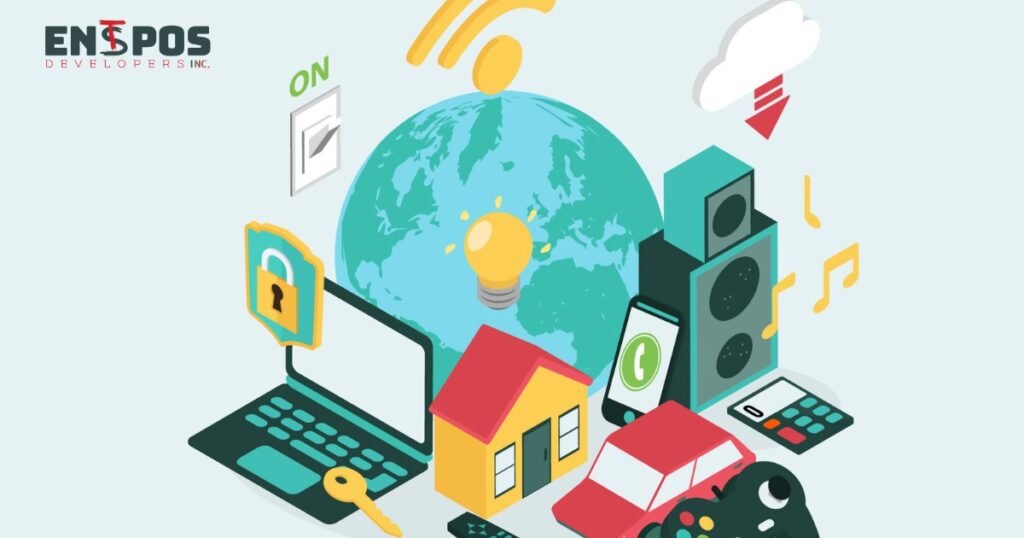
Shameer 9:54 am November 10, 2025 You stumble out of bed, bleary-eyed. Your coffee machine has already started brewing. Your thermostat warmed the bedroom just enough to make getting up painless. Your phone pings: the smart fridge noticed you’re low on milk and added it to your grocery list. Far from science fiction, that’s the Internet of Things — devices quietly helping you through the day, one tiny data point at a time.But IoT isn’t just about convenient mornings and smart kettles. It’s a quiet revolution reshaping healthcare, farming, cities, and industries — and it comes with both enormous opportunity and real risk. What is IOT? IoT = ordinary objects + internet + tiny brains (sensors and software).A sensor sees something (is the soil dry?), a device sends that signal, the cloud or an app decides what to do, and something acts (water the crop, text the farmer). No dramatic sci-fi robot uprising — just lots of small, useful conversations between devices. But How Does It Actually Work? It’s simple when you break it down:Devices (like sensors or wearables) collect data.That data is sent through the internet to a cloud platform.The platform analyzes it and sends back useful information or commands.For example, your smart thermostat senses that you’re away, and the app automatically lowers the temperature to save energy It’s all about communication — not between people, but between things. The Future Is Connected The Internet of Things is not just a tech trend — it’s a shift in how we live. As IoT grows, our homes, workplaces, and cities will continue getting smarter, more responsive, and more connected. Recent Posts