
The Dawn of AI Governance: Why 2026 Will Redefine How We Build and Deploy Intelligent Systems

Shameer 4:13 pm December 22, 2025 The landscape of artificial intelligence is undergoing a fundamental transformation. What was once treated as an afterthought—ensuring AI systems operate fairly, transparently, and responsibly—is rapidly becoming the cornerstone of technology strategy. As we approach 2026, organizations worldwide are realizing that AI governance is not merely about avoiding regulatory penalties, but about building sustainable, trustworthy technology that people are willing to adopt. The regulatory environment has shifted dramatically. The European Union’s comprehensive AI legislation became enforceable in 2025, setting a precedent now echoed across North America and the Asia-Pacific region. These frameworks go beyond high-level principles, requiring organizations to demonstrate transparency, fairness, and accountability in every AI system they deploy. Market trends reinforce this shift. The AI governance market, valued at approximately $227 million in 2024, is projected to grow to nearly $1.4 billion by 2030. This rapid expansion reflects a growing consensus: responsible AI is no longer optional infrastructure—it is foundational. From Reactive Compliance to Proactive Strategy Organizations are moving away from reactive governance approaches driven by regulatory pressure or public backlash. Instead, governance is increasingly embedded directly into AI development workflows. Model registries are becoming standard practice, providing detailed documentation of each AI model’s purpose, training data, performance metrics, and risk profile. These registries act as transparency tools, allowing stakeholders to understand how and why systems operate. Fairness audits are now routine, testing AI performance across demographics, regions, and contexts to detect and mitigate bias early. Explainability dashboards offer visual insights into model behavior, helping stakeholders understand the reasoning behind AI-driven decisions. Impact assessments conducted before deployment evaluate potential risks and benefits, particularly in high-stakes domains such as healthcare, finance, and criminal justice. Why High-Stakes Industries Are Leading the Charge Industries where AI decisions directly affect human lives are driving governance adoption. Healthcare organizations must ensure diagnostic models perform consistently across diverse patient populations. Financial institutions face intense scrutiny to confirm that credit and risk models do not reinforce historical discrimination. These challenges are far from theoretical. Biased hiring algorithms can exclude qualified candidates, flawed medical models can overlook critical symptoms, and discriminatory lending systems can deny entire communities access to opportunity. Governance infrastructure has therefore become essential not only for compliance, but for maintaining public trust and legitimacy. The Unexpected Competitive Advantages AI governance is rapidly evolving from a cost center into a strategic advantage. Organizations with strong governance frameworks benefit in multiple ways. Consumer trust increases when organizations are transparent about how AI systems work. Investors view mature governance practices as indicators of reduced risk and long-term sustainability. Strategic partnerships increasingly require assurance that AI systems meet ethical and regulatory standards. Talent acquisition also improves, as top AI professionals prefer environments where responsible development is prioritized. Internally, governance enhances operational efficiency by catching errors early, improving documentation, and driving higher-quality model performance. The New Professional Landscape The rise of AI governance is creating new interdisciplinary career paths that blend technology, ethics, law, and business strategy. Key roles include bias detection specialists, model risk managers, AI auditors, governance architects, and explainability engineers. These professionals ensure AI systems are fair, accountable, transparent, and aligned with regulatory expectations. Essential Skills for the Governance-First Future Professionals entering this space need a diverse skill set. Regulatory literacy is crucial, along with a practical understanding of how AI systems function and fail. Ethical reasoning helps navigate moral trade-offs in technical decisions, while strong documentation skills ensure clarity for both technical and non-technical audiences. Cross-functional communication is vital for aligning engineering teams with legal, executive, and public stakeholders. Risk assessment capabilities enable professionals to identify potential harms and implement mitigation strategies before deployment. Educational programs are rapidly adapting, offering courses that combine applied AI development with governance principles. Early expertise in this domain positions professionals at the forefront of one of technology’s fastest-growing fields. The Path Forward As we move deeper into 2026 and beyond, AI governance will mature into core infrastructure for technology development. Organizations that succeed will be those that view governance as an enabler rather than a constraint—one that makes ambitious AI deployment sustainable and trustworthy. Transparency is becoming a baseline expectation. Fairness is a core requirement. Accountability is a competitive strength. The AI systems shaping the future will be built with governance at their foundation—designed to be explainable, auditable, and aligned with human values. The transformation is already underway. The remaining question is who will lead it. Recent Posts
Large Language Models: Transforming How Machines Understand and Generate Human Language

Shameer 5:42 pm December 6, 2025 Large Language Models: Transforming How Machines Understand and Generate Human Language Large language models represent one of the most significant breakthroughs in artificial intelligence, fundamentally changing how computers process and generate human language. These sophisticated neural networks, trained on vast amounts of text from books, websites, and numerous other sources, have developed remarkable abilities to understand context, generate coherent text, and perform complex tasks once thought to require human intelligence. At their core, large language models work by predicting the next likely word in a sequence. This simple mechanism enables surprisingly advanced behavior. Through billions of examples, these models learn grammar, syntax, semantics, style, tone, and even reasoning patterns. The “large” refers not only to the extensive datasets but also to architectures containing hundreds of billions of parameters that capture intricate relationships within language. What makes LLMs extraordinary is their versatility. Earlier AI systems required task-specific programming, but LLMs can perform countless functions through natural language prompts. They can draft emails, summarize documents, translate languages, write code, answer specialized questions, and even engage in creative writing. Their general-purpose understanding makes them foundational infrastructure across industries. Practical applications are widespread. Customer service uses them for intelligent chatbots. Healthcare uses them to interpret medical literature and draft documentation. Developers rely on them for code generation and debugging. Educators use them for personalized learning and explanations. Creators use them for brainstorming and content drafting. However, LLMs also present challenges. They sometimes produce inaccurate but confident responses, known as hallucinations. Their training data may contain biased patterns that models can unintentionally replicate. Copyright and privacy concerns persist, and training these large models consumes significant computational resources. As capabilities grow, responsible use and alignment with human values become essential. The field continues evolving rapidly. Techniques like retrieval-augmented generation improve factual reliability by connecting models to external knowledge sources. Fine-tuning personalizes models for specific tasks. Multimodal systems expand capabilities beyond text to images, audio, and video. Looking ahead, large language models will become even more integrated into daily life. As they grow more capable and accessible, they will augment human creativity, productivity, and problem-solving in transformative ways. This technology represents not just a technical breakthrough but a new paradigm for human-machine collaboration, with natural language serving as the interface. Understanding their capabilities, limitations, and implications is increasingly vital in today’s digital world. Recent Posts
IT Ethics and Law: Navigating the Digital Landscape with Integrity
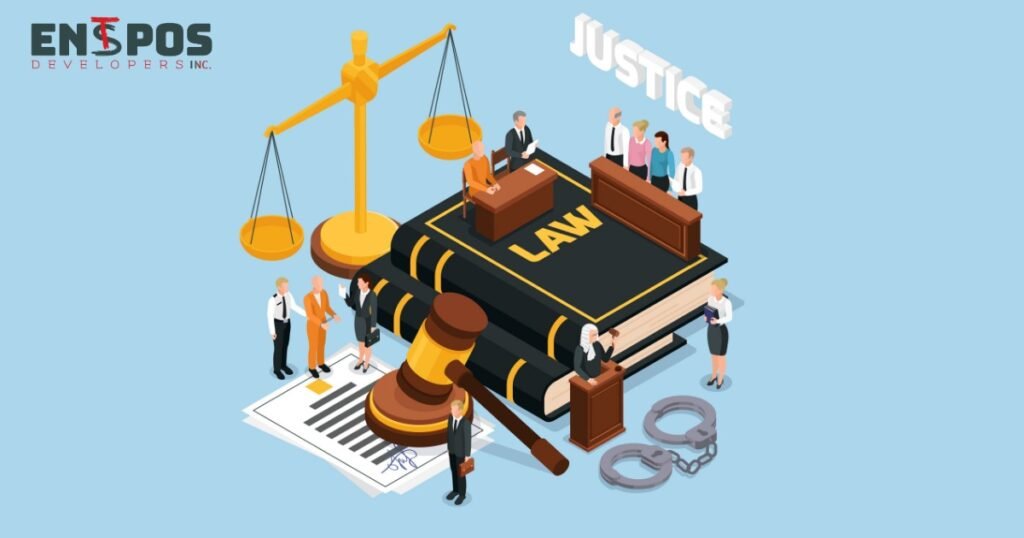
Shameer 5:39 pm December 6, 2025 IT Ethics and Law: Navigating the Digital Landscape with Integrity The rapid evolution of information technology has fundamentally transformed how we work, communicate, and conduct business. Yet with these advances comes a profound responsibility to ensure that our use of technology aligns with both ethical principles and legal frameworks. Understanding the intersection of ethics and law in the digital realm has never been more critical for IT professionals, business leaders, and everyday users of technology. At its core, IT ethics concerns itself with the moral principles that govern how we create, deploy, and interact with technology. These principles extend beyond mere compliance with regulations to encompass broader questions about privacy, security, access, intellectual property, and the societal impact of our technological choices. The law provides the formal structure within which these ethical considerations must operate, establishing boundaries and consequences for technological misconduct. Privacy, Data Protection, and Security Privacy stands as perhaps the most pressing ethical and legal concern in modern IT. The data we generate through our digital activities creates an unprecedented portrait of our lives, and organizations collecting this information face both ethical obligations and legal requirements regarding its use and protection. Regulations such as the GDPR and CCPA attempt to codify privacy rights, granting individuals greater control over their personal data through transparency, consent requirements, and rights to access, correct, or delete information. However, legal compliance alone doesn’t satisfy the ethical dimension of privacy protection. Organizations must ask deeper questions: Just because we can collect certain data, should we? What responsibility do we bear when algorithms can infer sensitive information users never explicitly shared? How do we balance business interests with individual autonomy and dignity? Cybersecurity is another crucial domain. Laws now require breach notifications and reasonable security measures, but ethics demands more—IT professionals often know of vulnerabilities that could cause harm if exploited. Responsible disclosure attempts to balance public safety, organizational reputation, and security improvement, though it remains imperfect. Intellectual Property, AI Ethics, and Algorithmic Responsibility Intellectual property law intersects with IT ethics in complex ways. While piracy is illegal, ethical arguments often arise around access to technology. Open source provides a model grounded in transparency and shared benefit, but requires careful navigation of licenses. AI introduces entirely new challenges. Algorithmic bias, explainability, and responsibility for automated decisions raise concerns that law has not fully addressed. Bias can occur unintentionally within training data, yet still produce harmful outcomes. Transparency, fairness, and accountability have become essential ethical principles but remain difficult to enforce consistently. Professional Responsibility and Emerging Challenges IT professionals often access sensitive information, creating risks of misuse. Reporting unethical practices—ignored vulnerabilities, mishandled data, deceptive systems—requires balancing loyalty, consequences, and societal obligations. Whistleblower protections offer limited support. Digital inclusion is another growing concern. As essential services shift online, unequal access becomes an issue of fairness. Accessibility and equitable access increasingly intersect with legal requirements in some regions. Surveillance technologies heighten tensions between security and liberty. Debates grow around encryption, law enforcement access, and potential misuse. Social media platforms further complicate ethical and legal boundaries as they curate content, gather large datasets, and influence public discourse. Emerging technologies such as quantum computing, IoT ecosystems, and biotechnology will continue testing existing ethical and legal frameworks. Ultimately, navigating IT ethics and law requires more than regulatory compliance. It demands ongoing ethical reflection, professional integrity, and a commitment to human dignity and rights. Ethical awareness, education, and open dialogue are essential as technology continues reshaping society. The choices we make today will define the digital future for generations to come. Recent Posts