
Apple plans Mac line overhaul with AI-focused M4 chips, Bloomberg News reports

entspos 7:28 am April 12, 2024 According to Bloomberg News, Apple is reportedly nearing the production phase of its M4 computer processors, which are expected to feature AI processing capabilities. The company plans to update every Mac model with these new chips, aiming for a release late this year and early next year. The updated lineup is said to include new iMacs, a 14-inch MacBook Pro, both low and high-end versions, as well as Mac minis. The PC industry has seen a decline since the peak of pandemic-driven sales for remote work and learning. To reignite growth, manufacturers are banking on a new wave of laptops and desktops equipped with more powerful chips capable of handling AI tasks locally, without relying on cloud services. Intel, Qualcomm, and reportedly Nvidia are all preparing chips geared towards this purpose. Apple intends to emphasize the AI processing capabilities of its new chips and their integration with the next version of macOS. The company has not yet responded to requests for comment on these reports. This news precedes Apple’s annual developers conference in June, where the company might announce new AI partnerships and unveil significant updates to iOS. Mac sales saw a decline of 27% in Apple’s most recent fiscal year, prompting the company to introduce the current-generation M3 chips and new MacBook Pro and iMac models in October. Recent Posts
OpenAI expands its custom model training program

entspos 7:09 pm April 4, 2024 OpenAI is expanding its Custom Model program to assist enterprise clients in creating tailored generative AI models for specific applications and domains. Launched last year at OpenAI’s DevDay conference, Custom Model has attracted “dozens” of customers, prompting OpenAI to enhance the program to optimize performance further. The expanded program introduces two key components: assisted fine-tuning and custom-trained models. Assisted fine-tuning utilizes advanced techniques, including additional hyperparameters and parameter efficient fine-tuning methods, to improve model performance on specific tasks. Custom-trained models, on the other hand, are built using OpenAI’s base models and tools, allowing customers to deeply fine-tune models or incorporate domain-specific knowledge. OpenAI highlights examples such as SK Telecom and Harvey, who have leveraged Custom Model to enhance GPT-4’s performance for telecom-related conversations in Korean and develop a custom model for legal tools, respectively. With the belief that personalized models tailored to industry, business, or use case will become commonplace, OpenAI emphasizes the importance of custom model development. This initiative aligns with OpenAI’s growth trajectory, with reports suggesting it’s nearing $2 billion in annualized revenue. As the demand for generative AI continues to surge, fine-tuned and custom models offer a solution to alleviate strain on OpenAI’s model serving infrastructure. In addition to the expanded Custom Model program, OpenAI introduces new model fine-tuning features for GPT-3.5 developers, including a dashboard for comparing model quality, third-party platform integrations, and tooling enhancements. However, details on fine-tuning for GPT-4 remain undisclosed following its early access launch at DevDay. Recent Posts
Scientists Achieve New Record for Internet Speed of 301 Terabits Per Second

entspos 6:44 am March 31, 2024 The recent advancement in internet speed technology achieved by researchers at Aston University in the UK marks a significant leap in data transmission rates over standard optical fiber cables. With an impressive transmission rate of 301,000 Gbps, the researchers have showcased the potential for greatly improving internet speeds without the necessity of completely overhauling existing infrastructure. At the heart of this breakthrough lies the utilization of novel wavelength bands that introduce additional colors to the optical spectrum, thereby expanding the capacity for data transmission. In contrast to previous methods that divided optical light into more wavelengths, often requiring extensive network upgrades, Aston University’s approach, known as Multiband Transmission (MBT), offers a more practical solution. MBT makes use of the existing bandwidth of standard single mode fiber (SSMF) while primarily implementing upgrades at the node and operator levels. This implies that infrastructure enhancement can be achieved without the widespread replacement of optical fiber cables, thus minimizing costs and disruptions to existing networks. The research team’s experiment involved the development of optical amplifiers and gain equalizers capable of accessing additional wavelength bands, specifically the E-band and S-bands, in addition to the commercially available C and L-bands. By successfully reproducing E-band channels in a controlled manner, the researchers have demonstrated the feasibility of achieving high-speed data transmission over long distances. Moreover, the experiment was conducted using a 50-kilometer-long optical fiber, indicating the scalability of the technology for practical applications in real-world networks. This scalability is crucial for ensuring that the breakthrough can be effectively implemented across various network configurations and geographical regions. Aston University’s accomplishment represents a promising stride forward in the pursuit of faster internet speeds. By leveraging innovative approaches such as Multiband Transmission, researchers have shown the potential to significantly enhance data transmission rates while minimizing the need for extensive network upgrades. As the demand for high-speed internet continues to grow, breakthroughs like this will play a pivotal role in shaping the future of connectivity. Recent Posts
Behind the plot to break Nvidia’s grip on AI by targeting software
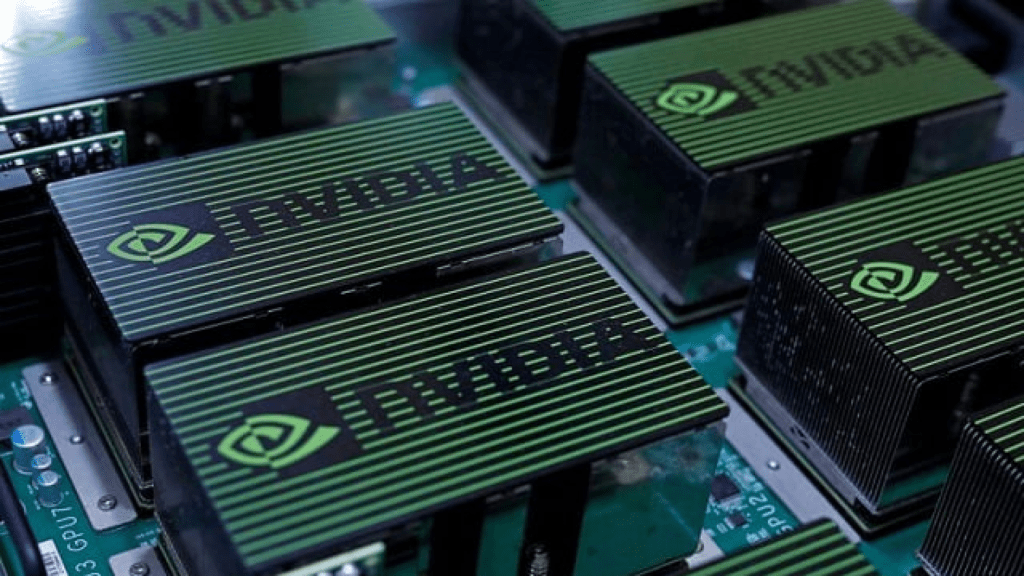
entspos 5:22 pm March 27, 2024 Nvidia’s $2.2 trillion market cap has been attributed to its production of artificial intelligence chips, which have become integral to the new era of generative AI, with major players like startups, Microsoft, OpenAI, and Google’s parent company, Alphabet, relying on them. The company’s CUDA software platform, used by over 4 million global developers, has further cemented its dominance by making competition extremely challenging. However, a coalition of tech giants including Qualcomm, Google, and Intel is aiming to disrupt Nvidia’s stronghold by targeting its proprietary software that binds developers to its chips. Utilizing Intel’s OneAPI technology as a starting point, the UXL Foundation, backed by various tech companies, intends to develop a suite of software and tools capable of powering different types of AI accelerator chips, fostering an open ecosystem where code can run on any hardware. Google, a founding member of UXL, emphasizes the importance of creating an open ecosystem and promoting hardware choice. The technical steering committee of UXL is working towards finalizing technical specifications, aiming for a mature state by year-end, and plans to attract contributions from various companies while ensuring compatibility across different hardware platforms. Despite these efforts, Nvidia remains optimistic, acknowledging the evolving landscape of accelerated computing and welcoming new ideas from across the ecosystem. Meanwhile, startups aiming to challenge Nvidia’s dominance in AI software have attracted significant investment, signaling increased interest in disrupting Nvidia’s position. In summary, while Nvidia’s CUDA software remains a formidable force, initiatives like the UXL Foundation and the influx of venture capital into AI startups demonstrate a growing effort to diversify the AI hardware and software landscape, potentially challenging Nvidia’s dominance in the long run. Recent Posts
Stability AI CEO resigns because you’re ‘not going to beat centralized AI with more centralized AI’

entspos 6:21 pm March 23, 2024 Emad Mostaque, the founder and former CEO of Stability AI, has stepped down from his position as CEO and also vacated his seat on the startup’s board, marking the second major leadership change within the AI industry this week. Stability AI, a unicorn startup with backing from prominent investors like Lightspeed Venture Partners and Coatue Management, has yet to appoint a permanent replacement for Mostaque. In the interim, the company has named its COO Shan Shan Wong and CTO Christian Laforte as co-CEOs, according to a statement released by the firm. Mostaque’s decision to step down from Stability AI stems from his desire to pursue decentralized AI initiatives, as he expressed in various posts on X. He argued against the dominance of “centralized AI” models, advocating for more transparent and distributed governance in the field. Mostaque, who held a significant portion of controlling shares, emphasized the importance of addressing the concentration of power in AI. The departure of Mostaque from Stability AI comes amid challenges for the startup, which has experienced significant talent loss in recent times. Reports suggest that the company was spending a substantial amount each month and struggled to secure new funding at a desired valuation. Notably, Mostaque’s priorities seemed to have shifted over time. While previously not emphasizing revenue growth, his recent statements indicate a focus on achieving cash flow positivity and catering to enterprise adoption. Stability AI aims to capitalize on the vast market demand for open models, particularly in regulated industries and at the edge. This development at Stability AI coincides with other significant shifts in the AI industry, such as the departure of key personnel from Inflection AI to Microsoft. These events underscore the dynamic nature of the AI landscape and the ongoing evolution of strategies within the sector. Recent Posts