
AI’s Macro Impact: Inflation, Rising Debt, and Investor Fatigue

Nazima 6:24 am August 27, 2026 AI’s Macro Impact: Inflation Pressure and Rising Debt Fatigue Artificial intelligence is rapidly moving beyond the technology sector and becoming an increasingly important macroeconomic force. Its impact is emerging through two closely connected channels: the investment boom required to build AI infrastructure is creating near-term inflationary pressure, while the growing reliance on debt to finance that expansion is beginning to test investor capacity and appetite. This creates a complicated economic transition. AI has the potential to raise productivity, expand productive capacity, and reduce costs over the long term. Yet, during the build-out phase, the surge in investment, demand for scarce inputs, and rapid growth in corporate borrowing can generate inflationary pressures and tighter financial conditions. The following analysis brings together recent observations from central banks, the Bank for International Settlements (BIS), market participants, and financial analysts as of August 2026. 1. Swiss National Bank: AI Could Push Inflation Higher in the Short Term What the SNB Says Petra Tschudin, a Governing Board member of the Swiss National Bank (SNB), said in a late-August 2026 interview that artificial intelligence could push inflation higher in the short to medium term. The long-term effect, however, remains uncertain. A key reason is that investment is being redirected toward AI-related activities. As capital, labor, and other resources move toward the AI sector, parts of the broader economy may face adjustment difficulties and capacity constraints. One of the clearest examples is the supply of semiconductors. If demand for chips and other critical AI inputs grows faster than supply, shortages can emerge and push prices higher. Similar constraints can arise in infrastructure, energy, data-center capacity, and specialized labor. Over the longer term, AI could have the opposite effect. Greater productivity and lower production costs could create disinflationary pressure. However, higher productivity does not automatically result in sustained deflation. For inflation to turn structurally negative, prices would need to fall repeatedly and persistently rather than simply increase at a slower rate. The SNB’s latest forecast continues to place Swiss inflation within its 0–2% target range through the first quarter of 2029. Importantly, this is a conditional forecast based on unchanged policy rates, rather than a commitment to keep rates unchanged for the entire period. Tschudin also emphasized that the SNB would respond to new inflation information and adjust monetary policy when necessary. The central bank does not publish a fixed interest-rate path. Why This Matters The SNB’s assessment reflects a broader concern among central banks: AI is no longer simply a technology-sector story. It is becoming a macroeconomic shock that can influence demand and supply simultaneously. That combination makes the economic cycle harder to interpret. Strong AI investment can increase demand today, while productivity gains may expand supply later. For central banks, distinguishing between temporary inflationary pressure and longer-lasting changes becomes considerably more difficult. 2. BIS and Other Central Banks: AI Is Blurring Inflation Signals The Bank for International Settlements and other policymakers have highlighted similar risks. According to a July 2026 BIS Bulletin, the AI boom is driving a large and increasingly debt-financed investment surge. This expansion is affecting trade, equity markets, wealth effects, and terms of trade, with the consequences varying across countries. The central challenge is that AI can influence both sides of the economy at the same time. On the demand side, AI investment increases spending on infrastructure, equipment, energy, technology, and services. Rising equity valuations can also generate wealth effects that encourage additional spending. On the supply side, successful AI adoption could increase productivity and expand the economy’s productive capacity. This creates a difficult policy environment. If demand rises faster than supply during the early stages of the AI build-out, inflationary pressures can increase. Later, once productivity gains become more widespread, the additional supply generated by AI could help contain inflation. ECB Executive Board member Philip Lane has identified another important transmission channel. If households and businesses quickly interpret AI as a permanent productivity improvement, they may bring forward spending in anticipation of higher future income. That shift in current demand can itself create upward pressure on inflation during the transition. IMF research cited through central-bank channels has similarly suggested that higher productivity from AI does not necessarily translate into lower inflation in a simple or immediate way. In other words, AI represents a dual-edged macroeconomic force: potentially inflationary during the investment and adjustment phase, but potentially disinflationary as productivity gains become more established. 3. US Corporate AI Debt: Rapid Growth and Emerging Investor Fatigue The inflation story is only one side of the equation. The other is how the AI investment boom is being financed. A Rapid Increase in Debt US technology “hyperscalers” — including Microsoft, Amazon, Alphabet, Meta, and Oracle — have significantly increased borrowing to finance AI-related capital expenditure. According to the estimates cited in the underlying sources, AI-related debt issuance by hyperscalers reached approximately $220 billion in 2026 by early to mid-August. That compares with much smaller issuance levels in 2024 and 2025, although estimates vary depending on how AI-linked borrowing is defined. Another estimate placed AI-linked gross issuance at approximately $98 billion in 2025 and around $200 billion in 2026, suggesting that borrowing could roughly double within a year as infrastructure investment accelerates. A separate, broader estimate has placed “hidden debt” associated with technology companies at approximately $1.65 trillion, representing an eightfold increase over four years. This figure should not be directly compared with conventional bond issuance because it refers to a broader category of off-balance-sheet and structured financing. The underlying purpose of this borrowing is largely the same: funding the enormous capital requirements of the AI build-out, including data centers, GPUs and other AI chips, electricity infrastructure, networking equipment, and related facilities. Investors Are Becoming More Selective The challenge is no longer simply whether investors are willing to fund large technology companies. The issue is how much additional debt the market can absorb without demanding significantly higher compensation. Reports cited in the draft indicate signs of growing investor fatigue as
Microsoft Copilot: Everything you need to know about Microsoft’s AI
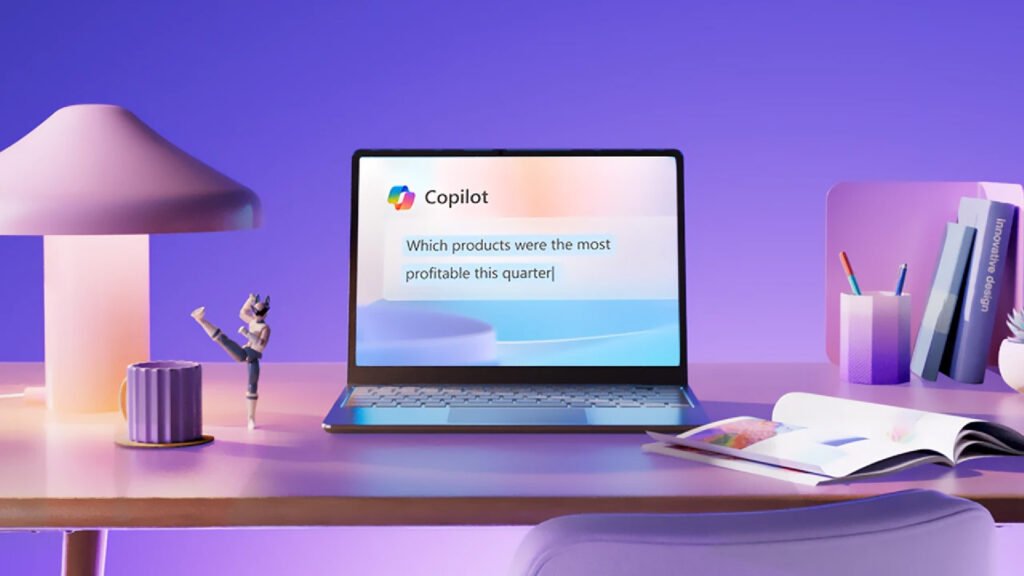
entspos 10:38 am August 19, 2024 Copilot is Microsoft’s innovative approach to enhancing productivity through generative AI, aligning with its expansive AI ambitions. Today, there are about a dozen Copilot-branded products integrated into various Microsoft software and services, offering features like summarizations in Microsoft Outlook and transcriptions in Microsoft Teams. In addition to these, Microsoft also offers GitHub Copilot for code generation and a general-purpose Copilot on Windows and the web, similar to OpenAI’s ChatGPT. This post will explore the different Microsoft Copilot products, their functionalities, and highlight the distinctions between them. What is Microsoft Copilot? Microsoft Copilot, formerly known as Bing Chat, is embedded in Microsoft’s search engine Bing, as well as Windows 10, Windows 11, and the Microsoft Edge sidebar. Some newer PCs even feature a dedicated keyboard key for launching Copilot. Additionally, there are stand-alone Copilot apps for Android and iOS, and an in-app Telegram room. Powered by fine-tuned versions of OpenAI’s models, Copilot can perform a wide range of tasks described in natural language, such as writing poems and essays, translating text, and summarizing web sources. It also provides up-to-date information by browsing the web via Bing, although it occasionally makes mistakes. Copilot can create images using Microsoft’s Image Creator, built on OpenAI’s DALL-E 3 model, and generate songs through an integration with the AI music-generation platform Suno. For instance, typing “Create an image of a zebra” or “Generate a song with a jazz rhythm” in Copilot will activate the relevant tool. Copilot supports plug-ins for third-party apps and websites, including Instacart for meal planning, Kayak for trip planning, OpenTable for restaurant reservations, and Shopify, among others. Which Windows settings can Copilot control? On Windows 11, Copilot can control certain settings and functions, acting as a digital concierge. Users can type or use speech recognition to perform actions like turning the battery saver on or off, displaying device and system information, launching live captions, showing the PC’s IP address, and emptying the recycle bin. A toggle in the Copilot interface switches between “Work” and “Web” mode, with the former integrating Copilot’s Microsoft 365 capabilities. What is Copilot Pro? Copilot Pro, priced at $20 per month, offers premium features similar to other generative AI chatbot plans. Subscribers get priority access to the most capable OpenAI models, exclusive features like higher-resolution images from Image Creator, and access to generative AI functions across Word, Excel, PowerPoint, Outlook, and OneNote. Copilot Pro subscribers receive 100 daily “boosts” in Image Creator and access to generative AI functions across the Microsoft 365 desktop apps for those with a Microsoft 365 Personal or Family plan. However, Copilot Pro does not include Copilot in Teams, which is reserved for enterprise Copilot customers. What is Copilot for Microsoft 365? Copilot for Microsoft 365, priced at $30 per user per month, is available to customers with specific Microsoft 365 licenses. It offers similar capabilities as Copilot Pro but includes enterprise-grade data protection and the Semantic Index for more personalized responses. It integrates into Microsoft 365 apps to assist with tasks like formatting Excel data or generating PowerPoint presentations. List of Copilot Products and Their Skills: Copilot in Power Pages: Generates text, forms, chatbots, and web page layouts. Copilot for Sales: Assists with email responses and sales-related tasks. Copilot in Microsoft Supply Chain Center: Flags issues affecting supply chains. Copilot for Service: Drafts answers to customer queries and assists customer service agents. Copilot for Azure: Suggests configurations and helps with troubleshooting. Copilot for Security: Summarizes cyber threat intelligence. Copilot in Fabric: Helps with data visualization and transformation. Copilot in Intune: Manages security policies and device issues. Team Copilot: Manages meeting agendas and tasks in Teams. Recent Posts