AI-Based Logistics Management System
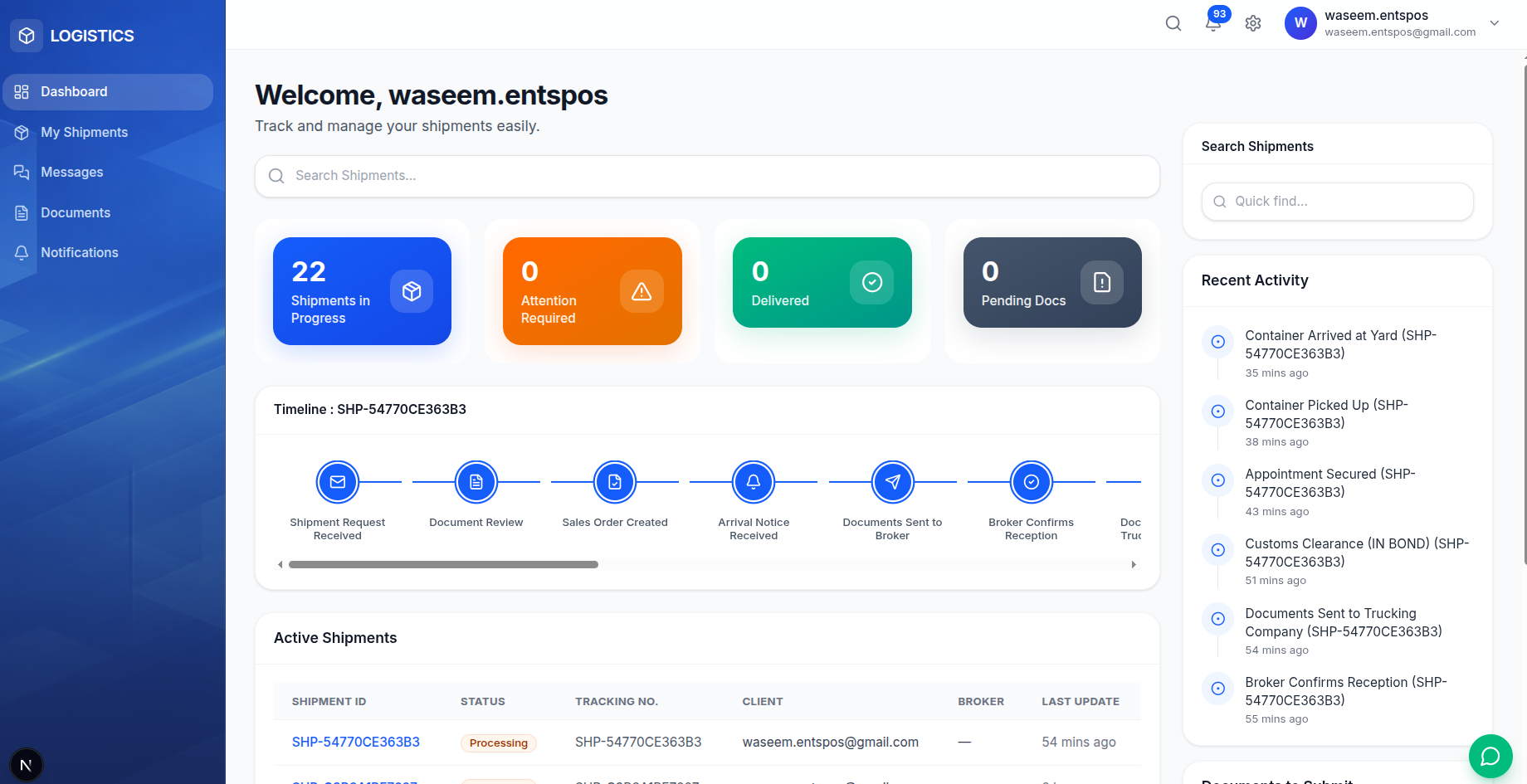
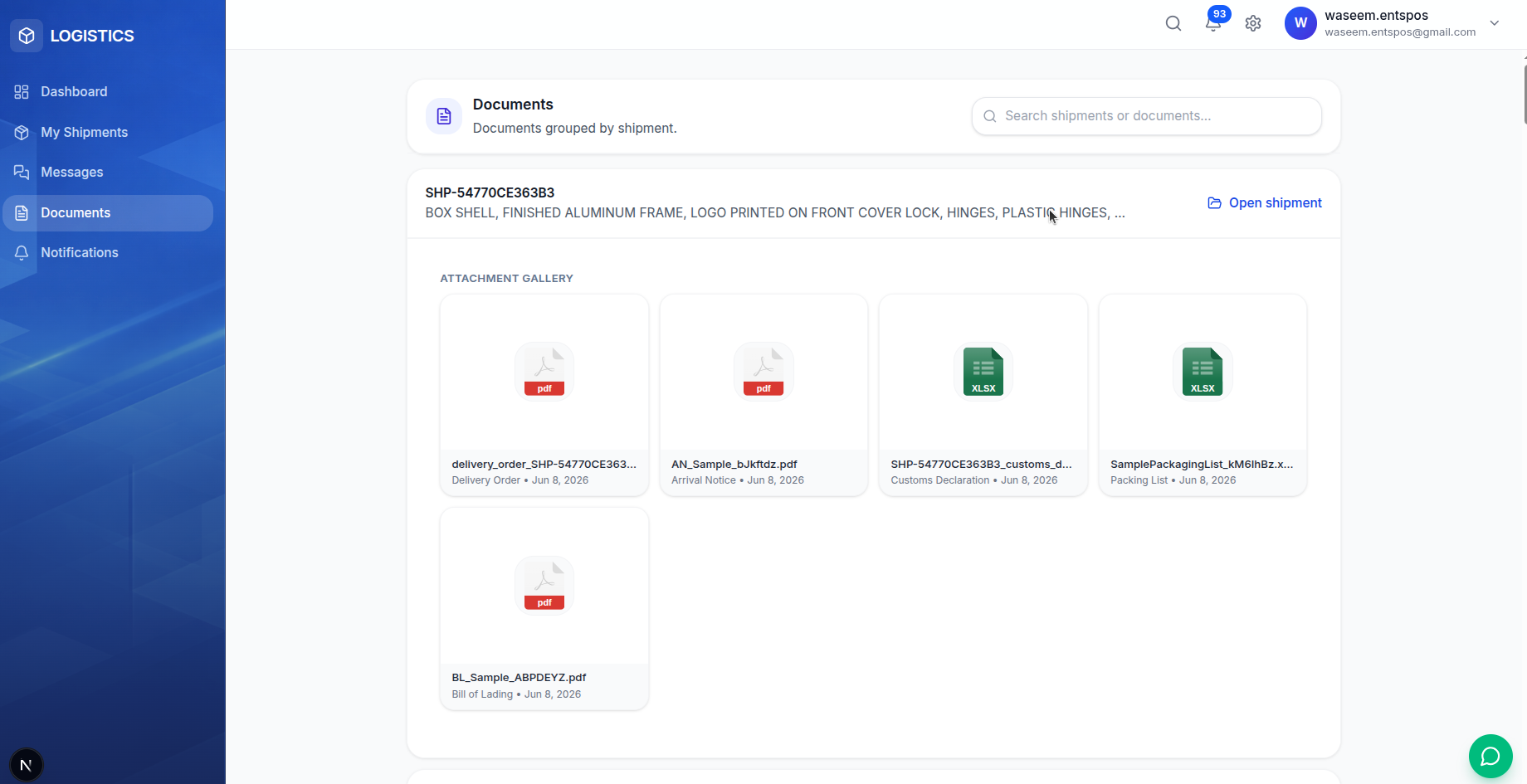
Barklays Logistics required a modern, intelligent platform to bridge the gap between their internal operations and their clients. The system was designed to unify shipment management, document handling, and real-time communication into a single, customer-facing dashboard backed by AI-driven automation.
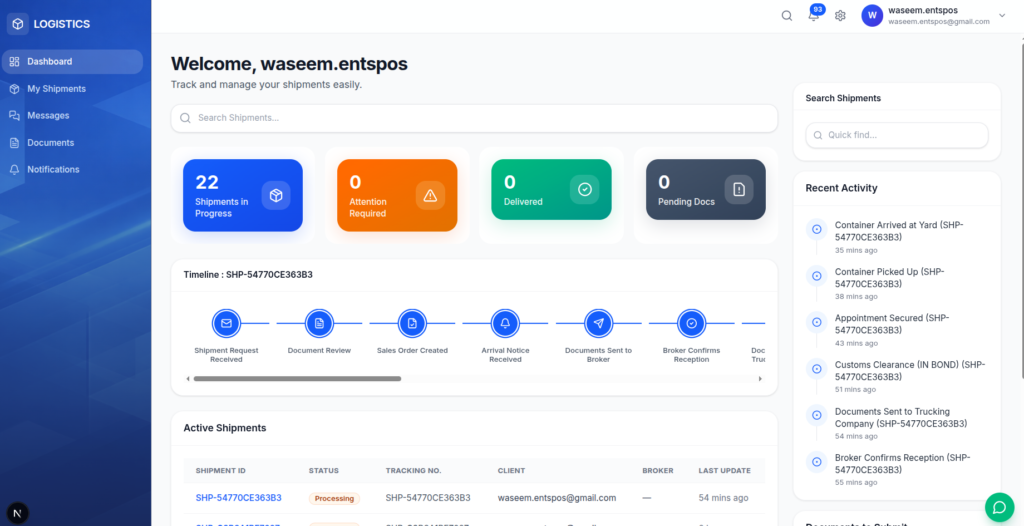
The platform integrates with Microsoft Outlook via Azure OAuth and Odoo ERP, enabling the system to automatically read incoming emails, extract shipment-related data, and push status updates — without any manual intervention from operations staff.
Problem Statement
- Customers had no visibility into the real-time status of their shipments — all updates were communicated manually via email, creating delays and miscommunication.
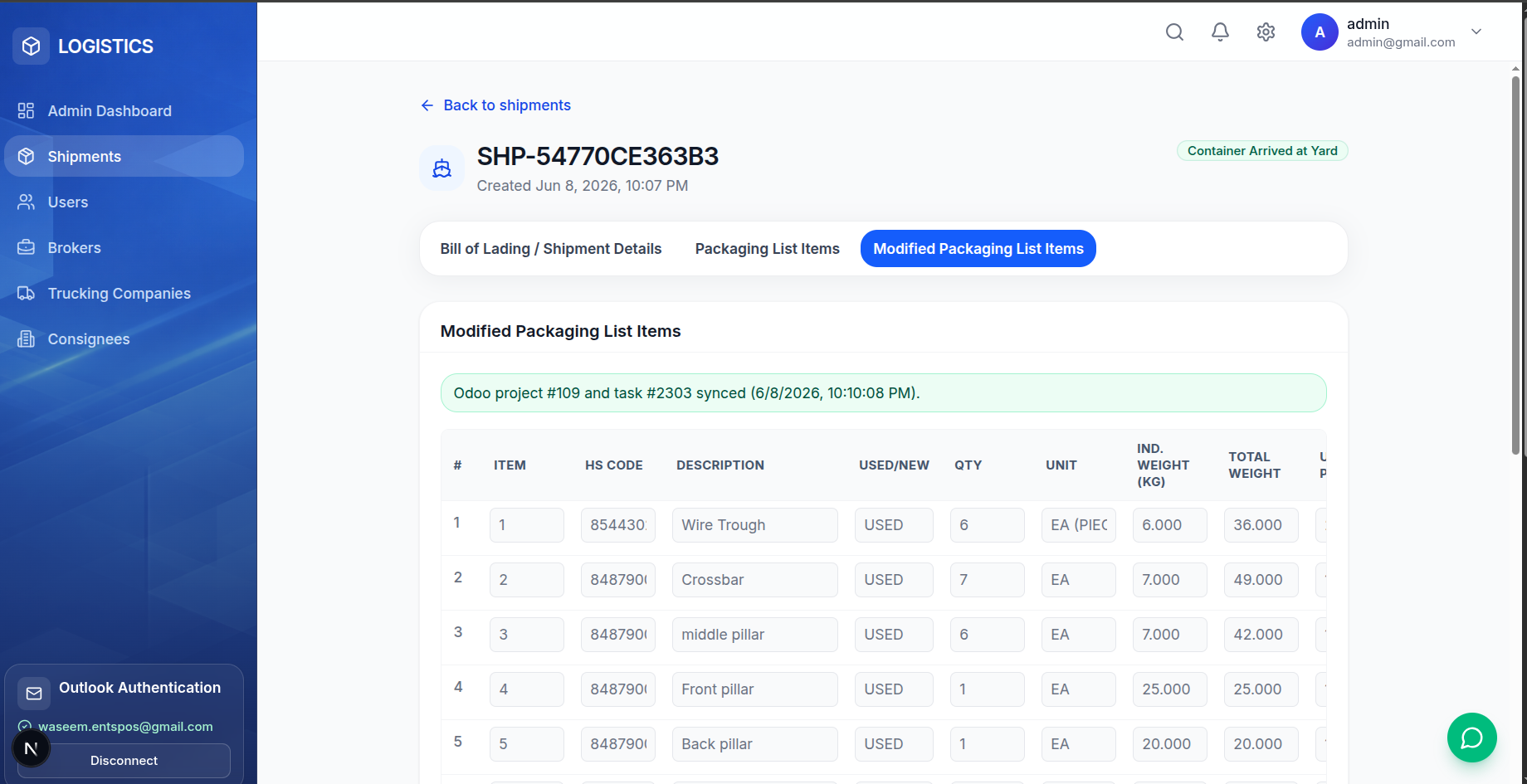
- Critical shipping documents such as Bills of Lading had to be reviewed and entered manually into internal systems, leading to errors and wasted staff hours.
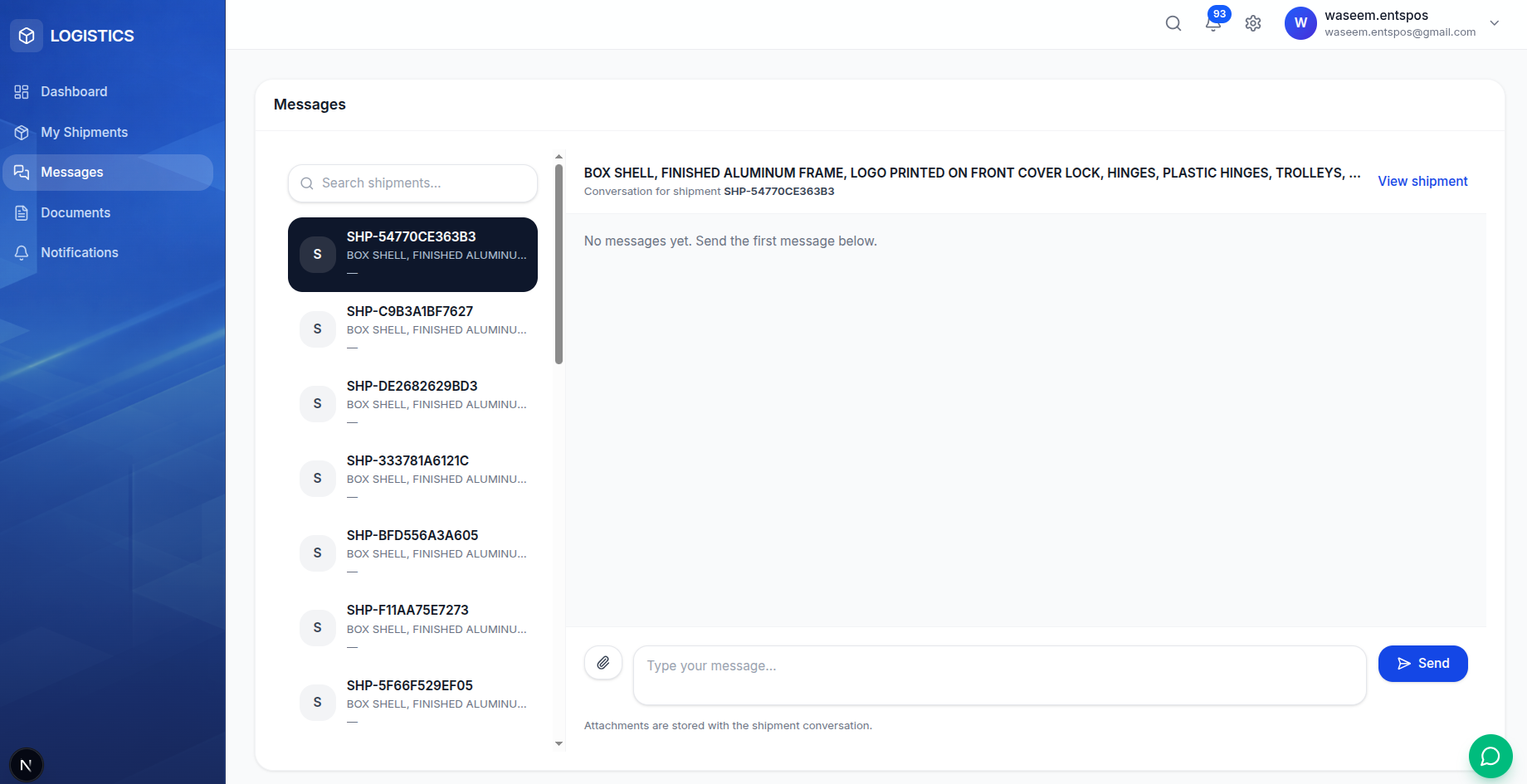
- There was no centralized channel for client–logistics team communication; conversations were fragmented across email threads with no link to specific shipments.
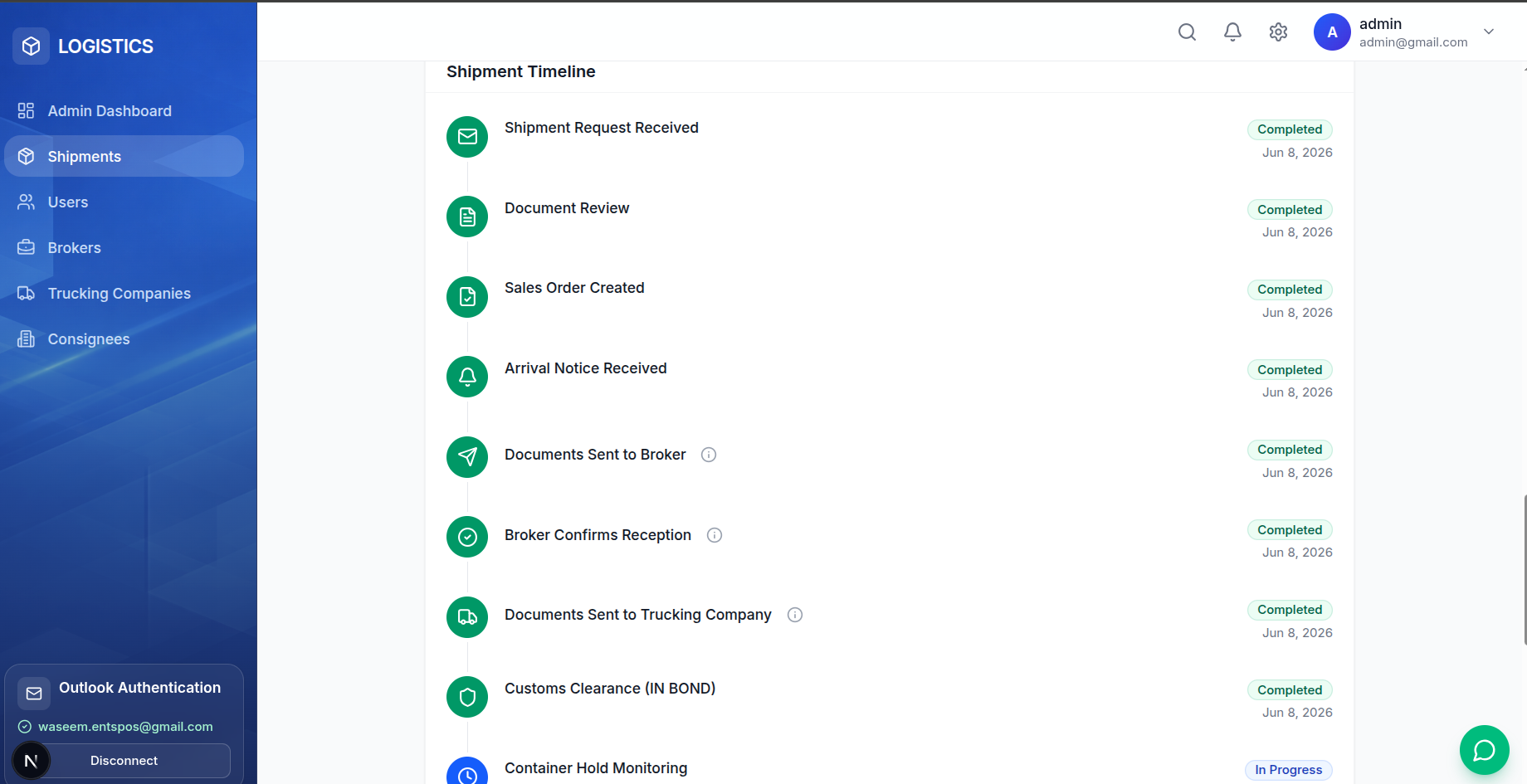
- Shipment milestone tracking was inconsistent — there was no structured timeline showing customers where in the logistics process their cargo was at any given moment.
- Incoming emails from freight forwarders, brokers, and carriers contained actionable data (arrival notices, status changes, delays) that was not being captured or processed systematically.
Project Scope
- Customer dashboard: Authentication, shipment listing, shipment detail views, in-app messaging, real-time notifications, and search — estimated 15–18 days.
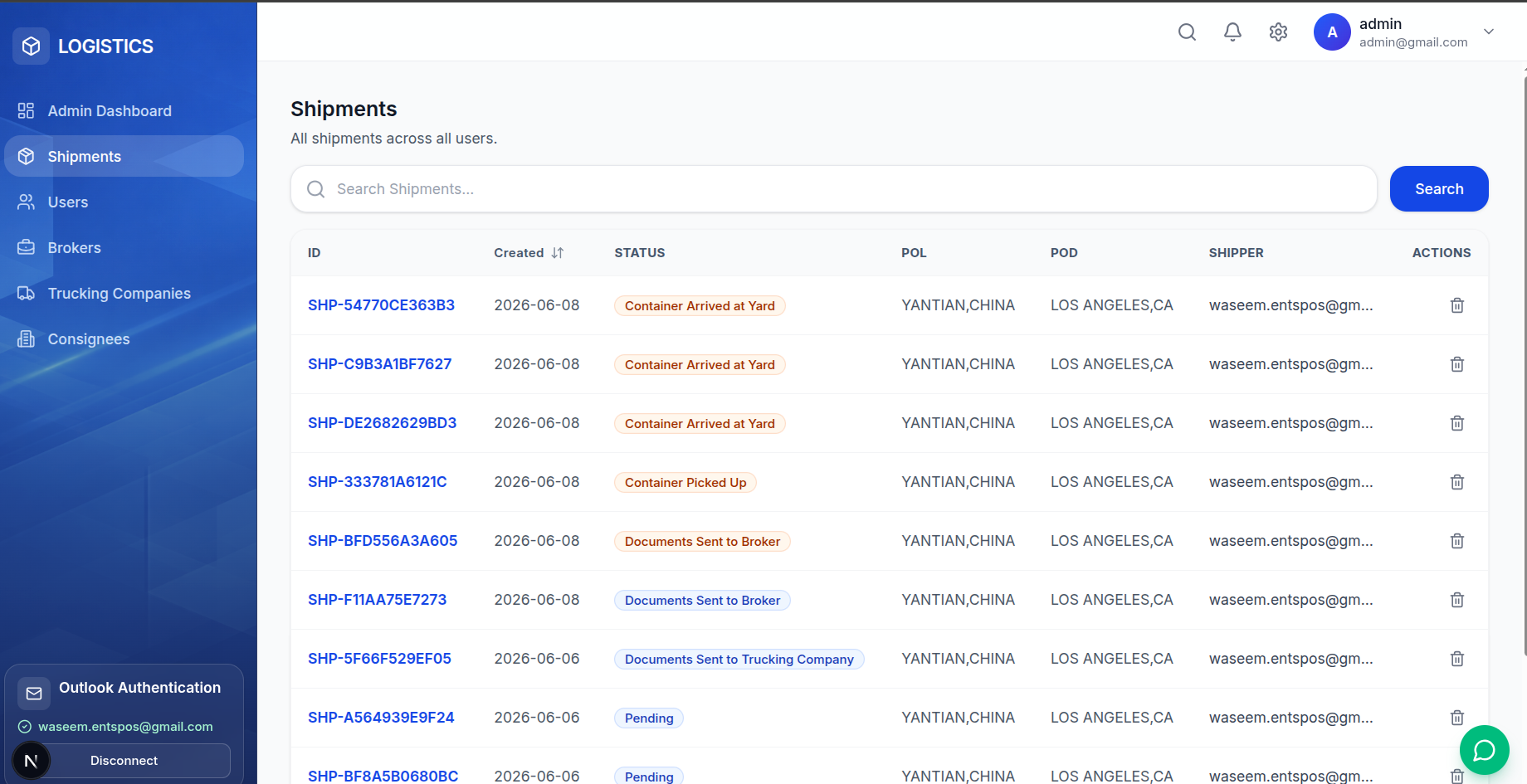
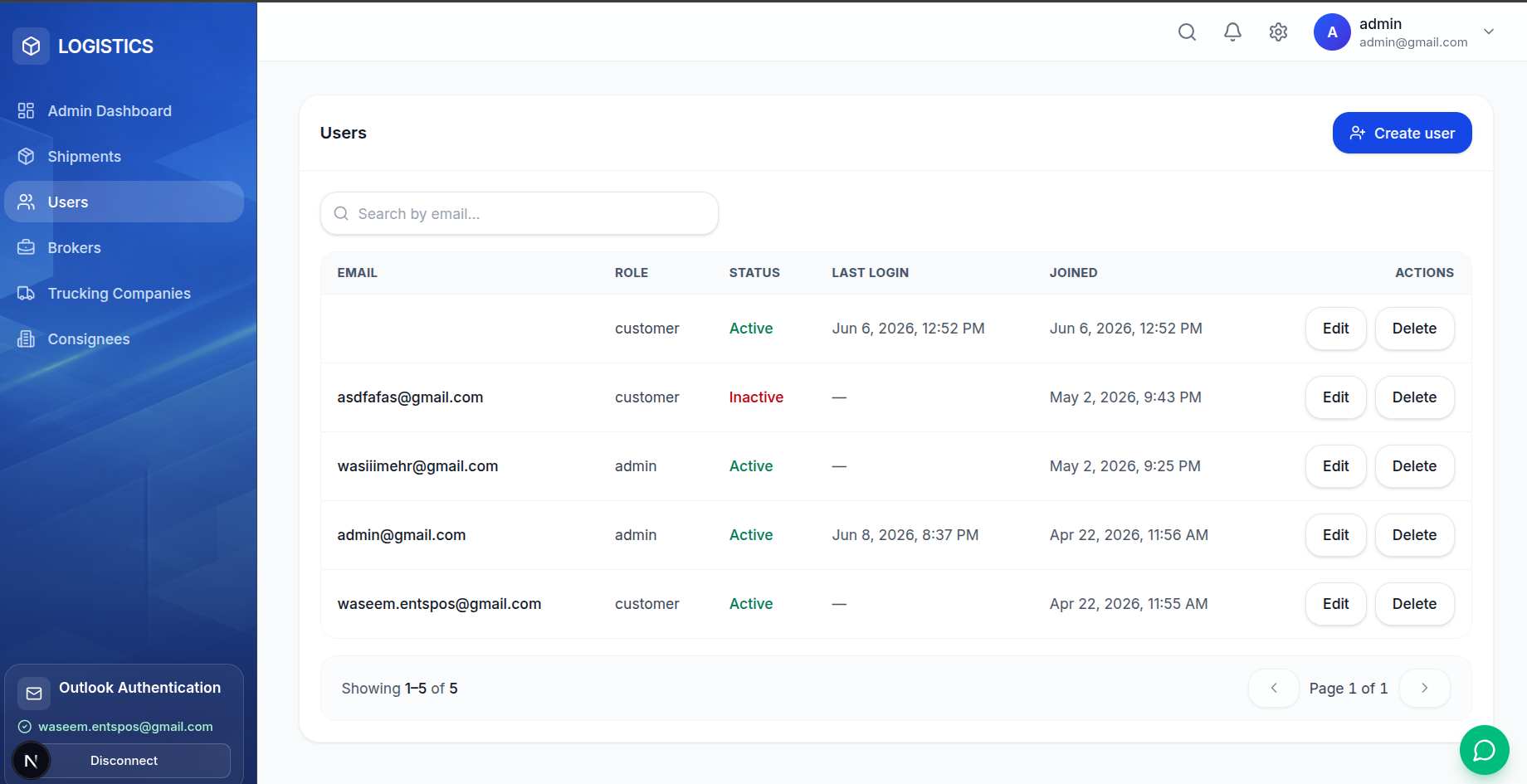
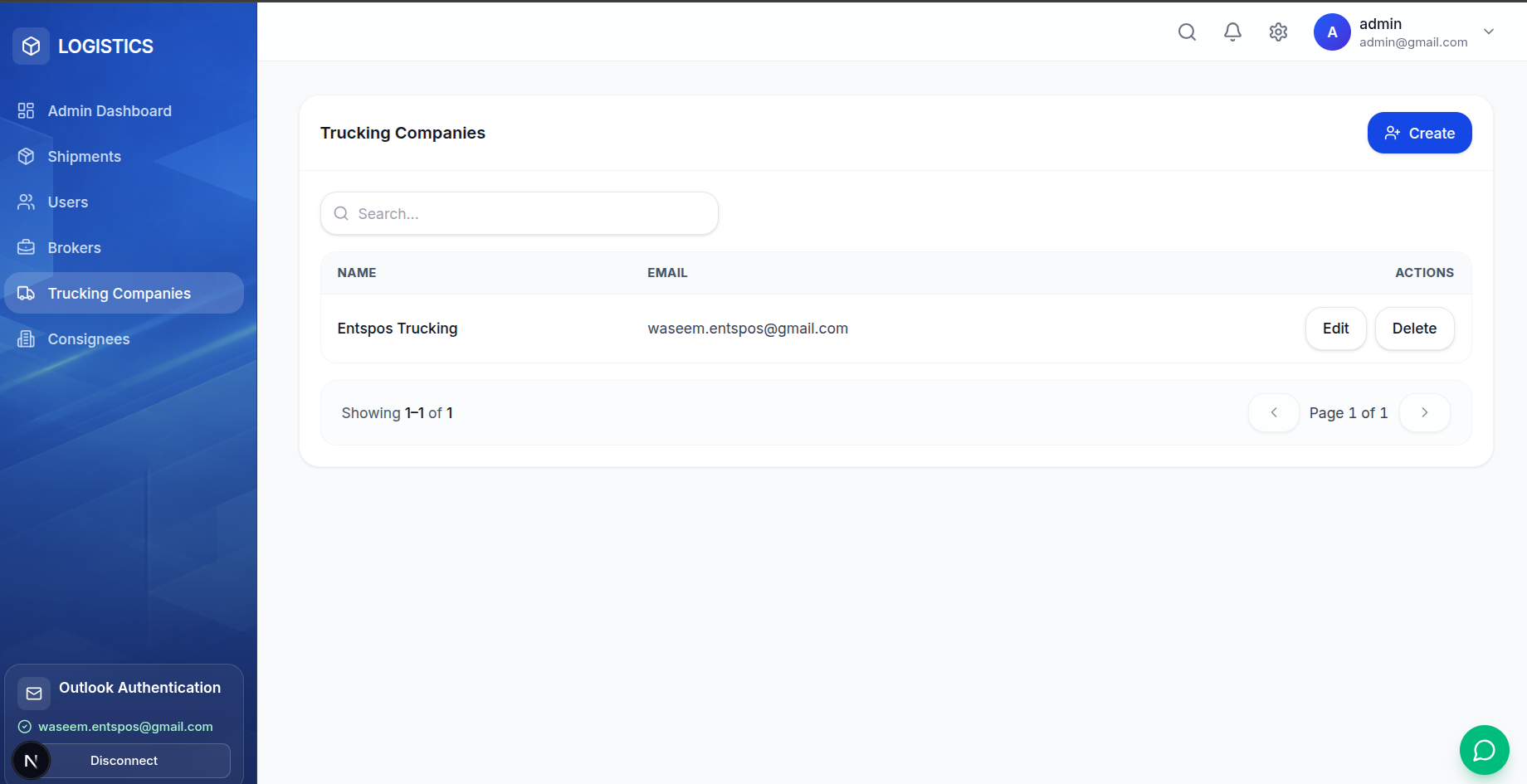
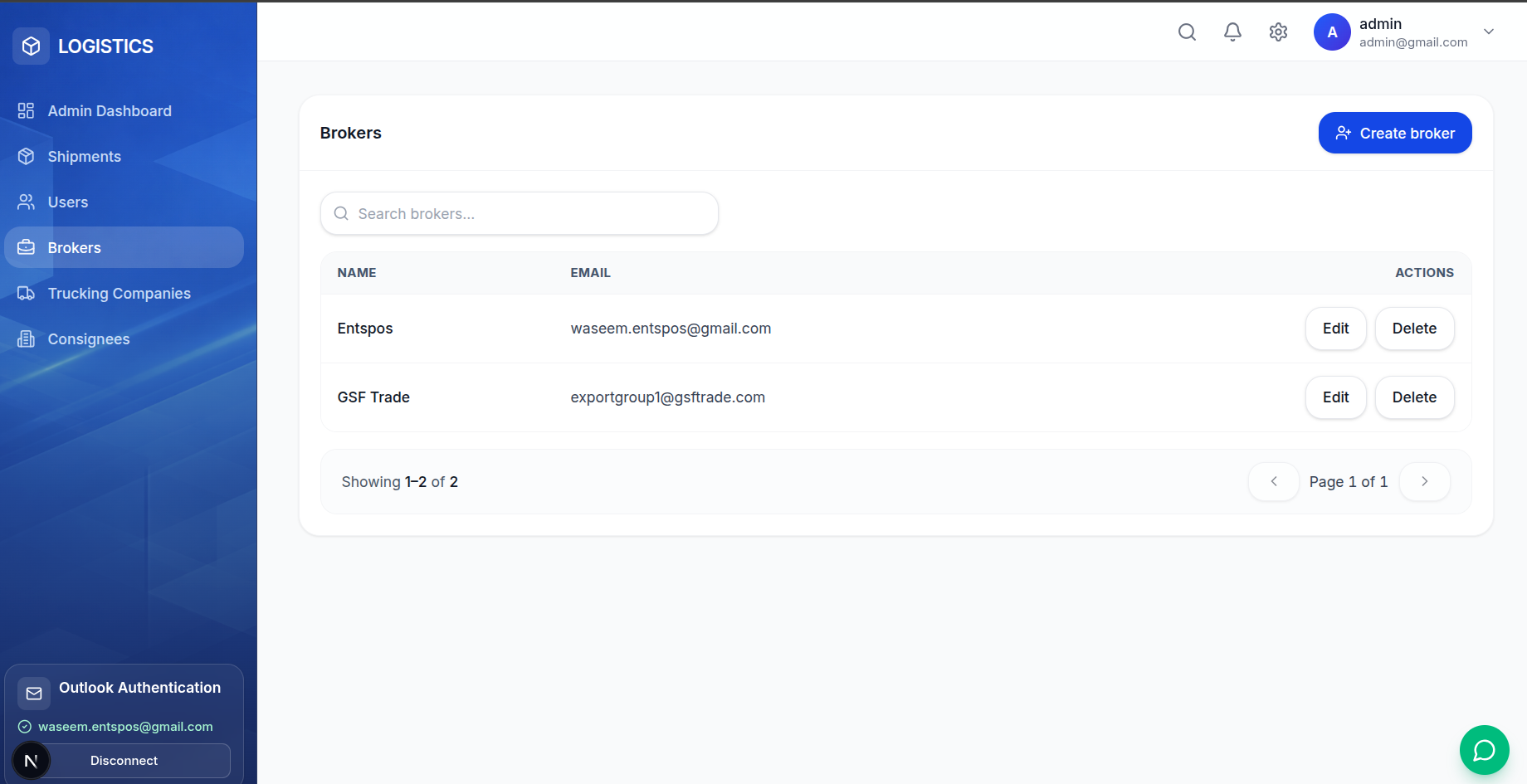
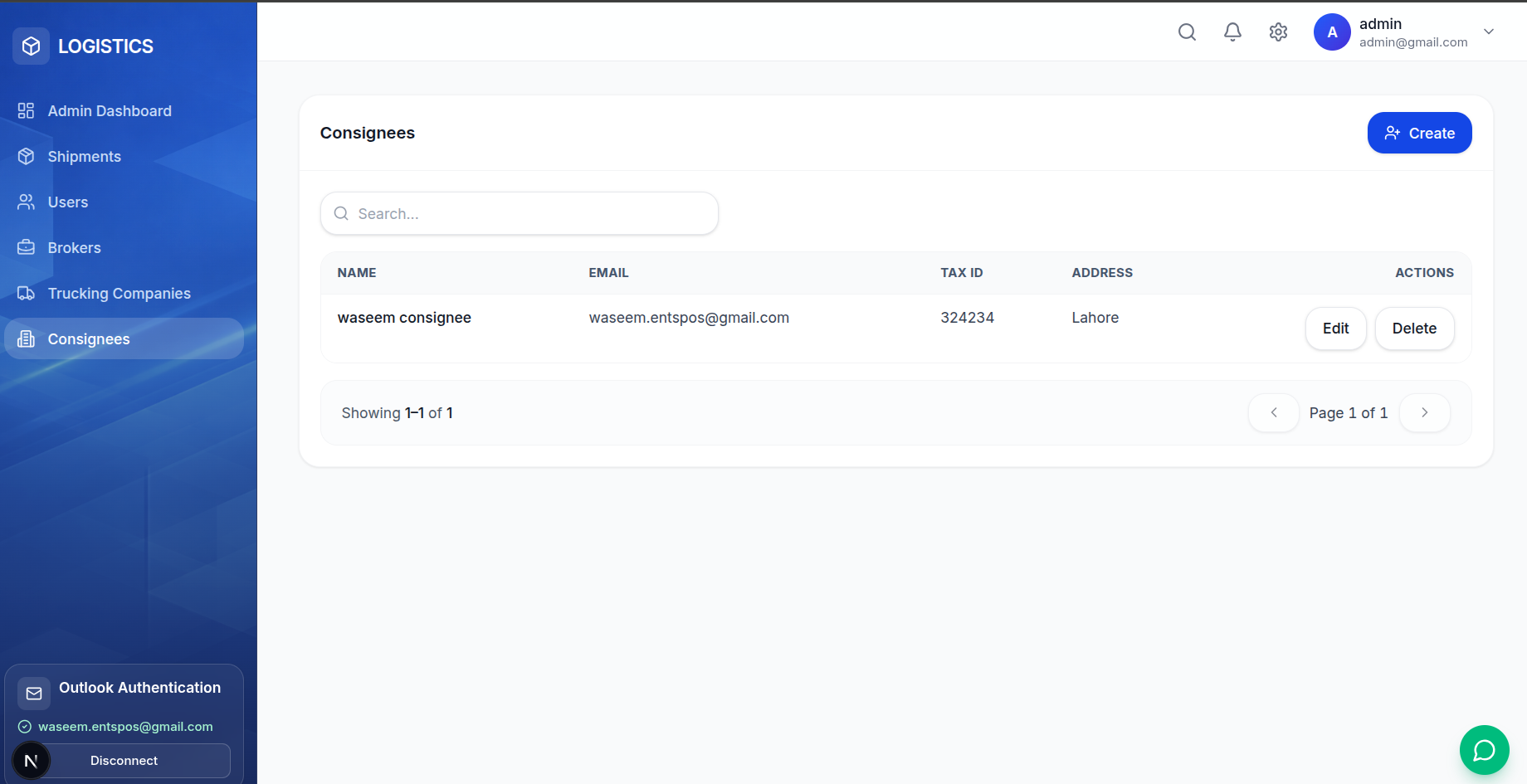
- Admin dashboard: Client management, shipment management, reporting, analytics, email AI analysis, Odoo sync, audit logs, and background job queues — estimated 28–37 days.
- AI & automation: OCR-based document extraction, LLM-powered email analysis, auto status updates, and automated email notifications triggered by workflow events.
- Third-party integrations: Microsoft Azure (Outlook OAuth + Graph API) for email access, and Odoo ERP for sales order creation and shipment data synchronization.
Solution
The platform was built as a two-sided web application — a customer-facing portal and an operations-facing admin dashboard — unified by a shared Django REST API backend with PostgreSQL storage.
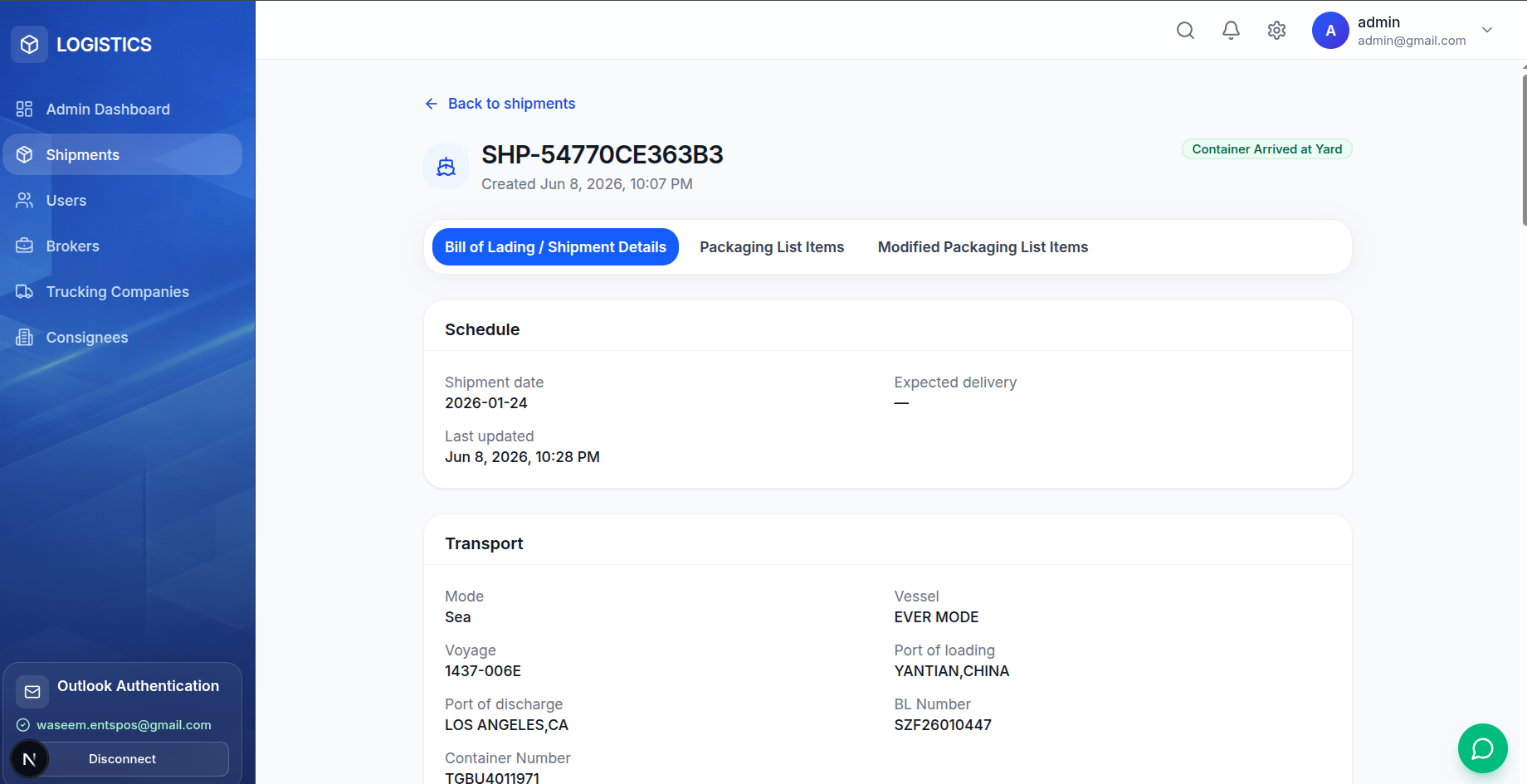
At its core, the solution leverages AI at two key touchpoints: when a customer uploads a Bill of Lading or supporting document, OCR and an LLM automatically extract structured data (parties, vessel, cargo, containers) and populate the shipment record instantly. On the operations side, incoming emails from freight forwarders and brokers are continuously monitored via the Microsoft Graph API; an AI module classifies each message, detects status changes or delays, and triggers the appropriate timeline update and customer notification — all without manual input.
Real-time communication between clients and the logistics team happens within the platform itself, with each conversation scoped to a specific shipment. Celery and Redis handle background jobs to keep the interface responsive while AI processing, Odoo sync, and email automation run asynchronously.
Key Features
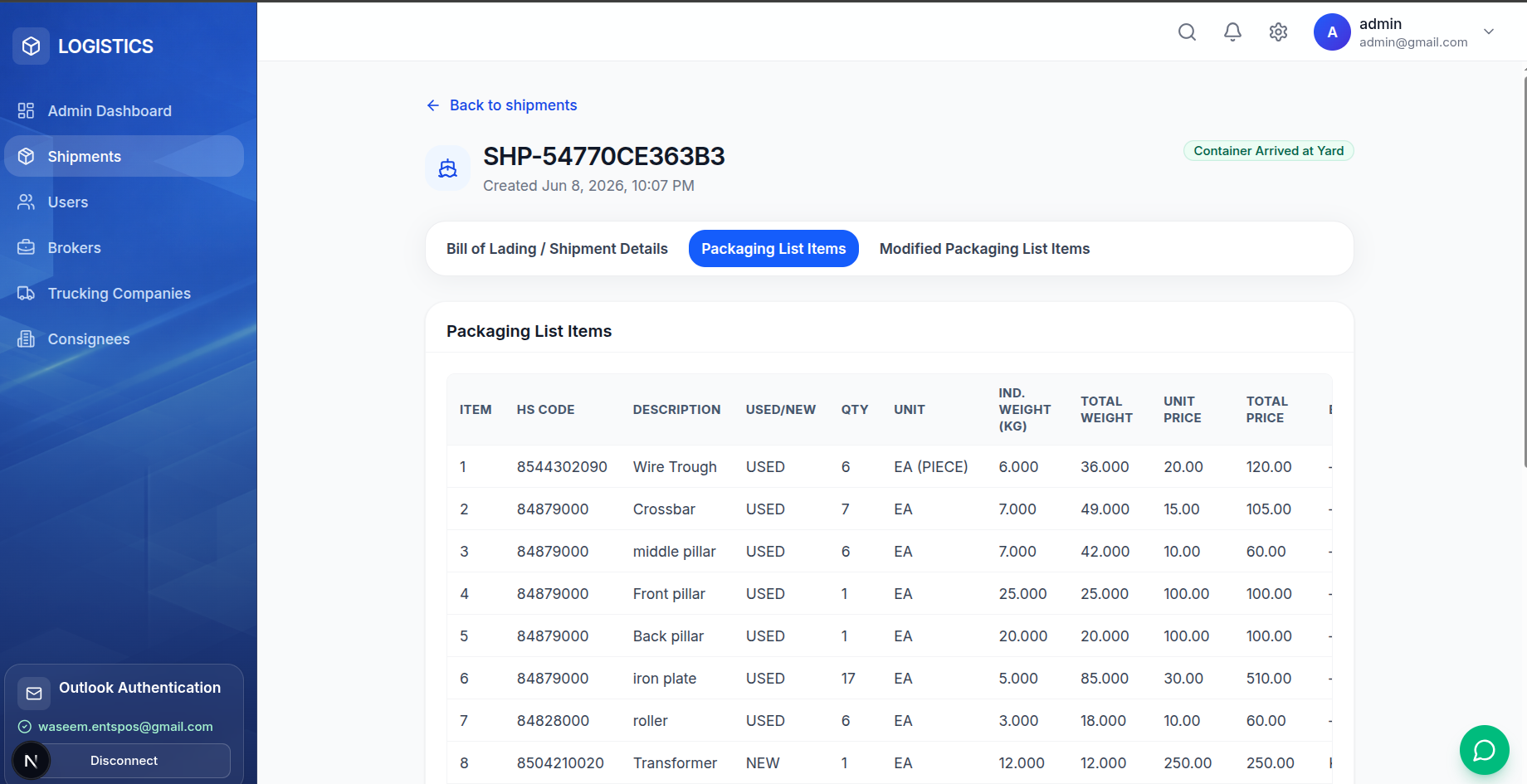
- AI document extraction: Customers upload a Bill of Lading and the system automatically extracts shipper, consignee, vessel, voyage, cargo, container, and weight data — populating the full shipment record in seconds.
- Visual shipment timeline: A structured, milestone-by-milestone progress tracker — from shipment request received through customs clearance, container pickup, crossing, and final warehouse delivery — updated automatically via AI email triggers.
- AI email analysis: Incoming emails from brokers, carriers, and freight forwarders are read and classified by an LLM. Status updates, arrival notices, and delays are automatically extracted and reflected on the shipment timeline and notification feed.
- Per-shipment messaging: An in-app messaging interface replaces external email threads, keeping all client–logistics communication tied directly to the relevant shipment with full conversation history and attachment support.
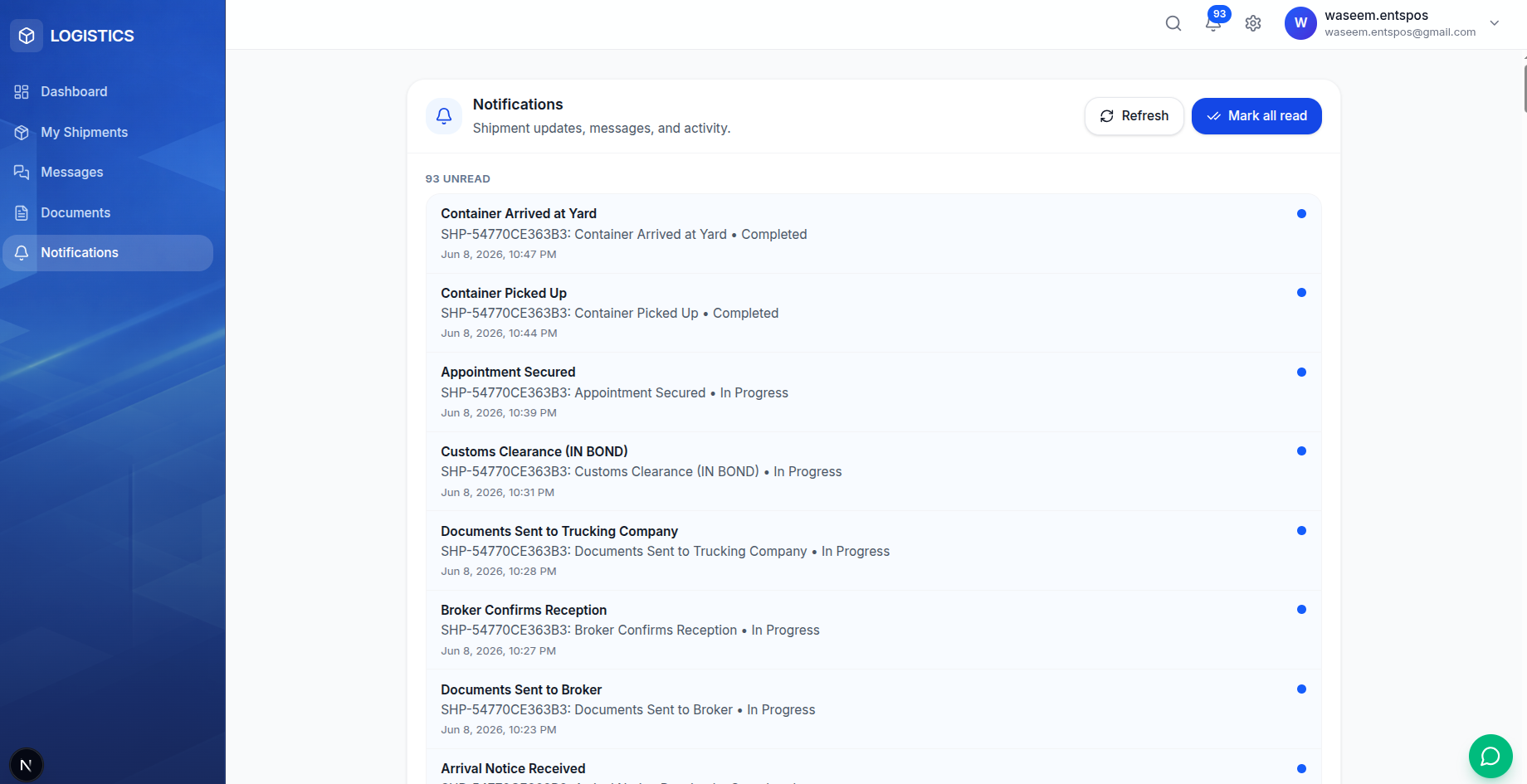
- Real-time notifications: A WebSocket-powered notification panel alerts customers the moment a shipment status changes, a new message arrives, or an email-triggered update occurs — keeping clients informed without polling or manual follow-up.
- Odoo ERP integration: Sales orders are automatically created in Odoo when a shipment is initiated, and shipment data stays synchronized between the customer dashboard and the internal ERP throughout the shipment lifecycle.
Project Manager
Frontend Engineer
Mobile Developer
Backend Engineer
QA
Team
UI/UX Designer
Tecnology Stack
Frontend
React
Nextjs
Typescript
Redux
Backend
Django
Express JS
Tools & Integrations
Figma
Docker
AWS S3
Results


Are You Interested?
Fill Out The Form!
Say something to start a live chat!