
Scientists Achieve New Record for Internet Speed of 301 Terabits Per Second

entspos 6:44 am March 31, 2024 The recent advancement in internet speed technology achieved by researchers at Aston University in the UK marks a significant leap in data transmission rates over standard optical fiber cables. With an impressive transmission rate of 301,000 Gbps, the researchers have showcased the potential for greatly improving internet speeds without the necessity of completely overhauling existing infrastructure. At the heart of this breakthrough lies the utilization of novel wavelength bands that introduce additional colors to the optical spectrum, thereby expanding the capacity for data transmission. In contrast to previous methods that divided optical light into more wavelengths, often requiring extensive network upgrades, Aston University’s approach, known as Multiband Transmission (MBT), offers a more practical solution. MBT makes use of the existing bandwidth of standard single mode fiber (SSMF) while primarily implementing upgrades at the node and operator levels. This implies that infrastructure enhancement can be achieved without the widespread replacement of optical fiber cables, thus minimizing costs and disruptions to existing networks. The research team’s experiment involved the development of optical amplifiers and gain equalizers capable of accessing additional wavelength bands, specifically the E-band and S-bands, in addition to the commercially available C and L-bands. By successfully reproducing E-band channels in a controlled manner, the researchers have demonstrated the feasibility of achieving high-speed data transmission over long distances. Moreover, the experiment was conducted using a 50-kilometer-long optical fiber, indicating the scalability of the technology for practical applications in real-world networks. This scalability is crucial for ensuring that the breakthrough can be effectively implemented across various network configurations and geographical regions. Aston University’s accomplishment represents a promising stride forward in the pursuit of faster internet speeds. By leveraging innovative approaches such as Multiband Transmission, researchers have shown the potential to significantly enhance data transmission rates while minimizing the need for extensive network upgrades. As the demand for high-speed internet continues to grow, breakthroughs like this will play a pivotal role in shaping the future of connectivity. Recent Posts
Behind the plot to break Nvidia’s grip on AI by targeting software
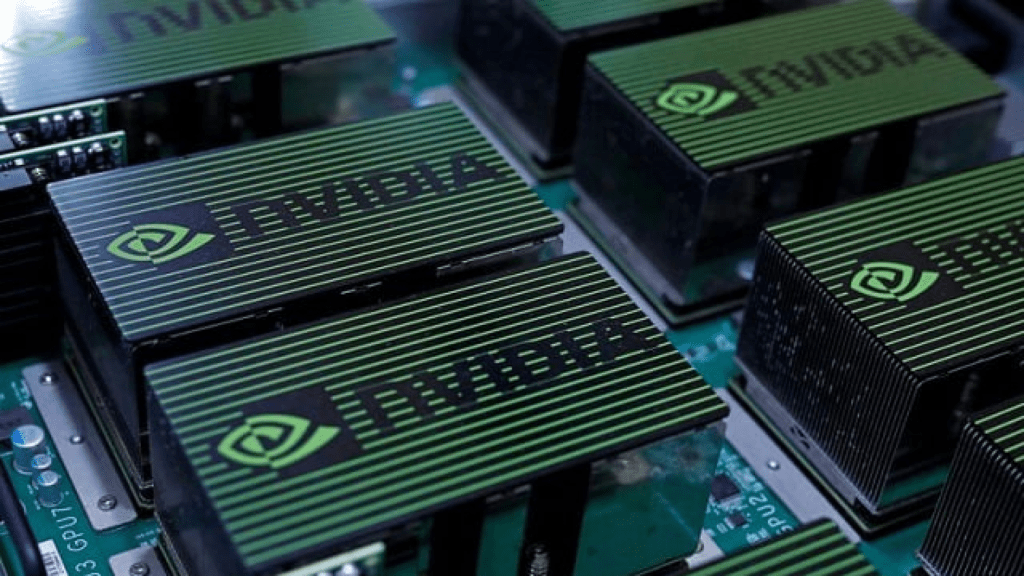
entspos 5:22 pm March 27, 2024 Nvidia’s $2.2 trillion market cap has been attributed to its production of artificial intelligence chips, which have become integral to the new era of generative AI, with major players like startups, Microsoft, OpenAI, and Google’s parent company, Alphabet, relying on them. The company’s CUDA software platform, used by over 4 million global developers, has further cemented its dominance by making competition extremely challenging. However, a coalition of tech giants including Qualcomm, Google, and Intel is aiming to disrupt Nvidia’s stronghold by targeting its proprietary software that binds developers to its chips. Utilizing Intel’s OneAPI technology as a starting point, the UXL Foundation, backed by various tech companies, intends to develop a suite of software and tools capable of powering different types of AI accelerator chips, fostering an open ecosystem where code can run on any hardware. Google, a founding member of UXL, emphasizes the importance of creating an open ecosystem and promoting hardware choice. The technical steering committee of UXL is working towards finalizing technical specifications, aiming for a mature state by year-end, and plans to attract contributions from various companies while ensuring compatibility across different hardware platforms. Despite these efforts, Nvidia remains optimistic, acknowledging the evolving landscape of accelerated computing and welcoming new ideas from across the ecosystem. Meanwhile, startups aiming to challenge Nvidia’s dominance in AI software have attracted significant investment, signaling increased interest in disrupting Nvidia’s position. In summary, while Nvidia’s CUDA software remains a formidable force, initiatives like the UXL Foundation and the influx of venture capital into AI startups demonstrate a growing effort to diversify the AI hardware and software landscape, potentially challenging Nvidia’s dominance in the long run. Recent Posts
Stability AI CEO resigns because you’re ‘not going to beat centralized AI with more centralized AI’

entspos 6:21 pm March 23, 2024 Emad Mostaque, the founder and former CEO of Stability AI, has stepped down from his position as CEO and also vacated his seat on the startup’s board, marking the second major leadership change within the AI industry this week. Stability AI, a unicorn startup with backing from prominent investors like Lightspeed Venture Partners and Coatue Management, has yet to appoint a permanent replacement for Mostaque. In the interim, the company has named its COO Shan Shan Wong and CTO Christian Laforte as co-CEOs, according to a statement released by the firm. Mostaque’s decision to step down from Stability AI stems from his desire to pursue decentralized AI initiatives, as he expressed in various posts on X. He argued against the dominance of “centralized AI” models, advocating for more transparent and distributed governance in the field. Mostaque, who held a significant portion of controlling shares, emphasized the importance of addressing the concentration of power in AI. The departure of Mostaque from Stability AI comes amid challenges for the startup, which has experienced significant talent loss in recent times. Reports suggest that the company was spending a substantial amount each month and struggled to secure new funding at a desired valuation. Notably, Mostaque’s priorities seemed to have shifted over time. While previously not emphasizing revenue growth, his recent statements indicate a focus on achieving cash flow positivity and catering to enterprise adoption. Stability AI aims to capitalize on the vast market demand for open models, particularly in regulated industries and at the edge. This development at Stability AI coincides with other significant shifts in the AI industry, such as the departure of key personnel from Inflection AI to Microsoft. These events underscore the dynamic nature of the AI landscape and the ongoing evolution of strategies within the sector. Recent Posts
Saudi Arabia to set up mammoth $40 billion fund to invest in AI start-ups

Saudi Arabia is in discussions to establish a substantial $40 billion fund aimed at investing in artificial intelligence, as the nation endeavors to make its mark in an industry already flush with capital and strengthen its foothold in high-tech sectors. The country’s Public Investment Fund (PIF), boasting assets estimated at $925 billion, is reportedly in negotiations with Silicon Valley’s Andreessen Horowitz regarding this initiative. According to reports from The New York Times, this fund could be operational by the end of 2024, significantly surpassing existing investments in the market. This substantial investment pool could be allocated towards various areas, including artificial intelligence, microchip manufacturing, and advanced data storage technologies. Moreover, there are prospects for Andreessen Horowitz to establish a presence in Riyadh, alongside the potential emergence of indigenous AI startups within the kingdom. The co-founder of Andreessen Horowitz, Ben Horowitz, is reportedly in discussions with PIF governor Yasir al-Rumayyan about establishing this AI investment initiative, which could position both the Saudi government and Andreessen Horowitz as influential figures in the burgeoning AI market. Experts emphasize the transformative potential of AI across industries, although concerns about its ethical implications, such as misuse by authoritarian regimes and potential job displacement, have been raised. Under the leadership of Crown Prince Mohammed bin Salman, Saudi Arabia aims to position itself as a regional leader in high-tech industries, driven by initiatives like NEOM, a planned megacity project aimed at fostering innovation and sustainability. Despite skepticism surrounding NEOM’s feasibility, its success hinges on significant growth in the kingdom’s high-tech sector and substantial domestic and international investments. Saudi Arabia’s efforts to attract regional investors to Riyadh, backed by high-tech infrastructure development, are part of its broader strategy to diversify its economy away from oil dependency. However, the AI industry’s significant financial requirements, as exemplified by initiatives like OpenAI’s $7 trillion funding target, highlight the challenges ahead. Recent Posts
Pakistan earns $1,719 million from IT services’ export in 7 months

During the initial seven months of the fiscal year 2023-24, Pakistan garnered a total of US $1,719.921 million through the provision of various Information Technology (IT) services to diverse countries, showcasing a growth of 12.78 percent compared to the US $1,524.969 million earned in the corresponding period of the previous fiscal year 2022-23, as reported by the Pakistan Bureau of Statistics (PBS). Throughout this period, the export of computer services witnessed a notable increase of 14.09 percent, soaring from US $1,224.499 million to US $1,397.051 million from July to January 2023-24. Within the realm of computer services, the export of software consultancy services saw a modest uptick of 1.14 percent, reaching US $3.542 million compared to US $3.502 million last year. Similarly, hardware consultancy services experienced a rise of 4.73 percent, climbing from US $454.283 million to US $475.783 million. However, the export of repair and maintenance services declined by 12.17 percent from US $1.594 million to US $1.400 million, while the export and imports of computer software services increased by 2.71 percent, from $349.635 million to $359.094 million. Conversely, the export of information services during this period witnessed a decrease of 19.62 percent, dropping from US $2.600 million to US $2.090 million. Within information services, the exports related to information saw a slight increase of 1.99 percent, rising from US $0.804 million to US $0.820 million, whereas the exports of news agency services decreased by 29.29 percent, declining from US $1.796 million to US $1.270 million. Furthermore, the export of telecommunication services increased by 7.69 percent, rising from US $297.870 million to US $320.780 million. Among telecommunication services, call center services experienced a substantial growth of 18.95 percent, escalating from US $121.349 million to US $144.350 million. Conversely, other telecommunication services witnessed a marginal decrease of 0.05 percent, sliding from US $176.521 million to US $176.430 million during the same period, as per PBS data. Recent Posts